
Apr . 01, 2024 17:55 Back to list
china parker hydraulic hose fittings factory Performance Analysis
Introduction
Hydraulic hose fittings represent a critical component within fluid power systems, responsible for securely connecting hoses to machinery, pumps, and other components. These fittings, manufactured by facilities such as china parker hydraulic hose fittings factory, are engineered to withstand extreme pressures, temperatures, and corrosive environments. Their functionality is paramount in ensuring the safe and efficient transmission of hydraulic fluid, directly impacting system performance and operational longevity. This guide provides a comprehensive technical overview of hydraulic hose fittings, focusing on material science, manufacturing processes, performance characteristics, failure modes, and relevant industry standards. The complexity arises from the necessity of matching fitting material, pressure rating, and connection type to the specific hose and application requirements, often dictated by industry-specific regulations and safety protocols. Incorrect fitting selection or installation is a leading cause of hydraulic system failures, resulting in downtime, safety hazards, and costly repairs, making deep understanding crucial for engineers, procurement managers, and maintenance personnel.
Material Science & Manufacturing
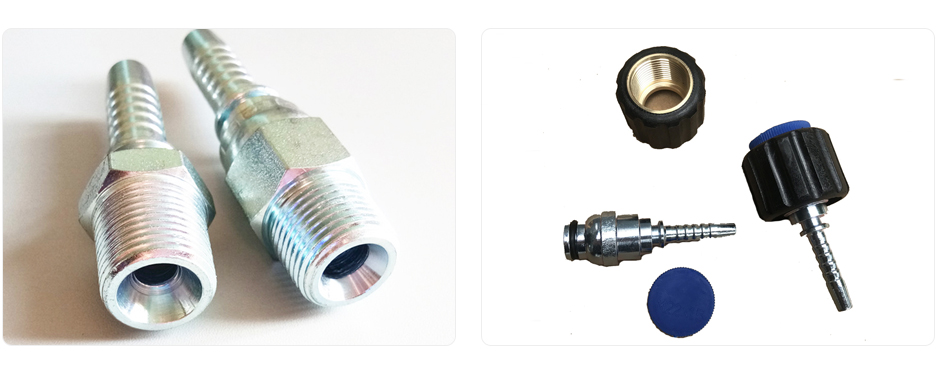
The selection of materials for hydraulic hose fittings is dictated by the operating environment, fluid compatibility, and required pressure ratings. Common materials include carbon steel (ASTM A519), alloy steel (4140, 8620), stainless steel (304, 316 – for corrosion resistance), and brass (for lower pressure applications). The manufacturing process commonly begins with raw material procurement followed by forging or machining to establish the fitting's basic shape. Critical dimensions are then refined through precision CNC machining to ensure tight tolerances. Threads, crucial for leak-proof sealing, are formed via thread rolling or cutting, with thread rolling generally preferred for its superior strength and fatigue resistance. Surface treatments like zinc plating (ASTM B633) or passivation (for stainless steel) enhance corrosion protection. For high-pressure applications, particularly those involving hydraulic systems utilizing phosphate ester fluids, specialized coatings are required. Quality control throughout the process, including non-destructive testing (NDT) such as magnetic particle inspection (MPI – ASTM E1444) and ultrasonic testing, is paramount to detect flaws and ensure structural integrity. The heat treatment process is also critical; improper heat treatment can lead to reduced yield strength and premature failure. A significant pain point in the industry is material traceability; ensuring the origin and composition of the raw materials used in fitting construction.
Performance & Engineering
Hydraulic hose fitting performance is governed by several key engineering principles. Burst pressure, a critical specification, is determined through hydrostatic testing (ISO 3766) and represents the maximum pressure the fitting can withstand before rupture. Tensile strength (ASTM E8) ensures the fitting can endure the mechanical stresses associated with hose assembly and system operation. Fatigue resistance is particularly important in dynamic applications where cyclical pressure fluctuations and vibrations are present. Finite Element Analysis (FEA) is frequently employed during the design phase to optimize fitting geometry and minimize stress concentrations. Leakage is a primary concern, addressed through precise thread engagement and the use of sealing compounds (e.g., PTFE tape or thread sealant conforming to MIL-T-27730B). Environmental resistance, particularly to corrosion and temperature extremes, is crucial, especially in outdoor applications or those involving aggressive fluids. The selection of appropriate O-rings (typically Nitrile, Viton, or EPDM conforming to SAE AS568) is critical to maintaining a reliable seal. A major engineering challenge is minimizing weight while maintaining structural integrity, especially in aerospace and automotive applications. Furthermore, adherence to standards like SAE J518, which governs hose and fitting interchangeability, is paramount for ensuring compatibility within hydraulic systems.
Technical Specifications
| Parameter | Unit | Specification (Typical) | Testing Standard |
|---|---|---|---|
| Maximum Working Pressure | psi | 5000 | SAE J518 |
| Burst Pressure | psi | 15000 | ISO 3766 |
| Tensile Strength | MPa | 600 | ASTM E8 |
| Operating Temperature Range | °C | -40 to +120 | SAE J518 |
| Material | - | Carbon Steel (ASTM A519) | ASTM A519 |
| Thread Type | - | NPTF (National Pipe Tapered Fuel) | SAE J1926 |
Failure Mode & Maintenance
Hydraulic hose fitting failures typically manifest in several forms. Fatigue cracking, often initiated at thread roots, results from repeated stress cycles. Corrosion, particularly galvanic corrosion when dissimilar metals are in contact, can weaken the fitting material. Erosion, caused by abrasive particles in the hydraulic fluid, can damage internal surfaces and lead to leakage. Over-tightening during assembly can distort the threads and compromise sealing integrity. Under-tightening, conversely, results in leakage. Improper storage and handling, leading to surface damage or contamination, can also contribute to premature failure. Regular visual inspections for signs of corrosion, cracking, or leakage are crucial. Torque wrenches should be used during assembly to ensure proper tightening (following manufacturer’s specifications). Periodic fluid analysis can identify contaminants that may contribute to erosion or corrosion. If a fitting is suspected of being damaged, it should be removed and subjected to a thorough inspection, including NDT if necessary. Replacement with a certified fitting is the recommended course of action. A recurring challenge is diagnosing the root cause of fitting failure, differentiating between material defects, improper installation, and operational factors.
Industry FAQ
Q: What are the key differences between NPT and NPTF threads, and which is preferred for hydraulic applications?
A: NPT (National Pipe Tapered) threads rely on interference between the threads to create a seal. NPTF (National Pipe Tapered Fuel) threads are designed with a tighter tolerance and a slightly different thread angle, and are intended to be used with a sealant (e.g., PTFE tape) to achieve a leak-proof seal. NPTF is generally preferred for hydraulic applications due to its enhanced sealing capability and resistance to vibration loosening. Using NPTF with a sealant provides a more reliable and consistent seal than relying solely on thread interference with NPT.
Q: How does the choice of plating affect the corrosion resistance of a steel hydraulic fitting?
A: Plating, such as zinc plating or nickel plating, provides a barrier between the steel substrate and the corrosive environment. Zinc plating (sacrificial coating) corrodes preferentially, protecting the steel. Nickel plating offers greater hardness and resistance to abrasion, but doesn’t offer the same sacrificial protection. The effectiveness of the plating depends on its thickness, porosity, and the specific corrosive agent encountered. For saltwater environments, stainless steel fittings are often the best choice.
Q: What is the importance of material traceability in hydraulic fitting manufacturing?
A: Material traceability is crucial for ensuring the integrity and reliability of hydraulic fittings. It allows manufacturers to track the origin and composition of raw materials, verifying that they meet specified standards and haven't been subject to counterfeiting. This is vital for quality control, failure analysis, and regulatory compliance. Without traceability, it’s impossible to determine the root cause of a failure and prevent recurrence.
Q: What are the consequences of using fittings with incorrect pressure ratings for a given application?
A: Using fittings with insufficient pressure ratings can lead to catastrophic failure, resulting in leaks, equipment damage, and potential injury to personnel. A fitting exceeding its rated pressure will rupture, potentially causing a high-pressure fluid spray. Conversely, using fittings with unnecessarily high pressure ratings can be less efficient and may not provide the optimal sealing characteristics for the application.
Q: How should hydraulic fittings be stored to prevent corrosion and contamination?
A: Hydraulic fittings should be stored in a clean, dry environment, protected from dust, moisture, and corrosive fumes. Openings should be capped or plugged to prevent contamination. Fittings should be stored on racks or shelves to prevent physical damage. Avoid stacking fittings directly on top of each other. Regular inspection of stored fittings is recommended to identify any signs of corrosion or contamination.
Conclusion
Hydraulic hose fittings are integral to the safe and efficient operation of fluid power systems. Selecting the appropriate fitting material, manufacturing process, and performance characteristics is critical, driven by considerations of pressure, temperature, fluid compatibility, and environmental conditions. Understanding potential failure modes and implementing proactive maintenance strategies are essential for maximizing system reliability and minimizing downtime. The importance of adherence to industry standards, such as SAE and ISO specifications, cannot be overstated.
The industry continually seeks improvements in fitting design, materials, and manufacturing techniques to enhance performance and reliability. Future developments will likely focus on lightweight materials, advanced coatings for corrosion resistance, and innovative sealing technologies. Maintaining a robust quality control system and ensuring material traceability remain paramount concerns for manufacturers like china parker hydraulic hose fittings factory, ultimately contributing to the overall safety and efficiency of hydraulic systems worldwide.