
Apr . 01, 2024 17:55 Back to list
china one wire braided hydraulic hose supplier Performance Analysis

Introduction
One wire braided hydraulic hose constitutes a critical component in fluid power systems across a multitude of industries, including construction, agriculture, mining, and manufacturing. These hoses are engineered to transmit hydraulic fluid under substantial pressure, facilitating the operation of heavy machinery and equipment. China has emerged as a significant global supplier of these hoses, offering competitive pricing and increasingly sophisticated manufacturing capabilities. This guide provides an in-depth technical overview of one wire braided hydraulic hoses, encompassing material science, manufacturing processes, performance characteristics, failure modes, and relevant industry standards. The core performance metrics revolve around pressure ratings, burst pressure, temperature resistance, and fluid compatibility. A key pain point in the industry is maintaining consistent quality control and ensuring adherence to international safety regulations, particularly concerning burst pressure and fatigue life. The selection of appropriate hose construction directly impacts system efficiency, reliability, and operator safety.
Material Science & Manufacturing
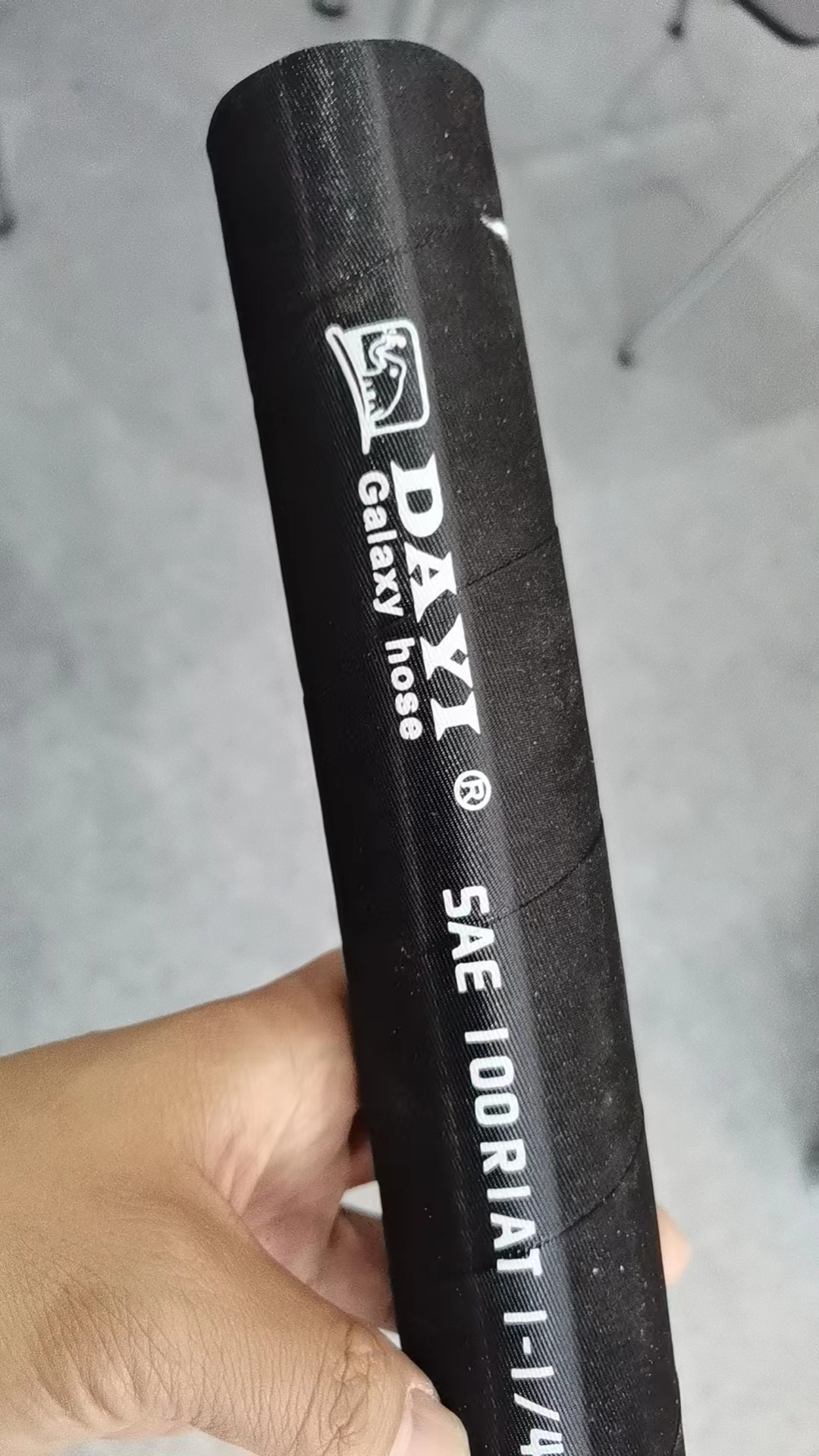
The construction of a one wire braided hydraulic hose typically involves four key layers: the inner tube, the reinforcement layer, the outer cover, and bonding agents. The inner tube is commonly composed of nitrile rubber (NBR), also known as Buna-N, due to its excellent resistance to petroleum-based hydraulic fluids. NBR possesses good abrasion resistance and flexibility, but its temperature range is limited to approximately -40°C to +120°C. Alternative inner tube materials include Chloroprene (CR) for improved heat and oil resistance, and PTFE (Teflon) for highly corrosive fluids. The reinforcement layer, the defining characteristic of this hose type, consists of a single braid of high-tensile steel wire. The steel wire is typically carbon steel, adhering to SAE J517 or DIN EN 10279 standards, and undergoes surface treatment (e.g., zinc plating) to enhance corrosion resistance. The outer cover is generally made of synthetic rubber, such as Chloroprene (CR) or EPDM (Ethylene Propylene Diene Monomer), providing protection against abrasion, weathering, ozone, and oil. EPDM demonstrates superior resistance to heat, ozone, and aging. The bonding agent, crucial for layer adhesion, is typically a combination of specialized adhesives formulated to maintain integrity under high pressure and temperature fluctuations. Manufacturing processes include extrusion of the inner tube and outer cover, followed by braiding of the steel wire, and final vulcanization to cure the rubber compounds and create a robust, integrated structure. Critical parameters during manufacturing include braid coverage percentage (typically >85%), bonding agent viscosity and cure time, and dimensional accuracy of the extruded layers. Inconsistent bonding or insufficient braid coverage can lead to premature failure.
Performance & Engineering
The performance of a one wire braided hydraulic hose is dictated by its ability to withstand internal pressure, external damage, and environmental factors. Force analysis considers hoop stress within the inner tube, tensile stress in the steel wire braid, and shear stress at the interfaces between layers. Burst pressure, a critical safety parameter, is typically four times the working pressure. Fatigue life, determined through cyclic pressure testing, assesses the hose’s resistance to failure under repeated loading. Environmental resistance encompasses temperature variations, exposure to ozone, ultraviolet radiation, and chemical attack. Hydraulic fluid compatibility is paramount; incompatibility can cause swelling, degradation, and loss of flexibility. Compliance requirements vary by region and application. SAE J517 (USA), DIN EN 853 (Europe), and GB/T 3686 (China) are key standards governing hose dimensions, performance characteristics, and testing procedures. A significant engineering consideration is hose bend radius; exceeding the minimum bend radius can induce localized stress concentrations and accelerate fatigue failure. Furthermore, the hose assembly’s end fittings (e.g., crimped fittings) must be properly sized and securely attached to prevent leakage and separation under pressure. The selection of appropriate fitting material (e.g., carbon steel, stainless steel) is crucial for compatibility with the hydraulic fluid and operating environment. Special attention is given to impulse pressure resistance, defined as the ability of the hose to withstand pressure surges and spikes, often encountered in dynamic hydraulic systems.
Technical Specifications
| Parameter | Unit | SAE J517 (Typical) | DIN EN 853 (Typical) |
|---|---|---|---|
| Working Pressure | MPa | Up to 35 | Up to 31.5 |
| Burst Pressure | MPa | 140 | 126 |
| Temperature Range | °C | -40 to +100 | -40 to +100 |
| Inner Tube Material | - | NBR (Buna-N) | NBR |
| Reinforcement | - | Single Steel Wire Braid | Single Steel Wire Braid |
| Outer Cover Material | - | CR (Chloroprene) | CR |
Failure Mode & Maintenance
One wire braided hydraulic hoses are susceptible to several failure modes. Fatigue cracking, initiated by repeated flexing and pressure cycling, is a common cause of failure, often originating at the braid-to-tube interface. Abrasion, resulting from contact with abrasive surfaces, can wear through the outer cover and eventually compromise the reinforcement layer. Corrosion, particularly in harsh environments, can weaken the steel wire braid. Oil degradation and incompatibility can cause swelling and cracking of the inner tube. Improper installation, such as excessive bending or twisting, can induce localized stress concentrations and accelerate failure. Over-pressurization, exceeding the hose’s working pressure, can lead to catastrophic rupture. Maintenance procedures include regular visual inspections for signs of wear, damage, or leakage. Hoses should be replaced if any defects are detected. Periodic pressure testing can verify hose integrity. Proper storage, away from direct sunlight, heat, and chemicals, is essential to prolong hose life. When replacing a hose, it is critical to use compatible end fittings and ensure proper crimping. Avoid kinking or sharply bending the hose during operation. A proactive preventative maintenance schedule, incorporating regular inspections and replacements, minimizes the risk of unexpected downtime and ensures optimal system performance. Examination of failed hoses through microscopic analysis reveals telltale signs of the initiating failure mechanism (e.g., fatigue striations, corrosion pits).
Industry FAQ
Q: What is the impact of hydraulic fluid type on hose life?
A: The type of hydraulic fluid significantly affects hose life. Incompatible fluids can cause swelling, softening, or degradation of the inner tube material (typically NBR). Using a fluid with improper viscosity or contamination levels can accelerate wear and damage the hose components. Always consult the hose manufacturer’s recommendations for fluid compatibility and filtration requirements.
Q: How does temperature affect the performance of a one wire braided hose?
A: Extreme temperatures, both high and low, can compromise hose performance. High temperatures can accelerate rubber degradation and reduce the hose’s pressure rating. Low temperatures can decrease flexibility and increase the risk of cracking. Operating the hose outside its specified temperature range can lead to premature failure.
Q: What are the key considerations when selecting hose end fittings?
A: End fitting selection is critical for ensuring a leak-free and reliable connection. Consider the hose’s pressure rating, fluid compatibility, and operating temperature. Fittings must be properly sized for the hose ID and correctly crimped to provide a secure attachment. Materials should be compatible with both the hose and the fluid to prevent corrosion.
Q: What is the difference between impulse pressure and working pressure, and why is it important?
A: Working pressure is the continuous operating pressure of the hose, while impulse pressure refers to the ability of the hose to withstand short-duration pressure spikes or surges. Impulse pressure is crucial in systems with pumps or rapid valve actuation. Failure to account for impulse pressure can lead to premature hose failure.
Q: How can I identify a hose that is nearing the end of its service life?
A: Signs of wear include cracking, blistering, abrasion, swelling, or deformation of the hose. Look for leaks around the fittings. Regular visual inspections and pressure testing can help identify hoses nearing the end of their service life. Maintain records of hose installation dates and usage to facilitate proactive replacement.
Conclusion
One wire braided hydraulic hoses represent a fundamental element in numerous industrial applications. Understanding the intricacies of their material composition, manufacturing techniques, and performance parameters is crucial for ensuring system reliability, safety, and efficiency. Proper selection, installation, and maintenance are paramount to maximizing hose lifespan and preventing catastrophic failures. The continued evolution of materials and manufacturing processes is driving improvements in hose performance and durability.
As hydraulic systems become increasingly sophisticated, the demand for high-performance, reliable hoses will continue to grow. Adherence to international standards (SAE, DIN, GB) and rigorous quality control measures are essential for manufacturers and end-users alike. Proactive maintenance programs, incorporating regular inspections and timely replacements, are vital for mitigating risks and optimizing overall system performance.