
Apr . 01, 2024 17:55 Back to list
china one wire braided hydraulic hose factory Performance Analysis
Introduction
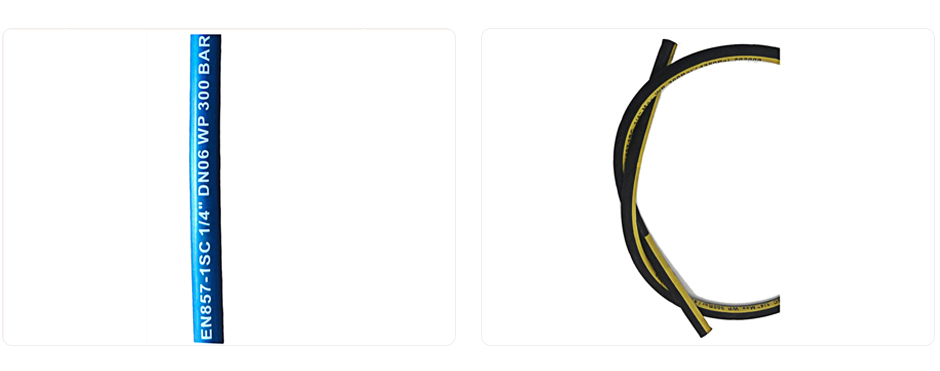
One wire braided hydraulic hose represents a critical component in fluid power systems across diverse industrial applications. Produced extensively by manufacturers in China, these hoses facilitate the transmission of hydraulic fluid, enabling the operation of machinery in sectors such as construction, agriculture, manufacturing, and automotive. The core function of these hoses is to safely and efficiently convey pressurized fluids, resisting collapse under vacuum and preventing leakage under high pressure. They bridge the gap between static hydraulic power sources (pumps) and dynamic actuators (cylinders, motors), and their reliable performance is paramount to the operational integrity of the connected systems. The manufacturing landscape has evolved, with Chinese factories, like china one wire braided hydraulic hose factory, focusing on standardized production, competitive pricing, and increasingly stringent quality control measures to meet global demand. Key performance indicators include burst pressure, working pressure, temperature resistance, and compatibility with various hydraulic fluids.
Material Science & Manufacturing
The construction of one wire braided hydraulic hose fundamentally relies on the interplay of several materials. The inner tube is typically composed of a synthetic rubber compound – commonly nitrile rubber (NBR) for petroleum-based hydraulic fluids, or ethylene propylene diene monomer (EPDM) for phosphate ester fluids. NBR offers excellent resistance to abrasion, oil, and fuels, while EPDM provides superior heat and weather resistance. The reinforcement layer, crucial for pressure resistance, consists of a single braid of high-tensile steel wire. The steel wire utilized is typically drawn from specialized steel grades exhibiting high yield strength and ductility, undergoing surface treatment (galvanization or phosphating) to enhance corrosion resistance. The outer cover provides environmental protection and abrasion resistance, typically utilizing a blend of synthetic rubbers like chloroprene (neoprene) or polyurethane. Manufacturing proceeds through a multi-stage process: inner tube extrusion, braid application via automated braiding machines (controlling braid angle and density), outer cover extrusion, and final curing. Critical parameters during extrusion include maintaining consistent wall thickness and material temperature. Braid coverage percentage, typically ranging from 30% to 60%, directly impacts the hose’s pressure rating. Curing parameters (temperature, time, pressure) are critical for achieving optimal crosslinking of the rubber compounds, resulting in desired elasticity and strength. Quality control checkpoints include hydrostatic testing (burst pressure verification), impulse testing (simulating pressure pulsations), and dimensional inspection.

Performance & Engineering
The performance of one wire braided hydraulic hose is dictated by several engineering principles. Burst pressure, the maximum pressure the hose can withstand before rupture, is a primary performance metric and is directly related to the steel wire tensile strength, braid coverage, and inner tube material properties. Working pressure, typically a fraction (safety factor) of the burst pressure, represents the maximum sustained operating pressure. Hose flexibility is crucial for ease of installation and routing, but excessive flexibility can lead to kinking under pressure. Force analysis during bending reveals stresses concentrated at the bend radius; therefore, maintaining a minimum bend radius (typically 4-6 times the hose ID) is essential to prevent fatigue failure. Environmental resistance is another critical factor. Prolonged exposure to UV radiation, ozone, extreme temperatures, and corrosive fluids can degrade the rubber compounds, reducing the hose’s lifespan. Compatibility with hydraulic fluids is paramount; incompatible fluids can cause swelling, softening, or cracking of the inner tube, leading to leaks and system failure. Compliance with industry standards (SAE J517, EN 853) ensures that hoses meet minimum performance requirements. The hose must also be able to withstand impulse pressures—rapid pressure fluctuations—without failure, a characteristic assessed through impulse testing per SAE J518.
Technical Specifications
| Parameter | Unit | SAE 100R1 AT | EN 853 1SN |
|---|---|---|---|
| Working Pressure | MPa | 10.5 | 10 |
| Burst Pressure | MPa | 31.5 | 30 |
| Temperature Range | °C | -40 to +100 | -40 to +100 |
| Inner Tube | Material | NBR | NBR |
| Reinforcement | Material | Steel Wire Braid (1 layer) | Steel Wire Braid (1 layer) |
| Outer Cover | Material | CR | CR |
Failure Mode & Maintenance
One wire braided hydraulic hoses are susceptible to several failure modes. Fatigue cracking, initiated by repeated flexing and pressure pulsations, often occurs at the fitting crimp or along the hose body. Abrasion, caused by contact with abrasive surfaces, degrades the outer cover, exposing the reinforcement layer to corrosion. Internal degradation, resulting from fluid incompatibility or contamination, leads to swelling, softening, and cracking of the inner tube. Corrosion of the steel wire reinforcement, particularly in humid environments, reduces the hose’s strength and can lead to catastrophic failure. Kinking, caused by exceeding the minimum bend radius, creates localized stress concentrations and can rupture the hose. Failure analysis involves visual inspection for cracks, abrasions, and swelling; pressure testing to identify leaks; and microscopic examination of fracture surfaces to determine the root cause. Preventive maintenance includes regular visual inspections, periodic pressure testing, and proper hose routing to avoid abrasion and kinking. Hoses should be replaced at recommended intervals (typically 5-7 years) or if signs of damage are detected. Maintaining clean hydraulic fluid and utilizing appropriate fittings are crucial for extending hose life. Proper storage, away from direct sunlight and extreme temperatures, also minimizes degradation.
Industry FAQ
Q: What is the impact of hydraulic fluid type on hose selection?
A: Hydraulic fluid compatibility is paramount. NBR inner tubes are suitable for petroleum-based fluids, while EPDM is preferred for phosphate ester fluids. Using an incompatible fluid can cause swelling, degradation, and ultimately, hose failure. Viscosity, temperature range, and the presence of additives also influence hose material selection.
Q: How does steel wire braid coverage affect hose pressure rating?
A: Higher braid coverage generally translates to a higher pressure rating. Increased braid coverage means more steel wire is incorporated into the reinforcement layer, providing greater tensile strength and resistance to expansion under pressure. However, higher coverage can also reduce flexibility.
Q: What are the common causes of hose kinking and how can it be prevented?
A: Kinking occurs when the hose is bent beyond its minimum bend radius, causing internal collapse. Prevention involves ensuring adequate clearance for hose routing, avoiding sharp bends, and using appropriately sized hoses for the application.
Q: What is the significance of impulse testing and what failure modes does it reveal?
A: Impulse testing simulates the effects of pressure pulsations in a hydraulic system. It reveals weaknesses in the hose construction that may not be apparent under static pressure testing, such as fatigue failure at the fitting crimp or internal degradation of the inner tube.
Q: What safety measures should be taken when disconnecting a pressurized hydraulic hose?
A: Always depressurize the system before disconnecting any hydraulic hose. Wear appropriate personal protective equipment (PPE), including safety glasses and gloves. Slowly and carefully loosen the fittings to release any residual pressure, and direct the fluid into a suitable container.
Conclusion
One wire braided hydraulic hoses, integral to countless industrial processes, demand a comprehensive understanding of material science, manufacturing processes, and performance characteristics. The selection and maintenance of these hoses are critical for ensuring system reliability, safety, and longevity. The advancements in rubber compound formulations and steel wire technologies continually improve hose performance, enabling higher pressures, wider temperature ranges, and enhanced resistance to harsh operating conditions.
As industries move towards greater efficiency and sustainability, the demand for durable, high-performance hydraulic hoses will only intensify. Manufacturers like china one wire braided hydraulic hose factory, focusing on rigorous quality control and adherence to international standards, are positioned to play a key role in meeting this evolving demand and providing reliable solutions for fluid power systems globally.