
Apr . 01, 2024 17:55 Back to list
china one wire braided high pressure hydraulic hose supplier Performance Analysis
Introduction
One wire braided high pressure hydraulic hose is a critical component in hydraulic systems across diverse industries including construction, agriculture, manufacturing, and transportation. These hoses are designed to convey hydraulic fluid under high pressure to transmit power. A leading china one wire braided high pressure hydraulic hose supplier focuses on delivering hoses capable of withstanding extreme conditions and meeting stringent safety standards. The core performance characteristics—pressure rating, burst pressure, temperature resistance, and fluid compatibility—directly impact system reliability and operational efficiency. This guide provides an in-depth technical overview of these hoses, encompassing material science, manufacturing processes, performance engineering, failure modes, and industry standards.
Material Science & Manufacturing
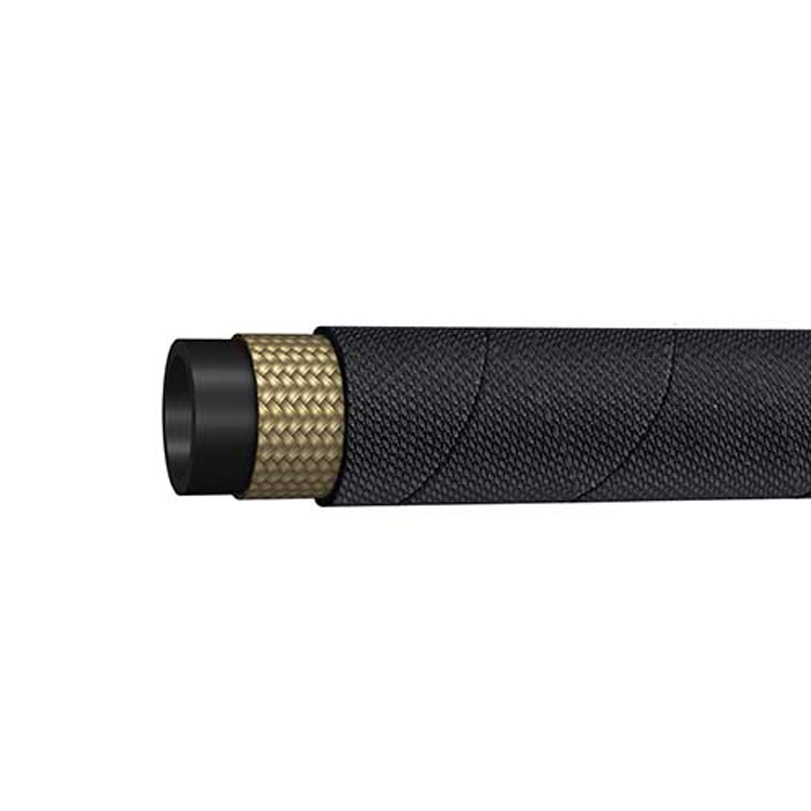
The construction of a one wire braided high pressure hydraulic hose involves several key material selections and manufacturing processes. The inner tube, typically composed of oil-resistant synthetic rubber such as nitrile rubber (NBR), chloroprene rubber (CR), or ethylene propylene diene monomer (EPDM), provides a fluid-tight barrier. NBR is favored for its resistance to petroleum-based fluids, while CR offers superior ozone and weathering resistance. EPDM excels in high-temperature and phosphate ester fluid applications. The reinforcement layer consists of a single braid of high-tensile steel wire, providing the hose's pressure resistance. Wire quality, including tensile strength and surface finish, is paramount. The cover, typically a synthetic rubber compound like CR or a polyurethane blend, protects the reinforcement layer from abrasion, weathering, and chemical exposure. Manufacturing begins with the extrusion of the inner tube. The steel wire is then helically wound around the inner tube, ensuring complete coverage and consistent pitch. Finally, the cover is extruded over the braided reinforcement. Key parameter control includes maintaining precise extrusion temperatures and pressures to ensure uniform wall thickness, consistent wire pitch, and proper adhesion between layers. Post-manufacturing quality control involves hydrostatic testing to verify pressure capabilities and dimensional inspections to confirm adherence to specifications. Vulcanization, a critical process involving heating the rubber compounds with sulfur, crosslinks the polymer chains, enhancing strength, elasticity, and resistance to degradation. Batch traceability throughout the manufacturing process is essential for quality assurance and failure analysis.
Performance & Engineering
Performance analysis of one wire braided hydraulic hoses centers on their ability to withstand internal pressure without failure. The principle governing this is the hoop stress equation: σ = (P r) / t, where σ is the hoop stress, P is the internal pressure, r is the inner radius of the hose, and t is the wall thickness. Increasing wall thickness or reducing inner radius directly improves pressure capacity. Burst pressure, typically four times the working pressure, represents the point of catastrophic failure. Environmental resistance is also crucial. Prolonged exposure to UV radiation can cause rubber degradation, leading to cracking and loss of flexibility. Temperature extremes can affect material elasticity and fluid compatibility. Hose assembly engineering is critical; incorrect crimping of fittings can significantly reduce hose lifespan and create leak paths. The angle of hose bending is also a factor, with tighter bends increasing stress concentration and accelerating fatigue. Compliance requirements, such as those dictated by SAE J517 and EN 853, mandate specific testing procedures for pressure, temperature, impulse, and fluid resistance. Fatigue analysis, using S-N curves (stress vs. number of cycles to failure), is employed to predict hose lifespan under cyclic loading conditions. Impulse testing simulates pressure pulsations, revealing potential weaknesses in the hose construction. Furthermore, fluid compatibility must be rigorously assessed. Incompatibility can lead to swelling, softening, or dissolution of the rubber compounds, compromising hose integrity.
Technical Specifications
| Parameter | Unit | Specification Range (Typical) | Test Standard |
|---|---|---|---|
| Working Pressure | MPa | 16 – 35 | SAE J517 |
| Burst Pressure | MPa | 64 – 140 | SAE J517 |
| Temperature Range | °C | -40 to +100 | SAE J517 |
| Inner Tube Material | - | NBR, CR, EPDM | ASTM D2000 |
| Reinforcement | - | High-Tensile Steel Wire (1 braid) | ASTM A938 |
| Cover Material | - | CR, Polyurethane | ASTM D2000 |
Failure Mode & Maintenance
Failure modes in one wire braided hydraulic hoses are varied. Fatigue cracking, often initiated at the braid crossover points or near fittings, is a common occurrence due to cyclic pressure and bending stresses. Delamination, the separation of layers, can result from poor adhesion during manufacturing or exposure to incompatible fluids. Abrasion and erosion of the cover can expose the reinforcement layer to corrosion, leading to weakening and eventual failure. Oxidation of the rubber compounds, accelerated by heat and UV exposure, causes hardening and cracking. Another critical failure mode is the degradation of the inner tube, leading to fluid leakage and contamination. Pinholes can develop due to inclusions or defects in the rubber. Maintenance involves regular visual inspections for signs of wear, cracking, or swelling. Hose assemblies should be checked for proper fitting crimp integrity. Fluid contamination should be minimized through filtration. Avoid exceeding the hose’s pressure and temperature ratings. Hoses subjected to excessive bending or twisting should be replaced. Proper storage is also vital; hoses should be stored in a cool, dry, and dark environment, away from direct sunlight and ozone sources. A proactive replacement schedule, based on operating conditions and usage frequency, can prevent catastrophic failures and ensure system reliability. When replacing a hose, always use fittings specifically designed for that hose type and pressure rating.
Industry FAQ
Q: What is the impact of fluid velocity on the lifespan of a one wire braided hose?
A: High fluid velocity can significantly reduce hose lifespan. Increased velocity causes greater erosion of the inner tube, especially with abrasive fluids. It also increases pressure drop and can contribute to cavitation, which can damage the rubber compounds. Selecting a hose with a larger internal diameter can mitigate this effect.
Q: How does the steel wire braid contribute to the hose’s resistance to kinking?
A: The steel wire braid provides axial stiffness, resisting deformation that can lead to kinking. While not entirely kink-proof, the braid significantly improves the hose's ability to maintain its shape under bending stress. Proper hose routing and support are still essential to prevent kinking.
Q: What are the key differences between NBR and EPDM inner tube materials?
A: NBR offers excellent resistance to petroleum-based hydraulic fluids, making it a common choice for general-purpose applications. EPDM provides superior resistance to heat, ozone, and weathering, and is specifically suited for phosphate ester fluids and high-temperature environments. NBR is generally less expensive than EPDM.
Q: What is the significance of impulse testing, and what does a high impulse rating indicate?
A: Impulse testing simulates pressure pulsations that occur in many hydraulic systems. A high impulse rating indicates that the hose can withstand a greater number of pressure cycles without failure. This is particularly important in systems with reciprocating pumps or solenoid valves.
Q: What are the consequences of using an improperly crimped fitting?
A: An improperly crimped fitting can create a leak path, reducing the hose's pressure rating and lifespan. It can also cause the fitting to slip off the hose under pressure, leading to catastrophic failure. Always use fittings and crimping equipment specifically designed for the hose type and pressure rating.
Conclusion
One wire braided high pressure hydraulic hoses are indispensable components in numerous industrial applications. Their performance and longevity are intrinsically linked to material selection, manufacturing precision, and adherence to industry standards. Understanding the interplay between pressure ratings, temperature resistance, fluid compatibility, and potential failure modes is crucial for ensuring system reliability and safety. A reputable china one wire braided high pressure hydraulic hose supplier prioritizes rigorous quality control, employing advanced testing methodologies to guarantee consistent performance and durability.
Looking ahead, advancements in material science and manufacturing techniques will continue to enhance the capabilities of these hoses. The development of new rubber compounds with improved heat and chemical resistance, coupled with optimized braid designs, will lead to increased pressure ratings and extended service life. Furthermore, the integration of sensor technology within the hose construction will enable real-time monitoring of pressure, temperature, and internal condition, facilitating predictive maintenance and preventing unexpected failures. Careful selection and proactive maintenance, guided by a thorough understanding of the underlying technical principles, remain paramount for maximizing the value and longevity of these critical components.