
Apr . 01, 2024 17:55 Back to list
china one wire braided high pressure hydraulic hose manufacturers Performance Analysis
Introduction
One wire braided high-pressure hydraulic hose, manufactured extensively in China, represents a critical component in fluid power systems across diverse industries including construction, agriculture, mining, and manufacturing. These hoses are designed to convey hydraulic fluid to transmit power, and their performance directly impacts the efficiency and safety of the systems they serve. This technical guide provides an in-depth analysis of their material science, manufacturing processes, performance characteristics, potential failure modes, and relevant industry standards. Chinese manufacturers have become a dominant force in this market, driven by competitive pricing and increasingly sophisticated manufacturing capabilities. However, understanding the nuances of material selection, construction techniques, and quality control is paramount to ensuring reliable and long-lasting performance. Core challenges in this industry revolve around maintaining consistent quality in high-volume production, achieving compatibility with a wide range of hydraulic fluids, and mitigating the risk of catastrophic failure under high-pressure and dynamic loading conditions. This guide will address these critical aspects for engineers, procurement managers, and quality control professionals.
Material Science & Manufacturing
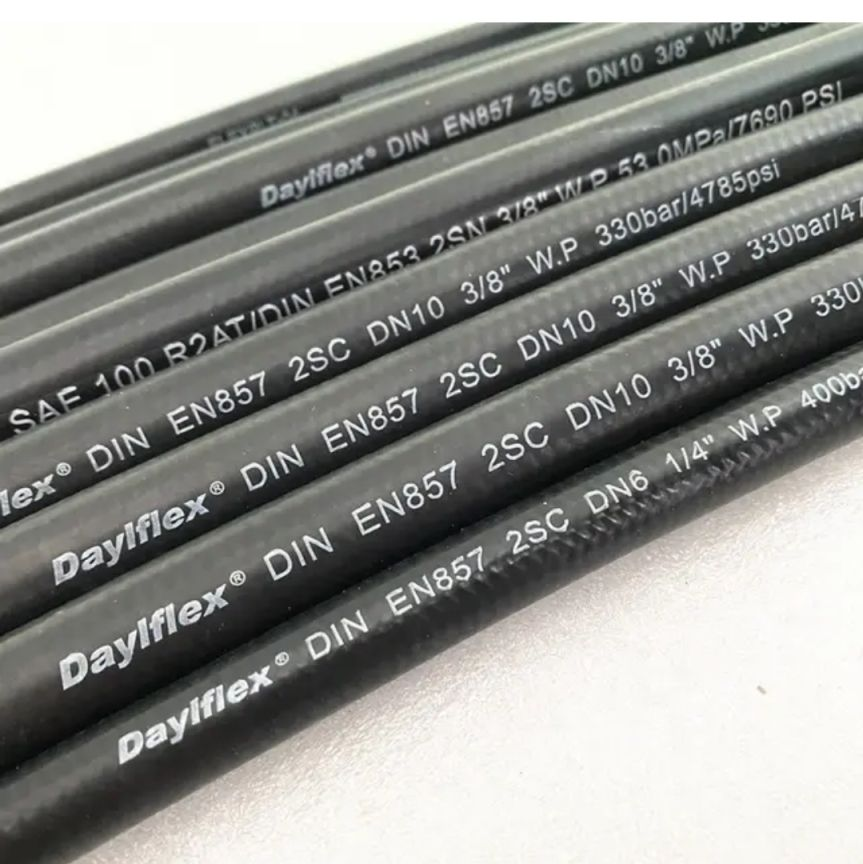
The construction of one wire braided high-pressure hydraulic hose involves several key material choices. The inner tube is typically made from a synthetic rubber compound, commonly Nitrile (NBR) due to its excellent resistance to petroleum-based hydraulic fluids. Alternative materials include Chloroprene (CR) for improved ozone and weathering resistance and EPDM for phosphate ester fluids. The reinforcement layer consists of a single braid of high-strength steel wire. The wire is typically drawn from carbon steel and undergoes surface treatment (zinc plating or galvanization) to inhibit corrosion. The outer cover is generally made from CR or a CR/NBR blend, providing abrasion resistance, weather protection, and resistance to oil and chemicals. Manufacturing begins with the extrusion of the inner tube to the specified dimensions. The steel wire is then braided over the inner tube using a specialized braiding machine, maintaining a consistent pitch and coverage. The outer cover is subsequently extruded over the braided reinforcement. Critical parameters during manufacturing include maintaining precise control over rubber compound formulations (hardness, tensile strength, elongation), wire diameter and braid angle, and extrusion temperatures and pressures. Improper vulcanization of the rubber compounds can lead to inconsistencies in physical properties and premature failure. The adhesion between the inner tube, reinforcement, and outer cover is also critical and is enhanced through the use of adhesion promoters during the extrusion process. Quality control throughout the manufacturing process involves rigorous testing of raw materials and finished products, including tensile strength testing, burst pressure testing, and impulse testing.
Performance & Engineering
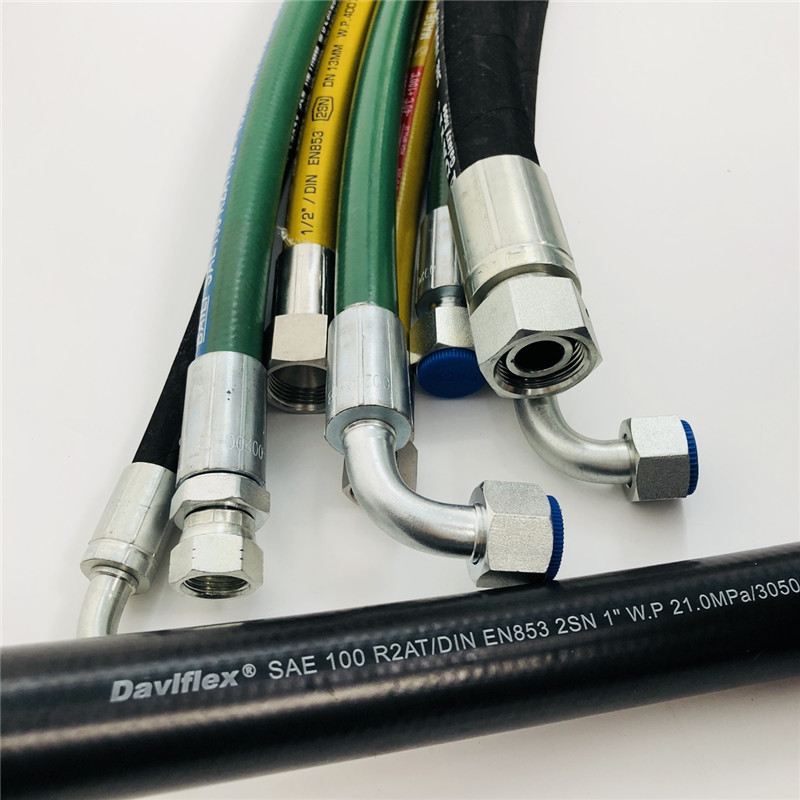
The performance of one wire braided hydraulic hose is dictated by its ability to withstand high pressures, resist abrasion, and maintain flexibility under dynamic loading conditions. Force analysis focuses on hoop stress in the hose wall due to internal pressure, and tensile stress in the steel wire reinforcement. Burst pressure is a critical performance parameter, typically exceeding the working pressure by a safety factor of 4:1. Impulse pressure testing, which simulates pressure spikes and fluctuations, assesses the hose’s resistance to fatigue failure. Environmental resistance is also crucial; exposure to extreme temperatures, UV radiation, and corrosive fluids can degrade the rubber compounds and compromise the hose’s integrity. The hose must also comply with relevant safety standards, such as those established by SAE International (J517, J1926) and EN standards (EN 853, EN 857). Engineers consider several factors when selecting a hose for a specific application, including operating pressure, fluid type, temperature range, bend radius, and potential for abrasion. Proper hose assembly is also critical; incorrect fitting selection or improper crimping can lead to leakage or failure. Finite element analysis (FEA) is often used to model the stress distribution within the hose and optimize its design for specific applications. The working temperature range and fluid compatibility are also crucial design parameters. For example, using a NBR inner tube with phosphate ester fluids will result in rapid degradation and failure.
Technical Specifications
| Parameter | Unit | Typical Value (China Manufactured Hose) | Testing Standard |
|---|---|---|---|
| Working Pressure | MPa | 16 - 32 | SAE J517 |
| Burst Pressure | MPa | 64 - 128 | SAE J517 |
| Inner Tube Material | - | NBR (Nitrile Rubber) | ASTM D2000 |
| Reinforcement | - | Single Steel Wire Braid | SAE J1926 |
| Outer Cover Material | - | CR (Chloroprene Rubber) | ASTM D2000 |
| Temperature Range | °C | -40 to +100 | SAE J517 |
Failure Mode & Maintenance
One wire braided hydraulic hoses are susceptible to several failure modes. Fatigue cracking, initiated by repeated bending and flexing, is a common cause of failure, particularly in applications with high dynamic loads. Corrosion of the steel wire reinforcement, due to exposure to moisture and corrosive fluids, can reduce its strength and lead to rupture. Abrasion of the outer cover can expose the reinforcement to the environment, accelerating corrosion. Pinholes in the inner tube, caused by defects in the rubber compound or damage from foreign objects, can result in leakage. Other failure modes include hose twisting (which can induce stress concentrations and fatigue), kinking (which restricts fluid flow and can damage the inner tube), and incompatibility with the hydraulic fluid (which can cause swelling or degradation of the rubber compounds). Maintenance procedures include regular visual inspection for signs of damage (cracks, abrasions, leaks), proper hose routing to avoid twisting and kinking, and periodic replacement of hoses based on service life or inspection findings. Proper storage of hoses is also important; they should be stored in a cool, dry place away from direct sunlight and ozone sources. When replacing a hose, it is crucial to use fittings that are compatible with the hose and rated for the operating pressure. Regularly check for fluid leaks around fittings.
Industry FAQ
Q: What is the significance of the 'braid angle' in a one wire braided hose, and how does it affect performance?
A: The braid angle, the angle at which the steel wire is woven around the inner tube, is a critical parameter. A smaller braid angle provides greater flexibility but reduces the hose's resistance to axial stretching and bursting. A larger braid angle increases burst strength and resistance to stretching but reduces flexibility. Manufacturers optimize the braid angle based on the intended application and performance requirements, typically around 55-70 degrees.
Q: How do Chinese manufacturers ensure the zinc plating on the steel wire braid meets corrosion resistance standards?
A: Chinese manufacturers employ various techniques to ensure adequate zinc plating thickness and adherence, including hot-dip galvanization and electroplating. Quality control procedures include measuring zinc coating thickness using eddy current testing and performing salt spray tests (ASTM B117) to assess corrosion resistance. Reputable manufacturers adhere to ISO 9001 quality management systems, ensuring consistent plating processes.
Q: What are the limitations of NBR inner tubes, and when should alternative materials like EPDM be considered?
A: NBR is susceptible to degradation when exposed to ozone, UV radiation, and certain polar fluids like phosphate esters. EPDM offers superior resistance to ozone, weathering, and these specific fluids. Therefore, EPDM is recommended for applications involving prolonged exposure to these conditions, even though NBR generally provides better resistance to petroleum-based hydraulic fluids.
Q: What is the impact of improper crimping on the lifespan and safety of a hydraulic hose assembly?
A: Improper crimping – either under-crimping or over-crimping – can significantly reduce the hose assembly’s lifespan and compromise its safety. Under-crimping leads to leakage, while over-crimping damages the hose reinforcement, reducing its strength and increasing the risk of catastrophic failure. Crimping should always be performed by trained personnel using calibrated crimping machines and fittings that are specifically matched to the hose.
Q: What testing is typically performed to verify the impulse pressure performance of a hydraulic hose?
A: Impulse pressure testing involves subjecting the hose to repeated pressure cycles, simulating pressure surges and fluctuations common in hydraulic systems. The hose is typically cycled between low and high pressures for a specified number of cycles (e.g., 100,000 cycles) while visually inspected for leaks or failures. This testing helps determine the hose’s resistance to fatigue and its ability to withstand dynamic loading conditions.
Conclusion
One wire braided high-pressure hydraulic hoses are essential components in a wide range of industrial applications. Understanding their material science, manufacturing processes, and performance characteristics is crucial for selecting the right hose for a specific application and ensuring its reliable operation. Chinese manufacturers play a significant role in the global supply chain, offering competitive pricing and increasingly sophisticated technology. However, diligent quality control and adherence to international standards are paramount.
The continued development of materials and manufacturing techniques will focus on improving hose performance, increasing lifespan, and enhancing safety. Further research into alternative reinforcement materials and advanced rubber compounds will contribute to the development of more durable and reliable hydraulic hoses capable of withstanding increasingly demanding operating conditions. Proper maintenance and inspection practices remain crucial for maximizing hose lifespan and preventing catastrophic failures.