
Apr . 01, 2024 17:55 Back to list
china one wire braided high pressure hydraulic hose factories Performance Analysis
Introduction
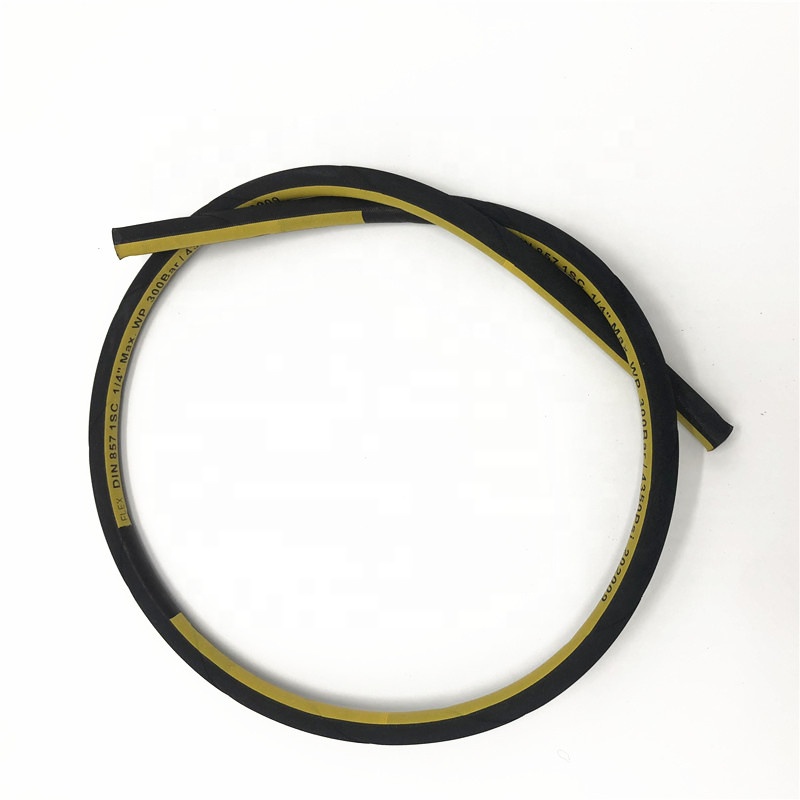
One wire braided high-pressure hydraulic hoses represent a critical component within fluid power systems across a vast spectrum of industries, including construction, agriculture, mining, and manufacturing. These hoses, manufactured extensively by factories in China, are engineered to transmit hydraulic fluid under substantial pressure, facilitating the operation of hydraulic machinery. Their technical position in the industrial chain is immediately post-hydraulic pump/reservoir, preceding actuators like cylinders and motors. Core performance characteristics are defined by working pressure, burst pressure, temperature range, and fluid compatibility. The industry currently faces challenges concerning consistent quality control across suppliers, achieving optimal hose life in demanding applications (particularly regarding abrasion and external damage), and adhering to increasingly stringent environmental regulations regarding phthalate content and end-of-life recyclability. Chinese manufacturers are increasingly focused on meeting these demands through improved material sourcing, manufacturing process optimization, and adherence to international standards.
Material Science & Manufacturing
The construction of a one-wire braided high-pressure hydraulic hose fundamentally relies on a multi-layered system. The innermost layer, the tube, is typically constructed from a synthetic rubber compound, most commonly nitrile rubber (NBR) for mineral oil-based hydraulic fluids. For phosphate ester fluids, specialized compounds like XNBR are employed. NBR’s properties – tensile strength (typically 17-25 MPa), elongation at break (300-500%), and hardness (60-70 Shore A) – directly impact the hose’s resistance to fluid permeation and degradation. The reinforcement layer consists of a single braid of high-tensile steel wire. The wire's material composition is crucial; high-carbon steel wires conforming to standards like SAE J517 are utilized, possessing a tensile strength exceeding 2000 MPa. The manufacturing process involves precisely winding the steel wire around the inner tube, maintaining consistent pitch and coverage for uniform pressure distribution. The outer cover, providing abrasion and weather resistance, is also typically NBR, often incorporating carbon black for UV protection. Manufacturing steps include extrusion of the inner tube, braiding of the reinforcement, and extrusion of the outer cover, followed by curing (vulcanization) under controlled temperature and pressure. Critical parameters during curing include temperature ramp rate, dwell time, and pressure profile, all influencing the final hose’s mechanical properties. Post-curing inspection includes burst pressure testing, impulse testing, and dimensional verification. Failure to maintain precise control of these parameters can result in premature hose failure due to delamination, cracking, or reduced burst strength.
Performance & Engineering
The performance of a one-wire braided hydraulic hose is governed by a complex interplay of internal pressure, temperature, fluid velocity, and external stresses. Force analysis dictates that the steel wire braid carries the majority of the tensile load generated by the internal pressure. Hose wall stress (σ) can be approximated using the thin-walled cylinder formula: σ = (Pr)/t, where P is the internal pressure, r is the inner radius, and t is the wall thickness. This highlights the importance of precise dimensional control during manufacturing. Environmental resistance is paramount; prolonged exposure to UV radiation, ozone, and extreme temperatures can cause rubber degradation, leading to reduced flexibility and cracking. Hydraulic fluid compatibility is also vital – incompatible fluids can cause swelling, softening, or chemical attack of the rubber compound. Compliance requirements are governed by standards like SAE J517 (hydraulic hose specification), ISO 6899 (rubber hoses for hydraulic applications), and EN 856 (steel wire for the reinforcement of rubber hoses). Detailed engineering considerations include bend radius – exceeding the minimum bend radius can induce stress concentrations and premature failure. Impulse testing, simulating pressure pulsations, assesses the hose’s ability to withstand cyclic loading. Furthermore, considerations must be given to proper hose routing to avoid kinking, abrasion, and excessive bending. The selection of appropriate end fittings (ferrules and couplings) is equally critical, ensuring a leak-free and secure connection capable of withstanding the operating pressure.
Technical Specifications
| Parameter | SAE J517 Type 1 | SAE J517 Type 2 | DIN EN 856 1SN |
|---|---|---|---|
| Working Pressure (PSI) | 750 | 1000 | 100 bar (1450 PSI) |
| Burst Pressure (PSI) | 2250 | 3000 | 315 bar (4568 PSI) |
| Temperature Range (°C) | -40 to +100 | -40 to +121 | -40 to +100 |
| Reinforcement | Single Wire Braid | Single Wire Braid | Single Steel Wire Braid |
| Inner Tube Material | NBR | NBR | NBR |
| Outer Cover Material | NBR | NBR | NBR |
Failure Mode & Maintenance
Common failure modes in one-wire braided hydraulic hoses include burst failure (due to exceeding the working pressure), fatigue cracking (resulting from repeated pressure cycling and flexing), abrasion damage (caused by external contact with abrasive surfaces), and permeation (fluid leakage through the hose wall). Failure analysis often reveals that burst failures originate at defects within the steel wire braid or at the hose ends. Fatigue cracking typically initiates at areas of high stress concentration, such as at the fitting crimp or at points of sharp bending. Abrasion damage compromises the outer cover, exposing the reinforcement layer to corrosion. Permeation is exacerbated by high temperatures and incompatible fluids. Maintenance strategies include regular visual inspection for signs of wear, damage, or leaks. Hose routing should be carefully planned to minimize bending and abrasion. Proper hose clamping and support are essential to prevent excessive movement and stress. Fluid cleanliness is critical; contaminants can accelerate wear and damage. When replacing hoses, it is crucial to use compatible fittings and ensure proper crimping. Hoses should be replaced periodically, even if no visible damage is present, based on the manufacturer’s recommendations and the severity of the operating conditions. Avoid kinking and twisting the hose during installation and operation. Implement a preventative maintenance schedule to ensure timely hose replacement and prevent catastrophic failures.
Industry FAQ
Q: What is the primary difference between SAE J517 Type 1 and Type 2 hoses?
A: The key distinction lies in the working and burst pressure ratings. Type 2 hoses are designed for higher pressure applications, typically 1000 PSI working pressure versus 750 PSI for Type 1. This difference is achieved through slightly thicker construction and tighter tolerances in the manufacturing process.
Q: How does temperature affect the lifespan of a hydraulic hose?
A: Elevated temperatures accelerate the degradation of the rubber compound, leading to reduced flexibility, cracking, and decreased burst strength. Conversely, extremely low temperatures can cause the rubber to become brittle and prone to cracking. Maintaining operation within the specified temperature range is crucial.
Q: What is the importance of proper hose end crimping?
A: Proper crimping ensures a leak-free and mechanically secure connection between the hose and the fitting. Incorrect crimping – whether too loose or too tight – can lead to premature failure. Too loose a crimp can result in leakage, while an over-crimp can damage the hose reinforcement.
Q: What fluid compatibility considerations should be made when selecting a hose?
A: Different hydraulic fluids have varying chemical properties. NBR is suitable for mineral oil-based fluids, but phosphate ester fluids require specialized compounds like XNBR. Using an incompatible fluid can cause swelling, softening, or chemical attack of the hose material, leading to failure.
Q: How can I identify potential abrasion damage on a hydraulic hose?
A: Regular visual inspection is key. Look for cuts, abrasions, or worn areas on the outer cover. Any damage that exposes the reinforcement layer should be addressed immediately. Consider using hose guards or sleeves in areas prone to abrasion.
Conclusion
One-wire braided high-pressure hydraulic hoses are essential components in a wide range of industrial applications. Their performance and longevity are directly influenced by material selection, manufacturing precision, and adherence to industry standards. Understanding the underlying principles of force analysis, fluid compatibility, and failure modes is critical for ensuring safe and reliable operation.
The increasing demand for higher performance and more durable hydraulic hoses is driving innovation in materials and manufacturing techniques. Chinese manufacturers are playing an increasingly significant role in this landscape, focusing on quality control, environmental sustainability, and compliance with international regulations. Future advancements are likely to include the development of new rubber compounds with improved resistance to degradation and the implementation of advanced monitoring systems to detect potential failures before they occur.