
Apr . 01, 2024 17:55 Back to list
china one fiber braid hydraulic hose supplier Performance Analysis
Introduction
Fiber braid hydraulic hoses are critical components in hydraulic systems across diverse industrial applications, including construction machinery, agricultural equipment, and manufacturing processes. These hoses transmit fluid power, enabling the operation of actuators and motors. China One Fiber Braid Hydraulic Hose Supplier specializes in the production of these hoses, utilizing a construction that combines a robust inner tube, layers of high-tensile reinforcement braiding, and a durable outer cover. This guide provides a comprehensive technical overview of these hoses, covering material science, manufacturing processes, performance characteristics, failure modes, and relevant industry standards. The core performance characteristics – pressure rating, burst pressure, temperature range, and fluid compatibility – are paramount considerations for ensuring system reliability and safety. The selection of an appropriate hose is dictated by the specific operating conditions and fluid types encountered in the application, making a thorough understanding of these parameters essential for engineers and procurement professionals.
Material Science & Manufacturing
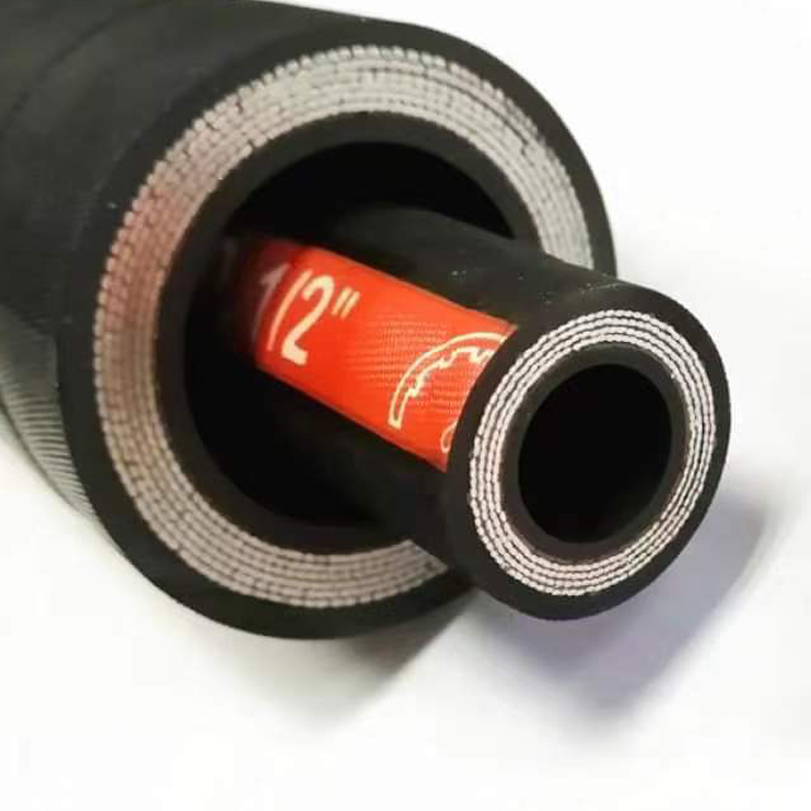
The construction of a fiber braid hydraulic hose relies on the synergistic properties of several key materials. The inner tube is typically composed of synthetic rubber compounds, such as nitrile rubber (NBR), chlorinated polyethylene rubber (CM), or ethylene propylene diene monomer rubber (EPDM). NBR offers excellent resistance to petroleum-based fluids, CM provides superior heat and ozone resistance, and EPDM excels in applications involving water-glycol fluids. The reinforcement braid, crucial for withstanding internal pressure, is commonly made from high-tensile steel wire or synthetic fiber, such as polyester or aramid. Steel wire provides the highest pressure capacity, while synthetic fibers offer greater flexibility and corrosion resistance. The outer cover, providing environmental protection and abrasion resistance, is generally composed of synthetic rubber compounds like CR (chloroprene rubber) or SBR (styrene-butadiene rubber).
Manufacturing commences with the extrusion of the inner tube to precise dimensions. Following this, the reinforcement braid is applied using a specialized braiding machine, ensuring uniform coverage and consistent tension. The braid angle is a critical parameter, influencing the hose's flexibility and burst pressure. A higher braid angle generally results in increased pressure capacity but reduced flexibility. After braiding, the outer cover is extruded over the reinforcement layer. Curing, a crucial step, involves subjecting the hose to controlled temperature and pressure to vulcanize the rubber compounds, establishing their final physical and chemical properties. Quality control measures throughout the process include dimensional checks, pressure testing (hydrostatic and impulse testing), and material analysis to ensure adherence to specifications.
Performance & Engineering
The performance of a fiber braid hydraulic hose is governed by a complex interplay of factors, including internal pressure, temperature, fluid compatibility, and external mechanical stresses. Force analysis is critical in determining the hose's ability to withstand the stresses imposed during operation. The hoop stress, resulting from internal pressure, is directly proportional to the pressure and the hose's radius, and inversely proportional to the wall thickness. The reinforcement braid provides the necessary tensile strength to counteract this stress. Impulse testing simulates the pressure pulsations common in hydraulic systems, assessing the hose's fatigue resistance. Temperature significantly influences the rubber compounds' elasticity and strength; exceeding the recommended temperature range can lead to premature degradation and failure.
Environmental resistance is another vital consideration. Exposure to ozone, UV radiation, and chemicals can degrade the rubber compounds, reducing their performance and lifespan. Fluid compatibility is paramount; incompatible fluids can cause swelling, softening, or cracking of the inner tube, leading to leaks and system failure. Compliance requirements, dictated by industry regulations and customer specifications, often necessitate adherence to specific performance standards, such as those established by SAE (Society of Automotive Engineers) or EN (European Norm). Functional implementation details, such as the hose’s bend radius and coupling compatibility, also play a crucial role in ensuring proper system operation.
Technical Specifications
| Parameter | Unit | Specification (Typical) | Test Standard |
|---|---|---|---|
| Working Pressure | MPa | 10 - 35 | SAE J517 |
| Burst Pressure | MPa | 30 - 105 | SAE J517 |
| Temperature Range | °C | -40 to +100 | SAE J517 |
| Inner Tube Material | - | NBR, CM, EPDM | ASTM D2000 |
| Reinforcement Braid | - | Steel Wire / Polyester Fiber | ASTM E8 |
| Outer Cover Material | - | CR, SBR | ASTM D2000 |
Failure Mode & Maintenance
Fiber braid hydraulic hoses are susceptible to several failure modes. Fatigue cracking, occurring due to repeated pressure pulsations and bending, is a common cause of failure, particularly in applications involving high vibration. Delamination, the separation of the reinforcement braid from the rubber matrix, can lead to a significant reduction in pressure capacity. Degradation of the rubber compounds, caused by exposure to ozone, UV radiation, or incompatible fluids, results in loss of elasticity and strength. Oxidation, particularly at elevated temperatures, can lead to hardening and cracking of the rubber. Abrasion, resulting from contact with abrasive surfaces, can damage the outer cover, exposing the reinforcement braid to corrosion.
Preventative maintenance is crucial for extending the lifespan of hydraulic hoses. Regular visual inspections should be conducted to identify signs of wear, damage, or fluid leaks. Hoses should be replaced if they exhibit cracks, abrasions, bulges, or evidence of delamination. Proper routing and support are essential to prevent excessive bending and abrasion. Fluid compatibility must be verified before using a hose with a new fluid. Avoid exceeding the hose's maximum working pressure and temperature rating. Implement a periodic replacement schedule based on the operating conditions and hose usage. Proper storage, protecting hoses from sunlight and extreme temperatures, also contributes to their longevity.
Industry FAQ
Q: What is the impact of braid angle on hose performance?
A: The braid angle directly influences a hose’s flexibility and burst pressure. A steeper braid angle provides higher burst strength but reduces flexibility, making it more suitable for static applications. A shallower angle offers greater flexibility but lower burst pressure, ideal for dynamic applications requiring frequent bending.
Q: How does fluid compatibility affect hose lifespan?
A: Incompatible fluids can cause the inner tube to swell, soften, or crack, leading to leaks and premature failure. Selecting a hose with an inner tube material specifically compatible with the intended fluid is crucial for maximizing lifespan and ensuring system reliability.
Q: What are the primary causes of hose fatigue failure?
A: Hose fatigue failure is primarily caused by repeated pressure pulsations and bending. High-frequency vibrations and exceeding the hose’s impulse rating can accelerate fatigue cracking. Proper hose routing and support, along with using hoses designed for pulsed flow, can mitigate this issue.
Q: What safety precautions should be taken when replacing a hydraulic hose?
A: Always depressurize the hydraulic system completely before disconnecting any hoses. Wear appropriate personal protective equipment (PPE), including safety glasses and gloves. Ensure the replacement hose is rated for the system’s pressure and temperature requirements. Properly torque the hose couplings to the manufacturer’s specifications.
Q: How do environmental factors impact hose performance?
A: Exposure to ozone, UV radiation, and extreme temperatures can degrade the rubber compounds in the hose, reducing their elasticity and strength. Using hoses with UV-resistant outer covers and protecting hoses from direct sunlight and extreme temperatures can prolong their lifespan.
Conclusion
Fiber braid hydraulic hoses represent a vital component in numerous industrial applications, demanding careful consideration of material science, manufacturing quality, and operational parameters. China One Fiber Braid Hydraulic Hose Supplier's products, like all hoses of this type, rely on a complex interplay of inner tube material, reinforcement braid construction, and outer cover protection to deliver reliable fluid power transmission. Understanding the nuances of performance characteristics, potential failure modes, and relevant industry standards is paramount for ensuring system safety and longevity.
Future advancements in hydraulic hose technology will likely focus on developing more durable rubber compounds, exploring alternative reinforcement materials (such as thermoplastic reinforcements), and incorporating smart sensing capabilities for real-time monitoring of hose condition. A proactive approach to maintenance, coupled with the selection of high-quality hoses from reputable suppliers, will continue to be essential for optimizing hydraulic system performance and minimizing downtime.