
Apr . 01, 2024 17:55 Back to list
china lpg hose suppliers manufacturer Performance Analysis

Introduction
Liquefied Petroleum Gas (LPG) hoses manufactured in China are critical components in the distribution and utilization of LPG for heating, cooking, industrial processes, and automotive applications. These hoses differ significantly from standard industrial hoses due to the specific hazards associated with LPG – namely, its flammability, volatility, and potential for pressure build-up. China has emerged as a dominant global supplier of LPG hoses, driven by competitive manufacturing costs and increasing production capacity. However, quality and adherence to international safety standards are paramount concerns. This guide provides a comprehensive overview of LPG hose technology, encompassing material science, manufacturing processes, performance characteristics, failure modes, and relevant industry standards, specifically focusing on products originating from Chinese suppliers. The core performance of an LPG hose is defined by its ability to reliably contain LPG under specified pressure and temperature conditions, resist degradation from LPG exposure and environmental factors, and prevent leakage, thereby mitigating fire and explosion risks. The industry currently faces challenges relating to counterfeit products, inconsistent quality control, and the need for improved traceability of materials and manufacturing processes.
Material Science & Manufacturing
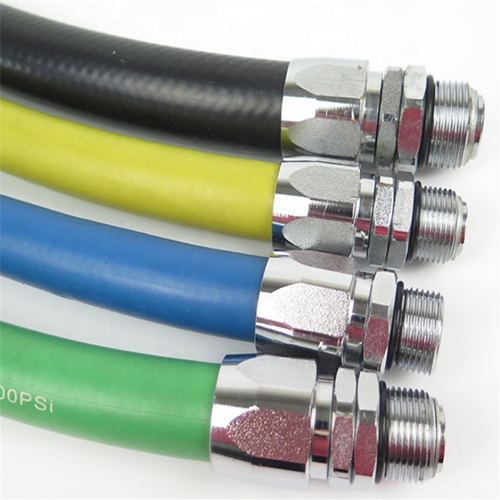
LPG hoses are typically constructed from multiple layers of synthetic rubber compounds, reinforced with textile or steel braiding. The innermost layer, or liner, is crucial for LPG impermeability and must be formulated from materials resistant to LPG’s chemical effects. Common liner materials include nitrile rubber (NBR), which exhibits good resistance to aliphatic hydrocarbons present in LPG, and chloroprene rubber (CR), offering improved ozone and weathering resistance. The reinforcement layer provides the hose’s strength and pressure-withstanding capability. High-tensile textile braiding (typically polyester or nylon) is employed for lower-pressure applications, while high-pressure hoses utilize spiraled steel wire reinforcement. The outer cover provides protection against abrasion, weathering, and UV degradation, commonly using a blend of EPDM (ethylene propylene diene monomer) rubber for its excellent resistance to environmental factors. Manufacturing processes involve extrusion of the inner liner and outer cover, followed by the application of the reinforcement layer. Extrusion parameters—temperature, screw speed, and die design—are critical for ensuring uniform thickness and consistent material properties. Braiding or spiraling of the reinforcement is precisely controlled to achieve the desired pressure rating. Quality control during manufacturing includes rigorous testing of material properties (tensile strength, elongation, hardness), dimensional accuracy, and leak testing using air or nitrogen. Chemical compatibility testing, confirming the liner material's resistance to LPG permeation, is also essential. A critical parameter is the curing process, which dictates the final crosslink density of the rubber compounds, significantly impacting their chemical resistance and mechanical properties. Improper curing can lead to premature degradation and failure.
Performance & Engineering
The performance of an LPG hose is governed by several key engineering principles. Burst pressure, the maximum pressure the hose can withstand before failure, is a critical safety parameter determined by the reinforcement layer’s strength and the liner’s integrity. Working pressure, typically a fraction of the burst pressure (e.g., 1/4), defines the safe operating pressure for sustained use. Tensile strength, measuring the hose’s resistance to stretching, is crucial for preventing elongation and potential failure under load. Elongation at break indicates the hose’s ductility and ability to absorb energy before fracture. Permeation rate, the rate at which LPG molecules diffuse through the hose wall, is a critical safety metric. Excessive permeation can lead to flammable vapor accumulation. Environmental resistance, including ozone resistance, UV resistance, and resistance to temperature extremes, dictates the hose’s longevity and performance in diverse operating conditions. Force analysis under pressure considers hoop stress (stress in the circumferential direction) and longitudinal stress (stress along the hose length). Proper reinforcement design minimizes these stresses, preventing rupture or deformation. Regulatory compliance mandates adherence to specific performance standards, such as flame resistance testing and leakage testing. Fatigue resistance, evaluating the hose’s ability to withstand repeated pressure cycles, is vital for long-term reliability. Flex fatigue testing simulates the hose’s bending and flexing during use, identifying potential failure points. The selection of materials and the design of the hose are optimized to minimize permeation, maximize strength, and ensure long-term durability in LPG applications.
Technical Specifications
| Parameter | Unit | Typical Value (China Manufactured LPG Hose) | Test Standard |
|---|---|---|---|
| Working Pressure | MPa | 1.6 | GB/T 9586 |
| Burst Pressure | MPa | 4.8 | GB/T 9586 |
| Tensile Strength (Reinforcement) | MPa | 800 | ISO 6892-1 |
| LPG Permeation Rate | cm³/m²/day | ≤ 10 | EN 1762-2 |
| Operating Temperature Range | °C | -20 to +60 | GB/T 9586 |
| Outer Diameter | mm | 16 | GB/T 9586 |
Failure Mode & Maintenance
LPG hoses are susceptible to several failure modes. Permeation-induced degradation leads to the gradual diffusion of LPG through the liner, causing swelling and reduced mechanical properties. This is exacerbated by prolonged exposure and high temperatures. Cracking, particularly in the rubber compounds, can occur due to ozone attack, UV exposure, or fatigue from repeated bending. Steel wire reinforcement can corrode in humid environments, weakening the hose’s structure. Delamination, the separation of layers, arises from poor bonding during manufacturing or degradation of the adhesive. Kinking or crushing can damage the reinforcement, creating weak points prone to failure. Failure analysis typically involves visual inspection for cracks or bulges, pressure testing to identify leaks, and microscopic examination of the materials to determine the root cause of failure. Preventative maintenance includes regular visual inspections for signs of damage, proper storage to avoid UV exposure and extreme temperatures, and adherence to recommended operating pressures. Avoiding sharp bends and crushing forces is crucial. If damage is detected, the hose should be replaced immediately. Periodic leak testing with a soapy water solution can identify small leaks before they become hazardous. The service life of an LPG hose is typically 5-7 years, but this can vary depending on operating conditions and usage frequency. Maintaining detailed records of hose installation and inspection dates facilitates effective maintenance and ensures timely replacement.
Industry FAQ
Q: What is the significance of the “WP” marking on an LPG hose, and how does it relate to safe operating practices?
A: “WP” indicates the Working Pressure of the hose, expressed in MPa or PSI. This is the maximum pressure at which the hose is designed to operate safely and continuously. Exceeding the WP significantly increases the risk of hose failure, potentially leading to leaks and hazardous situations. Safe operating practices dictate that the system pressure never exceed the WP under any circumstances, and regular pressure checks should be conducted to ensure compliance.
Q: How do different reinforcement materials (textile vs. steel wire) affect the hose’s performance and application suitability?
A: Textile reinforcement (polyester, nylon) is suitable for lower-pressure applications and offers good flexibility. It's more cost-effective but provides lower burst pressure and temperature resistance. Steel wire reinforcement is used for high-pressure applications and provides superior strength and durability. However, it's less flexible and more prone to corrosion if not properly protected. The choice depends on the specific pressure requirements, temperature range, and operating environment.
Q: What are the implications of using an LPG hose that doesn't meet relevant international standards like EN 1762-2?
A: Using a non-compliant hose poses significant safety risks. EN 1762-2 specifies stringent requirements for material properties, construction, and performance testing. A non-compliant hose may have inadequate burst pressure, excessive permeation rates, or poor resistance to environmental factors, increasing the likelihood of leaks, fire, or explosion. It also voids any potential insurance coverage and creates legal liabilities.
Q: How can buyers verify the quality and authenticity of LPG hoses sourced from Chinese suppliers?
A: Verification involves several steps. First, request copies of test reports from accredited laboratories confirming compliance with relevant standards. Second, conduct a factory audit to assess the supplier’s quality control processes. Third, inspect the hose markings for accurate information regarding WP, manufacturing date, and standard compliance. Finally, consider using a third-party inspection service to independently verify the quality before shipment.
Q: What is the role of the liner material in preventing LPG permeation, and how is its effectiveness evaluated?
A: The liner material is the primary barrier against LPG permeation. NBR and CR are commonly used due to their inherent resistance to LPG. Effectiveness is evaluated through permeation testing, measuring the rate at which LPG molecules diffuse through the liner over a specific period. Lower permeation rates indicate better barrier properties. The liner’s thickness and crosslink density also influence its permeability.
Conclusion
China-manufactured LPG hoses represent a significant portion of the global market, offering cost-effective solutions for LPG distribution and utilization. However, achieving optimal safety and performance requires a thorough understanding of the underlying material science, manufacturing processes, and relevant industry standards. The selection of appropriate materials—NBR or CR for the liner, reinforced with textile or steel—is critical for ensuring LPG containment and resistance to degradation. Rigorous quality control throughout the manufacturing process, combined with adherence to standards such as GB/T 9586 and EN 1762-2, is paramount for mitigating the risks associated with LPG handling.
Moving forward, increased focus on traceability of materials, independent testing, and robust quality assurance programs will be essential for enhancing the reliability and safety of LPG hoses sourced from Chinese suppliers. Proactive preventative maintenance, including regular inspections and timely replacement, remains vital for extending service life and preventing catastrophic failures. Continuous improvement in manufacturing techniques and material formulations will contribute to the development of more durable and reliable LPG hoses, further enhancing safety and efficiency in LPG applications.