
Apr . 01, 2024 17:55 Back to list
china lpg flexible gas hose supplier Performance Analysis

Introduction
LPG (Liquefied Petroleum Gas) flexible hoses are critical components in the safe and efficient transfer of LPG in various applications, including residential heating, cooking, industrial processes, and automotive fuel systems. China has emerged as a significant global supplier of these hoses, offering a wide range of products catering to diverse industrial standards and performance requirements. This technical guide provides a comprehensive overview of LPG flexible gas hoses, focusing on their material science, manufacturing processes, performance characteristics, potential failure modes, and relevant industry standards. A key industry pain point revolves around ensuring consistent material quality, reliable crimping processes, and strict adherence to international safety regulations to prevent leaks and ensure long-term operational integrity. The hose must maintain flexibility across a broad temperature range while resisting degradation from LPG exposure and environmental factors. This guide addresses these concerns, providing a resource for procurement managers, engineers, and quality control personnel.
Material Science & Manufacturing
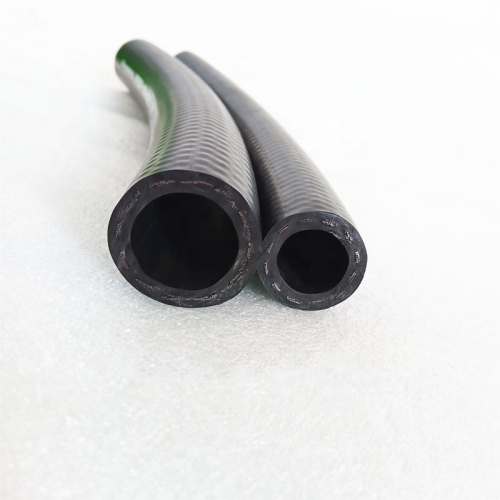
LPG flexible hoses are typically constructed from multiple layers, each contributing to specific performance characteristics. The inner tube, in direct contact with LPG, is commonly made from a specialized synthetic rubber compound, frequently a blend of NBR (Nitrile Butadiene Rubber) and HNBR (Hydrogenated Nitrile Butadiene Rubber) to provide resistance to LPG permeation, swelling, and degradation. NBR offers good general resistance, but HNBR provides superior heat and oil resistance, crucial for handling LPG under varying conditions. The reinforcement layer usually consists of high-tensile textile braiding – typically polyester or aramid fibers – providing the hose with the necessary pressure resistance and burst strength. The outer cover is often made from CR (Chloroprene Rubber, or Neoprene), offering excellent resistance to weathering, ozone, abrasion, and flame propagation.
Manufacturing involves several key processes. The inner tube is extruded using a continuous process, carefully controlling temperature, pressure, and material feed rates to ensure uniform thickness and consistent rubber compound distribution. The reinforcement braiding is applied using a specialized braiding machine, meticulously adjusting the braid angle and tension to achieve the specified strength and flexibility. The outer cover is then extruded over the braided layer. Critical parameter control includes accurate temperature monitoring during extrusion to prevent scorching or incomplete curing of the rubber compounds; precise braid tension to ensure uniform reinforcement; and stringent quality control checks throughout the process, including dimensional inspections, pressure testing, and leak detection. Crimping of end fittings is also a critical step, requiring calibrated crimping machines and rigorous inspection to ensure a secure, leak-proof connection. The consistency of the vulcanization process (curing) significantly affects the final properties of the rubber materials, and requires controlled time, temperature and pressure profiles.
Performance & Engineering
The performance of an LPG flexible hose is dictated by several key engineering considerations. Burst pressure, determined by the reinforcement layer’s tensile strength and the hose’s diameter, is paramount for safety. Working pressure, typically a fraction of the burst pressure (e.g., 1/4), defines the maximum safe operating pressure. Flexibility is critical for ease of installation and handling, influenced by the rubber compound’s elasticity and the braid structure. Permeation resistance, the ability to prevent LPG molecules from diffusing through the hose wall, is vital to minimize fuel loss and environmental impact. Temperature resistance must accommodate the operational temperature range, from cold storage to potential exposure to high ambient temperatures.
Force analysis during operation considers internal pressure causing hoop stress, and external bending forces inducing stress concentrations at the hose’s curves. Finite Element Analysis (FEA) is frequently employed to optimize hose design and predict stress distribution under various loading conditions. Environmental resistance includes resistance to UV radiation (causing rubber degradation), ozone cracking, and chemical attack from other substances in the operating environment. Compliance requirements vary significantly by region, mandating adherence to specific standards (detailed in the footer). Functional implementation necessitates proper fitting selection, ensuring compatibility with the hose material and pressure rating. Static electricity dissipation is also a concern, often addressed through the incorporation of conductive materials within the hose construction.
Technical Specifications
| Parameter | Unit | Typical Value (China Supplier - Grade A) | Typical Value (European Standard EN 1763) |
|---|---|---|---|
| Working Pressure | Bar | 20 | 20 |
| Burst Pressure | Bar | 60 | 60 |
| Inner Diameter | mm | 9.5 / 12.7 | 9.5 / 12.7 |
| Outer Diameter | mm | 19 / 25 | 19 / 25 |
| Tensile Strength (Reinforcement) | N/mm² | 1500 | 1600 |
| Permeation Rate (LPG) | g/m²/day | < 2 | < 1 |
Failure Mode & Maintenance
Common failure modes in LPG flexible hoses include: Fatigue Cracking – caused by repeated bending and flexing, particularly near fittings. This manifests as small cracks that propagate over time, leading to leaks. Delamination – separation of the layers (rubber and reinforcement) due to poor bonding or material incompatibility. Rubber Degradation – caused by exposure to UV radiation, ozone, or LPG itself, resulting in hardening, cracking, and loss of elasticity. Crimping Failure – loosening or failure of the crimped connection between the hose and fitting, resulting in leaks. Abrasion Damage – Wear and tear on the outer cover due to contact with abrasive surfaces. Permeation-Induced Swelling – Prolonged exposure to LPG can cause the inner tube to swell, potentially leading to deformation or rupture.
Preventative maintenance is crucial. Regular visual inspections should be conducted to identify cracks, bulges, or signs of degradation. Pressure testing can detect leaks before they become hazardous. Hoses should be stored in a cool, dry, and dark environment, away from direct sunlight and heat sources. Avoid sharp bends or kinks during installation and use. Replace hoses at recommended intervals (typically every 5 years, or sooner if damage is detected) or as dictated by local regulations. Any hose exhibiting signs of damage must be immediately removed from service and replaced. Correct installation practices, using compatible fittings and ensuring proper crimping, are also essential for maximizing hose lifespan and safety.
Industry FAQ
Q: What is the significance of HNBR versus NBR in the inner tube material?
A: HNBR offers superior heat and oil resistance compared to NBR. LPG systems, especially in automotive applications, can experience elevated temperatures. HNBR maintains its flexibility and integrity at higher temperatures, preventing premature degradation and ensuring a longer service life. While NBR is more cost-effective, HNBR is preferred for demanding applications.
Q: How do I verify the crimping quality of the end fittings?
A: Visual inspection should confirm a complete and uniform crimp without any gaps or distortions. A calibrated pull test can be performed to measure the force required to separate the fitting from the hose, verifying the crimp’s strength. Leak testing with a pressure gauge is critical to ensure a leak-proof seal.
Q: What impact does the braid material (polyester vs. aramid) have on hose performance?
A: Aramid fibers offer higher tensile strength and heat resistance than polyester, resulting in a hose with greater burst pressure and improved performance at elevated temperatures. However, aramid is generally more expensive. Polyester is a good compromise for many applications, offering sufficient strength at a lower cost.
Q: What are the key considerations when selecting a hose for outdoor use?
A: UV resistance is paramount. The outer cover material (CR or Neoprene) should be formulated with UV stabilizers to prevent degradation from sunlight exposure. Ozone resistance is also important, as ozone can cause cracking in rubber compounds. Consider a hose with a reinforced outer cover for added abrasion resistance.
Q: How does LPG composition affect hose material selection?
A: LPG composition can vary depending on the source and refining process. Different LPG blends may contain varying amounts of propane, butane, and other hydrocarbons. Ensure the hose material (inner tube) is compatible with the specific LPG blend being used to prevent swelling, degradation, or permeation issues. Consult with the hose manufacturer for guidance.
Conclusion
China LPG flexible gas hoses represent a crucial link in the safe and reliable distribution of LPG. Their performance relies heavily on the careful selection of materials – from the LPG-resistant inner tube compounds (NBR/HNBR) to the strength-providing reinforcement braiding and protective outer cover (CR). Understanding the manufacturing processes, particularly the control of extrusion parameters and crimping quality, is vital for ensuring consistent product performance.
Moving forward, the industry will likely see a continued emphasis on enhanced permeation resistance, improved UV stabilization, and the adoption of more sustainable materials. Strict adherence to international standards and rigorous quality control procedures remain essential for maintaining safety and preventing failures. The selection of a reputable supplier, such as a qualified china lpg flexible gas hose supplier, is paramount for ensuring a consistent supply of high-quality, reliable hoses.