
Apr . 01, 2024 17:55 Back to list
china lpg flexible gas hose manufacturers Performance Analysis

Introduction
LPG (Liquefied Petroleum Gas) flexible hoses manufactured in China are critical components in the safe and efficient transfer of LPG for various applications, including residential heating, cooking, industrial processes, and automotive fuel systems. These hoses differ significantly from general-purpose rubber hoses due to the specific demands imposed by LPG’s properties and associated safety regulations. Their technical position lies within the broader fluid transfer industry, specifically targeting high-pressure, potentially hazardous media. Core performance characteristics center around pressure resistance, leak-proof integrity, resistance to LPG permeation, and flexibility for ease of installation and maneuverability. The industry faces significant challenges including ensuring consistent quality control across a diverse manufacturing landscape, adhering to stringent international safety standards, and mitigating the risk of material degradation due to LPG's chemical properties. This guide provides an in-depth technical overview of these hoses, covering material science, manufacturing processes, performance characteristics, failure modes, and relevant industry standards.
Material Science & Manufacturing
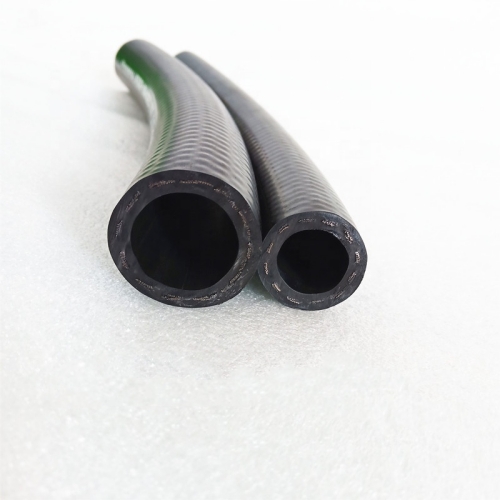
The core material for LPG flexible hoses is typically a synthetic rubber compound, most commonly a blend of Nitrile Rubber (NBR) and Polyvinyl Chloride (PVC). NBR provides excellent resistance to oils, fuels, and LPG itself, ensuring long-term compatibility and preventing degradation. PVC adds rigidity and enhances the hose's resistance to external abrasion and environmental factors. Reinforcement layers are crucial. These are commonly constructed from high-tensile strength textile braids, often polyester or nylon, embedded within the rubber matrix. The number of plies (layers) in the braid directly impacts the hose’s burst pressure and working pressure capabilities. Manufacturing begins with the compounding of the rubber mixture, meticulously controlling the ratios of NBR, PVC, plasticizers, curing agents, and reinforcing fillers like carbon black. This is followed by extrusion, where the rubber compound is forced through a die to create the inner and outer hose layers. The reinforcement braid is applied during or immediately after extrusion, often using automated braiding machines to ensure consistent coverage and tension. Subsequent curing (vulcanization) is a critical step, using heat and pressure to cross-link the rubber polymers, imparting elasticity, strength, and resistance to temperature extremes. Parameter control during curing – temperature, pressure, and time – is paramount to achieve optimal material properties. Finally, the hose undergoes rigorous testing, including pressure testing, leak testing, and dimensional inspection, to verify compliance with safety standards. The quality of the raw materials and the precision of the manufacturing process are key determinants of the hose’s overall performance and lifespan.
Performance & Engineering
The performance of an LPG flexible hose is dictated by its ability to withstand internal pressure, resist external forces, and maintain leak-proof integrity under dynamic conditions. Force analysis reveals that hoses are subjected to hoop stress due to internal pressure, longitudinal stress during bending and flexing, and shear stress at the connections. Reinforcement braiding is engineered to counteract hoop stress, preventing burst failure. The hose’s flexibility is governed by its bend radius, which is the minimum radius to which the hose can be bent without kinking or damaging the reinforcement. Environmental resistance is crucial, as LPG hoses are often exposed to temperature variations, UV radiation, and corrosive atmospheres. NBR offers good resistance to LPG at temperatures ranging from -40°C to +100°C, but prolonged exposure to high temperatures can accelerate degradation. Compliance requirements are stringent. Hoses must conform to standards like EN 1763 (European Standard for LPG hoses), GB/T 28258 (Chinese National Standard), and relevant local regulations. These standards specify requirements for pressure ratings, burst pressure, leakage rates, aging resistance, and flame retardancy. Functional implementation necessitates careful consideration of hose end fittings. Common fittings include flared connections, compression fittings, and quick-disconnect couplings. The compatibility of the hose material with the fitting material (typically brass or stainless steel) is vital to prevent galvanic corrosion. The hose's ability to maintain its flexibility and integrity over its service life is a critical engineering consideration.
Technical Specifications
| Parameter | Unit | Typical Value (China Manufactured LPG Hose) | Test Standard |
|---|---|---|---|
| Working Pressure | bar | 16 | EN 1763 |
| Burst Pressure | bar | 48 | EN 1763 |
| Inner Diameter | mm | 8-19 (various sizes available) | GB/T 28258 |
| Outer Diameter | mm | 12-25 (depending on inner diameter) | GB/T 28258 |
| Minimum Bend Radius | mm | 5D (where D is the inner diameter) | Manufacturer Specification |
| Tensile Strength (Reinforcement) | MPa | 1500 | ASTM D1633 |
| Elongation at Break (Rubber Compound) | % | 300 | ASTM D412 |
Failure Mode & Maintenance
LPG flexible hoses are susceptible to several failure modes. Fatigue cracking, arising from repeated bending and flexing, is a common issue, particularly at the hose ends. This is exacerbated by improper installation or exceeding the minimum bend radius. Delamination, the separation of the rubber layers from the reinforcement braid, can occur due to poor adhesion during manufacturing or prolonged exposure to extreme temperatures. Degradation of the rubber compound due to exposure to UV radiation, ozone, or chemical attack from LPG contaminants is another potential failure mechanism. Oxidation of the rubber can lead to embrittlement and cracking. Permeation of LPG through the hose wall, although generally slow, can occur over time, leading to a gradual reduction in pressure and potential leakage. Failure of the end fittings, such as corrosion or loosening of the connection, can also result in leaks. Preventative maintenance includes regular visual inspections for cracks, blisters, or signs of degradation. Hoses should be replaced if any damage is detected. Proper storage, away from direct sunlight and extreme temperatures, is essential. Avoid exposing the hose to mechanical stress or sharp objects. Regularly check the tightness of the end fittings. It’s also crucial to use the correct end fittings compatible with both the hose and the LPG appliance. Following the manufacturer’s recommendations for service life and replacement intervals is vital for ensuring safety.
Industry FAQ
Q: What is the significance of the “EN 1763” standard for LPG hoses?
A: EN 1763 is the primary European standard governing the design, manufacture, and testing of flexible hoses intended for use with LPG. It establishes stringent requirements for pressure resistance, leakage, aging resistance, and flame retardancy. Compliance with EN 1763 demonstrates that the hose has undergone rigorous testing and meets minimum safety standards for use with LPG in European markets. Failure to comply can result in legal repercussions and safety hazards.
Q: How does the reinforcement braiding impact the hose's performance?
A: The reinforcement braiding, typically made of polyester or nylon, is the critical element resisting the internal pressure of the LPG. The number of plies (layers) and the tensile strength of the braid directly determine the hose’s burst pressure and working pressure capabilities. Higher ply counts and stronger braid materials provide greater resistance to hoop stress, preventing the hose from rupturing under pressure. It also provides dimensional stability and resistance to kinking.
Q: What are the common causes of LPG permeation through the hose wall?
A: LPG permeation is influenced by several factors, including the rubber compound composition, the hose wall thickness, the LPG pressure, and the temperature. While NBR provides good resistance, prolonged exposure to high temperatures and pressures can accelerate permeation. Certain LPG contaminants can also increase permeability. Thicker hose walls and optimized rubber formulations minimize permeation rates.
Q: What type of fittings are most commonly used with LPG hoses, and what considerations are important?
A: Flared connections and compression fittings are the most common types used with LPG hoses. Brass and stainless steel are the preferred fitting materials due to their compatibility with LPG. It is vital to ensure that the fittings are correctly sized and tightened to prevent leaks. Galvanic corrosion can occur if dissimilar metals are used, so compatibility between the hose and fitting materials is essential.
Q: What is the recommended service life of an LPG hose, and what factors can shorten it?
A: The recommended service life varies depending on the application and manufacturer’s specifications, but generally ranges from 5 to 10 years. Factors that can shorten the service life include prolonged exposure to UV radiation, extreme temperatures, mechanical stress, and chemical contamination. Regular inspections and adherence to the manufacturer’s recommendations are crucial for ensuring safe operation.
Conclusion
China-manufactured LPG flexible hoses represent a vital component in the safe and reliable delivery of LPG across a diverse range of applications. Their performance is intrinsically linked to the careful selection of materials – primarily NBR and PVC – and the precise control of manufacturing processes, including extrusion, braiding, and vulcanization. Adherence to stringent international standards, such as EN 1763 and GB/T 28258, is paramount to ensuring product safety and compliance.
Future developments in LPG hose technology will likely focus on enhancing material durability, reducing permeation rates, and improving resistance to harsh environmental conditions. Advancements in rubber compounding and braiding techniques will play a key role in achieving these goals. Continued emphasis on quality control and rigorous testing will be essential for maintaining the integrity and reliability of these critical safety components.