
Apr . 01, 2024 17:55 Back to list
china lpg flexible gas hose manufacturer Performance Analysis
Introduction
Liquefied Petroleum Gas (LPG) flexible hoses, manufactured in China, represent a critical component in the safe and efficient transfer of LPG within residential, commercial, and industrial applications. These hoses are not merely conduits; they are engineered systems designed to withstand the specific pressures, temperatures, and chemical compatibility requirements of LPG, adhering to stringent international safety standards. Positioned within the LPG distribution chain between the storage vessel (tank or cylinder) and the gas-consuming appliance, their performance directly impacts system reliability and user safety. Core performance characteristics include resistance to permeation, mechanical strength under pressure, resistance to kinking and abrasion, and compatibility with LPG’s specific chemical composition. The Chinese manufacturing sector has become a dominant force in LPG hose production due to its capacity for high-volume output, competitive pricing, and increasingly sophisticated quality control procedures. However, understanding the nuances of material selection, manufacturing processes, and adherence to global standards is paramount for procurement professionals.
Material Science & Manufacturing
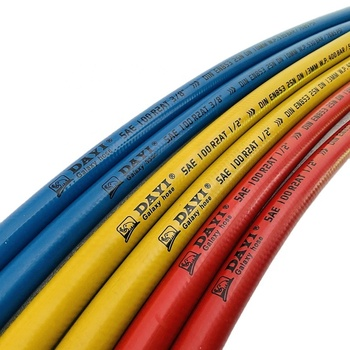
The foundation of a high-quality LPG hose lies in its material composition. The inner tube, typically in direct contact with LPG, is commonly constructed from a specialized synthetic rubber compound – typically a blend of Nitrile Butadiene Rubber (NBR), often incorporating additives to enhance LPG resistance and minimize permeation. NBR offers excellent resistance to aliphatic hydrocarbons, which constitute the majority of LPG. The reinforcement layer is critical for withstanding internal pressure and preventing hose collapse. This layer is typically comprised of high-tensile strength textile braiding, often using polyester or aramid fibers, selected based on required pressure ratings. An external cover, often using Chloroprene Rubber (CR) – commonly known as Neoprene – provides protection against abrasion, weathering (UV exposure, ozone cracking), and environmental degradation. Manufacturing begins with rubber compound mixing, meticulously controlled to ensure homogeneity and consistent physical properties. The inner tube is then extruded, followed by the application of the reinforcement braiding process, typically using a specialized braiding machine. The cover is subsequently extruded over the braided layer. Key parameters during extrusion include die temperature, screw speed, and material throughput, all of which influence the wall thickness and uniformity of the hose. Post-extrusion, hoses undergo rigorous testing including pressure testing, leak testing, and dimensional inspection. Crimping of end fittings is a crucial step, requiring precise control of pressure and die geometry to ensure a secure, leak-proof connection.
Performance & Engineering
The performance of an LPG hose is governed by a complex interplay of internal pressure, temperature variations, and mechanical stresses. Force analysis dictates that the reinforcement layer must be capable of withstanding the maximum allowable working pressure (MAWP) with a substantial safety factor, typically 4:1. Burst pressure testing is a standard method for verifying this capability. Environmental resistance is equally critical. Prolonged exposure to UV radiation can cause polymer degradation, leading to embrittlement and cracking. Similarly, ozone exposure can attack unsaturated bonds in the rubber compounds. Therefore, the external cover must incorporate UV stabilizers and ozone protectants. Chemical compatibility is also paramount; the hose materials must be inert to LPG, preventing swelling, dissolution, or other forms of degradation. Permeation, the diffusion of LPG through the hose wall, is a critical safety concern. Excessive permeation can create a flammable atmosphere. Hose construction and material selection directly influence permeation rates. Compliance requirements are multifaceted. International standards (detailed in the footer) specify minimum performance criteria related to pressure resistance, permeation, aging, and fire resistance. Furthermore, regional regulations (e.g., EN standards in Europe, GB standards in China) may impose additional requirements related to hose length, end fitting specifications, and marking requirements. Functional implementation considerations include minimizing pressure drop across the hose length, maintaining flexibility for easy installation, and preventing electrostatic buildup.
Technical Specifications
| Parameter | Unit | Typical Value (Standard Grade) | Typical Value (Premium Grade) |
|---|---|---|---|
| Working Pressure | Bar | 15 | 30 |
| Burst Pressure | Bar | 60 | 120 |
| Inner Diameter | mm | 6.35 | 9.52 |
| Outer Diameter | mm | 12.7 | 19.05 |
| LPG Permeation Rate | g/m²/day | < 0.5 | < 0.2 |
| Tensile Strength (Reinforcement) | MPa | 1500 | 2000 |
| Temperature Range | °C | -20 to +60 | -40 to +80 |
Failure Mode & Maintenance
LPG hoses are susceptible to several failure modes. Fatigue cracking, particularly at the hose ends near the fittings, can occur due to repeated flexing and pressure cycling. This is often initiated by stress concentrations around the crimped fittings. Delamination of the hose layers (separation between the tube, reinforcement, and cover) can result from poor bonding during manufacturing or prolonged exposure to harsh environments. Degradation of the rubber compounds due to UV exposure, ozone cracking, or chemical attack can lead to embrittlement and eventual failure. Oxidation of the rubber, accelerated by high temperatures, can also compromise its integrity. Kinking and crushing can damage the reinforcement layer, reducing its ability to withstand pressure. Maintenance recommendations include regular visual inspections for signs of cracking, abrasion, or swelling. Hoses should be replaced if any damage is detected. Avoid sharp bends or kinks during installation and operation. Ensure that the hose is adequately supported to prevent strain on the fittings. Store hoses in a cool, dry place away from direct sunlight and ozone sources. Periodically check the tightness of the end fittings. Replace hoses at the manufacturer’s recommended service interval, even if no visible damage is apparent, as aging can degrade the material properties over time. Leak testing with a soap solution is recommended after installation and periodically during use.
Industry FAQ
Q: What is the significance of the permeation rate specification?
A: The permeation rate is a critical safety parameter. A high permeation rate allows LPG to diffuse through the hose wall, potentially creating a flammable atmosphere around the connection points. Lower permeation rates are essential to minimize this risk and comply with safety regulations. The specification dictates the maximum allowable LPG loss through the hose material over a defined period.
Q: How does the reinforcement material impact hose performance?
A: The reinforcement material (typically polyester or aramid) provides the primary resistance to internal pressure. Higher tensile strength reinforcement allows for higher working and burst pressures. The braiding angle also influences performance; a tighter braid offers greater pressure resistance but may reduce flexibility. Material selection also affects the hose's resistance to stretching and elongation under pressure.
Q: What are the key differences between NBR and CR rubber compounds used in LPG hoses?
A: NBR (Nitrile Butadiene Rubber) offers excellent resistance to LPG itself, making it ideal for the inner tube. CR (Chloroprene Rubber, Neoprene) provides superior resistance to weathering, ozone, and abrasion, making it suitable for the outer cover. NBR has limitations in UV resistance, hence the need for a protective CR cover.
Q: What is the role of end fitting crimping in ensuring hose integrity?
A: Proper crimping is paramount. Insufficient crimping can lead to leaks, while over-crimping can damage the hose and weaken the connection. The crimping process creates a permanent, leak-proof seal between the hose and the fitting. The crimp geometry and pressure must be precisely controlled based on the hose and fitting specifications.
Q: What standards are most relevant for verifying the quality of an LPG hose?
A: Relevant standards include EN ISO 3821 (European standard for LPG hoses), GB/T 28168 (Chinese national standard), and ASTM D2131 (Standard Specification for Rubber Hose). These standards define test methods and performance criteria for pressure resistance, permeation, aging, and other critical parameters. Adherence to these standards ensures a minimum level of quality and safety.
Conclusion
The selection and implementation of LPG flexible hoses manufactured in China demand a thorough understanding of material science, manufacturing processes, and adherence to international safety standards. These hoses are not commodity items; they are engineered components critical for safe and reliable LPG distribution. Prioritizing hoses that meet or exceed relevant standards (EN ISO 3821, GB/T 28168, ASTM D2131) is paramount, coupled with rigorous quality control procedures throughout the supply chain.
Looking forward, advancements in rubber compound technology and reinforcement materials will continue to drive improvements in hose performance, particularly in reducing permeation rates and extending service life. Further emphasis on traceability and quality assurance throughout the manufacturing process will be crucial to maintaining confidence in Chinese-manufactured LPG hoses. Proactive maintenance and regular inspection programs remain essential for ensuring long-term safety and preventing failures in the field.