
Apr . 01, 2024 17:55 Back to list
china lpg flexible gas hose factory Performance Analysis
Introduction
LPG (Liquefied Petroleum Gas) flexible hoses manufactured in China represent a critical component within the LPG distribution and utilization infrastructure. These hoses serve as the vital link between stationary LPG storage – tanks, cylinders – and end-use applications such as heating appliances, cooking equipment, and industrial processes. Unlike rigid piping, flexible hoses offer installation adaptability, resistance to vibration-induced stress, and a degree of safety through enhanced leak detection. The Chinese manufacturing base has become a dominant force in global LPG hose production, driven by cost-competitiveness, established material supply chains (primarily rubber and reinforcing textiles), and increasingly sophisticated manufacturing capabilities. This guide provides an in-depth examination of these hoses, focusing on material science, manufacturing processes, performance characteristics, failure modes, and relevant industry standards. A key pain point for procurers is ensuring consistent quality and regulatory compliance amidst a large and diverse supplier landscape. Performance is heavily dictated by the hose’s ability to maintain pressure integrity, resist degradation from LPG exposure, and withstand varying environmental conditions. Ensuring a consistent bore diameter and adequate burst pressure are paramount concerns.
Material Science & Manufacturing
The construction of a typical LPG flexible gas hose involves several key materials. The inner tube is commonly composed of a specialized rubber compound designed for LPG resistance. This is typically a blend of nitrile rubber (NBR) or ethylene propylene diene monomer (EPDM) rubber, selected for their compatibility with LPG’s hydrocarbon composition and their ability to maintain flexibility at low temperatures. The reinforcement layer is crucial for withstanding internal pressure and preventing hose collapse. This layer usually consists of high-tensile strength textile braiding – typically polyester or nylon – which provides circumferential strength. Multiple layers of braiding may be used to achieve different pressure ratings. An outer cover, again typically a rubber compound (often SBR or a similar material), provides abrasion resistance, UV protection, and resistance to environmental degradation.
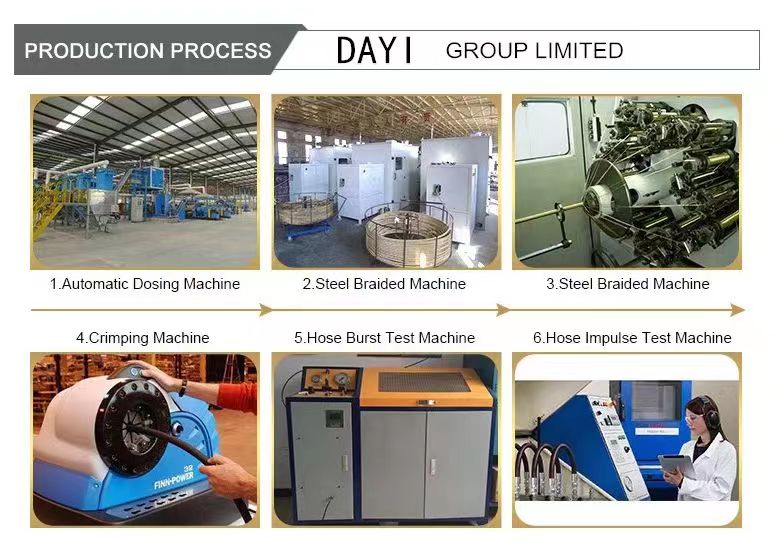
Manufacturing processes typically involve extrusion of the inner tube and outer cover, followed by the application of the reinforcement braiding. Extrusion parameters, such as die temperature, screw speed, and material feed rate, are carefully controlled to ensure consistent wall thickness and material homogeneity. The braiding process utilizes specialized braiding machines that interweave the textile yarns around a mandrel. Post-braiding, the hose undergoes curing (vulcanization) to crosslink the rubber compounds, enhancing their strength, elasticity, and resistance to chemical attack. Quality control is essential throughout the process, involving dimensional checks, pressure testing (hydrostatic and pneumatic), and material composition analysis. A critical parameter is the uniformity of the braiding tension, as uneven tension can lead to localized stress concentrations and premature failure. Furthermore, proper adhesion between the rubber layers and the textile reinforcement is vital, often achieved through the use of adhesion promoters during the compounding process. The end terminations (fittings) are crimped onto the hose using specialized machinery, ensuring a secure and leak-proof connection.
Performance & Engineering
The performance of an LPG hose is dictated by a number of engineering considerations. Burst pressure, defined as the pressure at which the hose fails catastrophically, is a primary performance metric. This is determined through rigorous hydrostatic testing, typically exceeding the working pressure by a substantial safety factor (e.g., 3:1 or 4:1). Tensile strength, referring to the force required to elongate and break the hose material, is another crucial parameter, impacting its resistance to mechanical stress. Elongation at break, measuring the extent to which the hose can stretch before fracturing, indicates its flexibility and ability to absorb shock. Permeation resistance, the rate at which LPG molecules diffuse through the hose wall, is critical for minimizing gas leakage and ensuring safety. This is influenced by the rubber compound composition and wall thickness.
Environmental resistance is also paramount. LPG hoses are often exposed to a range of temperatures, UV radiation, and chemical contaminants. Therefore, the rubber compounds must be formulated to resist degradation under these conditions. Furthermore, the hose must be able to withstand repeated flexing and bending without cracking or delaminating. Fatigue life, representing the number of cycles to failure under cyclic loading, is an important consideration. Force analysis involves assessing the internal pressure forces acting on the hose wall, as well as external forces from bending, kinking, and mechanical impact. These forces must be considered during material selection and hose design to ensure structural integrity. Compliance with national and international standards (detailed in the footer) is mandatory, often involving independent testing and certification by accredited laboratories. Specifically, standards address pressure rating, leak tightness, material composition, and marking requirements. The hose’s ability to maintain its flexibility over its service life is also an engineering concern, as stiffening can lead to increased stress concentrations and premature failure.
Technical Specifications
| Parameter | Unit | Typical Value (Low Pressure Hose) | Typical Value (High Pressure Hose) |
|---|---|---|---|
| Working Pressure | Bar | 15 | 30 |
| Burst Pressure | Bar | 45 | 90 |
| Inner Diameter | mm | 6.3 | 9.5 |
| Outer Diameter | mm | 12.7 | 19.1 |
| Minimum Bend Radius | mm | 40 | 60 |
| Temperature Range | °C | -20 to +60 | -30 to +80 |
Failure Mode & Maintenance
LPG flexible hoses are susceptible to several failure modes. Fatigue cracking, arising from repeated flexing and bending, is a common issue, particularly near the fittings. This is exacerbated by improper installation or excessive bending. Delamination, the separation of the rubber layers from the textile reinforcement, can occur due to poor adhesion or prolonged exposure to harsh chemicals. Degradation of the rubber compound, caused by UV radiation, ozone exposure, or chemical attack, leads to loss of elasticity and cracking. Oxidation, the reaction of the rubber with oxygen, causes hardening and embrittlement. Kinking or crushing can damage the hose structure, creating localized stress concentrations. Leaks, often originating at the fittings, represent a significant safety hazard.
Preventative maintenance is crucial. Regular visual inspections should be conducted to identify signs of cracking, swelling, or delamination. Hoses should be protected from direct sunlight, extreme temperatures, and contact with abrasive surfaces. Avoid sharp bends or kinks. Fittings should be checked for tightness and corrosion. The hose should be replaced if any damage is detected. Proper storage is also important; hoses should be stored in a cool, dry, and well-ventilated area, away from direct sunlight and heat sources. Avoid storing hoses in contact with incompatible materials. When replacing a hose, ensure the new hose is compatible with the LPG system and meets all relevant regulatory requirements. Furthermore, proper crimping of the fittings is essential for a leak-proof connection, requiring calibrated crimping tools and trained personnel. A record of hose replacement dates and inspection findings should be maintained for traceability and safety management.
Industry FAQ
Q: What is the significance of the “WP” (Working Pressure) rating on an LPG hose, and how does it relate to safety?
A: The Working Pressure (WP) rating represents the maximum sustained pressure the hose can safely handle under normal operating conditions. Exceeding the WP significantly increases the risk of burst failure, leading to potential gas leaks and fire hazards. It’s critical to select a hose with a WP rating appropriate for the specific application and to ensure that the entire LPG system – including regulators, valves, and connections – is rated to the same or a lower pressure. A robust safety margin is always recommended.
Q: How does the choice of rubber compound (NBR vs. EPDM) affect the hose’s performance and lifespan when exposed to LPG?
A: Both NBR and EPDM offer good resistance to LPG, but their properties differ. NBR generally exhibits superior resistance to oil-based LPG compositions and abrasion, making it suitable for applications with potential oil contamination. EPDM, however, offers better resistance to ozone cracking and weathering, making it a preferable choice for outdoor applications or environments with high ozone levels. The selection depends on the specific operating environment and the composition of the LPG being used.
Q: What are the key considerations when selecting a hose reinforcement material (polyester vs. nylon)?
A: Polyester reinforcement typically offers better resistance to stretching and creep under sustained pressure, making it suitable for high-pressure applications. Nylon, on the other hand, generally provides higher tensile strength and impact resistance. The choice depends on the required pressure rating, the expected mechanical stresses, and the desired level of safety. Multi-layered braiding combining both materials can also be employed to achieve optimal performance.
Q: What are the common causes of hose failure at the fitting crimp, and how can this be mitigated?
A: Failure at the fitting crimp is often caused by improper crimping, insufficient crimp depth, corrosion of the fitting material, or fatigue cracking due to vibration. Mitigation strategies include using calibrated crimping tools, selecting corrosion-resistant fitting materials (e.g., stainless steel), ensuring proper surface preparation before crimping, and performing regular inspections of the crimp for signs of loosening or corrosion.
Q: What role do international standards play in ensuring the quality and safety of LPG hoses?
A: International standards (listed in the footer) provide a framework for defining minimum performance requirements, testing procedures, and quality control measures. Compliance with these standards ensures that the hose meets acceptable safety criteria and performs as intended. Independent certification by accredited laboratories provides further assurance of quality and compliance. Purchasing hoses that are certified to recognized standards is crucial for mitigating risk and ensuring regulatory compliance.
Conclusion
China-manufactured LPG flexible gas hoses are an integral component of modern LPG systems, offering a crucial balance between flexibility, durability, and cost-effectiveness. Understanding the underlying material science, manufacturing processes, and performance characteristics is paramount for ensuring safe and reliable operation. The selection of appropriate materials, coupled with rigorous quality control and adherence to international standards, are vital for mitigating potential failure modes and maximizing the hose’s service life.
Looking ahead, advancements in rubber compounding technology and reinforcement materials will likely lead to hoses with improved permeation resistance, higher pressure ratings, and enhanced durability. Furthermore, the increasing emphasis on safety and sustainability will drive demand for hoses that meet stringent environmental regulations and minimize gas leakage. Continued investment in research and development, coupled with a commitment to quality and compliance, will be essential for maintaining the competitiveness of the Chinese LPG hose industry in the global market.