
Apr . 01, 2024 17:55 Back to list
china lpg flexible gas hose factories Performance Analysis
Introduction
LPG (Liquefied Petroleum Gas) flexible hoses manufactured in China are critical components within the LPG distribution and utilization infrastructure. These hoses serve as a flexible conduit for the safe transfer of LPG between storage tanks, transport vehicles, regulators, and gas appliances. The industry has experienced significant growth driven by increased LPG demand in residential, commercial, and industrial sectors, particularly in emerging economies. These hoses are subject to stringent safety regulations and performance standards due to the flammable nature of LPG. Core performance characteristics include pressure resistance, thermal stability, chemical compatibility with LPG, and resistance to permeation. A key pain point within the industry revolves around ensuring consistent quality control across diverse manufacturing facilities, verifying material traceability, and maintaining compliance with evolving international standards. This guide provides a comprehensive technical overview of LPG flexible gas hoses produced in China, covering material science, manufacturing processes, performance parameters, failure modes, and relevant industry regulations.
Material Science & Manufacturing
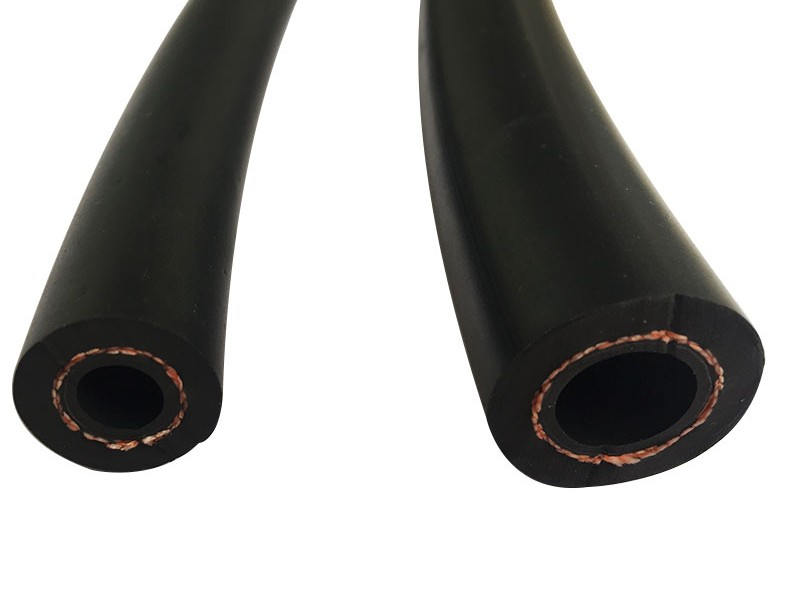
LPG flexible gas hoses are typically constructed from multiple layers, each designed to contribute specific performance attributes. The inner layer, in direct contact with LPG, is commonly made of a specialized synthetic rubber compound, often a blend of nitrile rubber (NBR) or chloroprene rubber (CR), selected for their excellent resistance to LPG permeation and degradation. NBR offers good resistance to aliphatic hydrocarbons, while CR provides superior resistance to weathering and ozone. The reinforcement layer, responsible for providing pressure resistance, typically consists of a high-tensile strength textile braid, traditionally made from polyester or nylon. Aramid fiber reinforcement is employed in higher-pressure applications. The outer cover is typically constructed from a durable synthetic rubber compound like ethylene propylene diene monomer (EPDM) or chlorosulfonated polyethylene (CSM), providing protection against abrasion, UV radiation, and environmental factors. Manufacturing processes involve several critical steps. Rubber compounds are mixed and extruded into the inner tube and outer cover. Textile braids are simultaneously applied during the extrusion process to create the reinforced structure. Critical parameters during extrusion include temperature control, screw speed, and die design to ensure consistent wall thickness and material properties. Following extrusion, hoses undergo rigorous testing, including pressure testing, leak testing, and dimensional verification. Vulcanization, a curing process involving heat and pressure, is essential for crosslinking the rubber polymers, enhancing their elasticity, strength, and resistance to chemicals. Post-vulcanization inspection focuses on detecting defects such as pinholes, cracks, and dimensional inconsistencies. Precise control of vulcanization time and temperature is critical to achieving optimal physical properties. Finally, hoses are cut to length, fitted with appropriate end connections (typically flared fittings or quick-connect couplings), and subjected to final quality control checks.
Performance & Engineering
The performance of LPG flexible gas hoses is dictated by a complex interplay of mechanical and chemical factors. Burst pressure, working pressure, and minimum bend radius are critical mechanical parameters. Burst pressure represents the maximum pressure the hose can withstand before failure, while working pressure defines the safe operating pressure. Minimum bend radius is crucial to avoid kinking and stress concentration, which can compromise the hose's integrity. Finite Element Analysis (FEA) is increasingly used in the design phase to optimize hose geometry and reinforcement layer configuration to maximize pressure resistance and minimize stress. Chemical compatibility is paramount; the hose materials must resist degradation and swelling when exposed to LPG. Permeation, the rate at which LPG molecules diffuse through the hose wall, is a critical safety concern. Low permeation rates are essential to prevent LPG leakage and maintain system efficiency. Thermal stability is also important, as hoses may be exposed to varying temperatures during operation and storage. The hose materials must maintain their mechanical properties within the specified temperature range. Compliance with industry standards, such as EN 1763 (European Standard) and GB/T 28148 (Chinese National Standard), is mandatory. These standards specify requirements for material properties, pressure testing, leak testing, and marking. The hose's performance is also affected by the type of end connections used. Properly installed and tightened end connections are crucial to prevent leaks. Force analysis during installation and operation helps determine the required clamping force and ensures a secure connection.
Technical Specifications
| Parameter | Unit | Typical Value (Low Pressure Hose) | Typical Value (High Pressure Hose) |
|---|---|---|---|
| Working Pressure | bar | 10 | 20 |
| Burst Pressure | bar | 30 | 60 |
| Minimum Bend Radius | mm | 150 | 250 |
| Tensile Strength (Reinforcement) | MPa | 1500 | 2500 |
| Permeation Rate (LPG) | cm³/m²/day | <5 | <2 |
| Temperature Range | °C | -20 to +60 | -20 to +80 |
Failure Mode & Maintenance
LPG flexible gas hoses are susceptible to various failure modes in practical applications. Fatigue cracking, induced by repeated bending and pressure cycling, is a common failure mechanism, particularly near end connections. Delamination, the separation of layers, can occur due to poor adhesion between the rubber and reinforcement materials. Degradation of the rubber compound, caused by exposure to ozone, UV radiation, or chemical attack, can lead to loss of elasticity and cracking. Oxidation, particularly at high temperatures, can embrittle the rubber and reduce its strength. Permeation-induced swelling can also contribute to hose failure. Improper installation, such as over-bending or excessive tightening of end connections, can accelerate failure. Maintenance involves regular visual inspections to detect signs of damage, such as cracks, blisters, or discoloration. The hose should be replaced immediately if any damage is observed. Proper storage is also crucial; hoses should be stored in a cool, dry, and dark environment, away from direct sunlight and sources of ozone. Avoid contact with incompatible chemicals. Periodic leak testing with a soap solution can help identify minor leaks before they become major problems. A well-documented maintenance schedule is essential for ensuring the long-term reliability and safety of LPG gas hose systems. Replacement intervals should be based on the hose's operating conditions and the manufacturer's recommendations.
Industry FAQ
Q: What is the significance of the reinforcement layer material in an LPG hose?
A: The reinforcement layer, typically polyester or aramid fiber, provides the primary pressure resistance of the hose. Aramid fiber offers significantly higher tensile strength than polyester, making it suitable for high-pressure applications. The choice of material impacts the hose's ability to withstand internal pressure without bursting or deforming, directly affecting safety and operational reliability.
Q: How does permeation affect the long-term performance of LPG hoses?
A: Permeation, the diffusion of LPG through the hose wall, leads to LPG loss, reducing system efficiency. More importantly, it presents a potential fire hazard. Lower permeation rates are critical for safety and are a key performance indicator when selecting LPG hoses. Specialized rubber compounds are engineered to minimize LPG permeation.
Q: What are the key differences between NBR and CR rubber for LPG hose inner tubes?
A: NBR (Nitrile Butadiene Rubber) provides excellent resistance to aliphatic hydrocarbons commonly found in LPG, while CR (Chloroprene Rubber) offers superior resistance to weathering, ozone, and abrasion. The choice depends on the specific application environment and anticipated exposure conditions. CR is generally preferred in outdoor applications.
Q: What testing procedures are typically used to verify the quality of LPG hoses?
A: Common testing procedures include hydrostatic pressure testing (to verify burst and working pressure), leak testing (using air or soapy water), tensile strength testing (of the reinforcement layer), permeation testing, and aging tests (to assess long-term durability). Compliance with relevant standards like EN 1763 or GB/T 28148 is verified through these tests.
Q: How can I ensure the proper installation of an LPG hose to prevent leaks?
A: Ensure end connections are correctly installed and tightened to the manufacturer’s specified torque. Avoid over-bending or kinking the hose during installation. Use appropriate sealing compounds if required. Inspect connections for leaks using a soap solution after installation and periodically during operation. Regular maintenance and adherence to safety guidelines are vital.
Conclusion
China-manufactured LPG flexible gas hoses play a pivotal role in the safe and efficient distribution of LPG. Their performance is inextricably linked to the careful selection of materials – specialized rubber compounds for chemical resistance and permeation control, coupled with high-strength reinforcement layers for pressure integrity. Strict adherence to manufacturing quality control protocols, including precise extrusion parameters, vulcanization processes, and rigorous testing procedures, is critical to ensuring consistent product reliability.
The ongoing evolution of industry standards, coupled with advancements in material science and engineering, drives continuous improvements in LPG hose technology. Future developments will likely focus on reducing permeation rates, enhancing thermal stability, and developing more durable and environmentally friendly materials. Maintaining a proactive approach to maintenance, coupled with a thorough understanding of potential failure modes, is essential for maximizing the service life and safety of LPG gas hose systems.