
Apr . 01, 2024 17:55 Back to list
china hydraulic industrial hose suppliers Performance Analysis
Introduction
Hydraulic industrial hoses manufactured by suppliers in China represent a critical component in fluid power systems across a diverse range of industries, including construction, agriculture, mining, and manufacturing. These hoses are engineered to safely and efficiently transmit hydraulic fluid under high pressure, facilitating the operation of heavy machinery and automated processes. The increasing global demand for hydraulic equipment has positioned China as a major production hub, driven by competitive pricing, expanding manufacturing capabilities, and a growing emphasis on export quality. A core challenge within the industry centers on maintaining consistent quality control, adhering to international safety standards, and offering hoses tailored to specific application requirements, encompassing factors such as fluid compatibility, temperature resistance, and burst pressure. This guide provides an in-depth technical overview of these hoses, covering material science, manufacturing processes, performance characteristics, failure modes, and relevant industry standards, aimed at informing procurement managers and engineering professionals.
Material Science & Manufacturing
The core construction of hydraulic hoses relies on a multi-layered design utilizing a combination of materials to achieve desired performance characteristics. The innermost layer, the tube, is typically composed of synthetic rubbers such as nitrile (NBR), ethylene propylene diene monomer (EPDM), or fluorocarbon (FKM/Viton), selected based on fluid compatibility and temperature range. NBR offers excellent resistance to petroleum-based fluids, EPDM excels in applications involving water and phosphate ester fluids, while FKM provides superior resistance to aggressive chemicals and high temperatures. Reinforcement layers are crucial for withstanding high pressure and consist of multiple plies of high-tensile steel wire, spiraled or braided depending on the pressure rating. The outer cover, typically made of chloroprene rubber (CR), provides abrasion, weather, and ozone resistance. Manufacturing processes vary based on hose type. Braided hoses involve helically winding steel wire around the inner tube, while spiral hoses utilize a continuous, tightly wound steel wire. Critical parameters during manufacturing include wire tension control to ensure uniform reinforcement, proper vulcanization to achieve optimal rubber properties (hardness, tensile strength, elongation), and precise adhesion between layers. Quality control measures at each stage—raw material inspection, layer assembly, curing, and final pressure testing—are paramount to guarantee product integrity. The chemical compatibility of the inner tube material with the target hydraulic fluid is rigorously tested to prevent swelling, degradation, or leaching, which can lead to hose failure.
Performance & Engineering
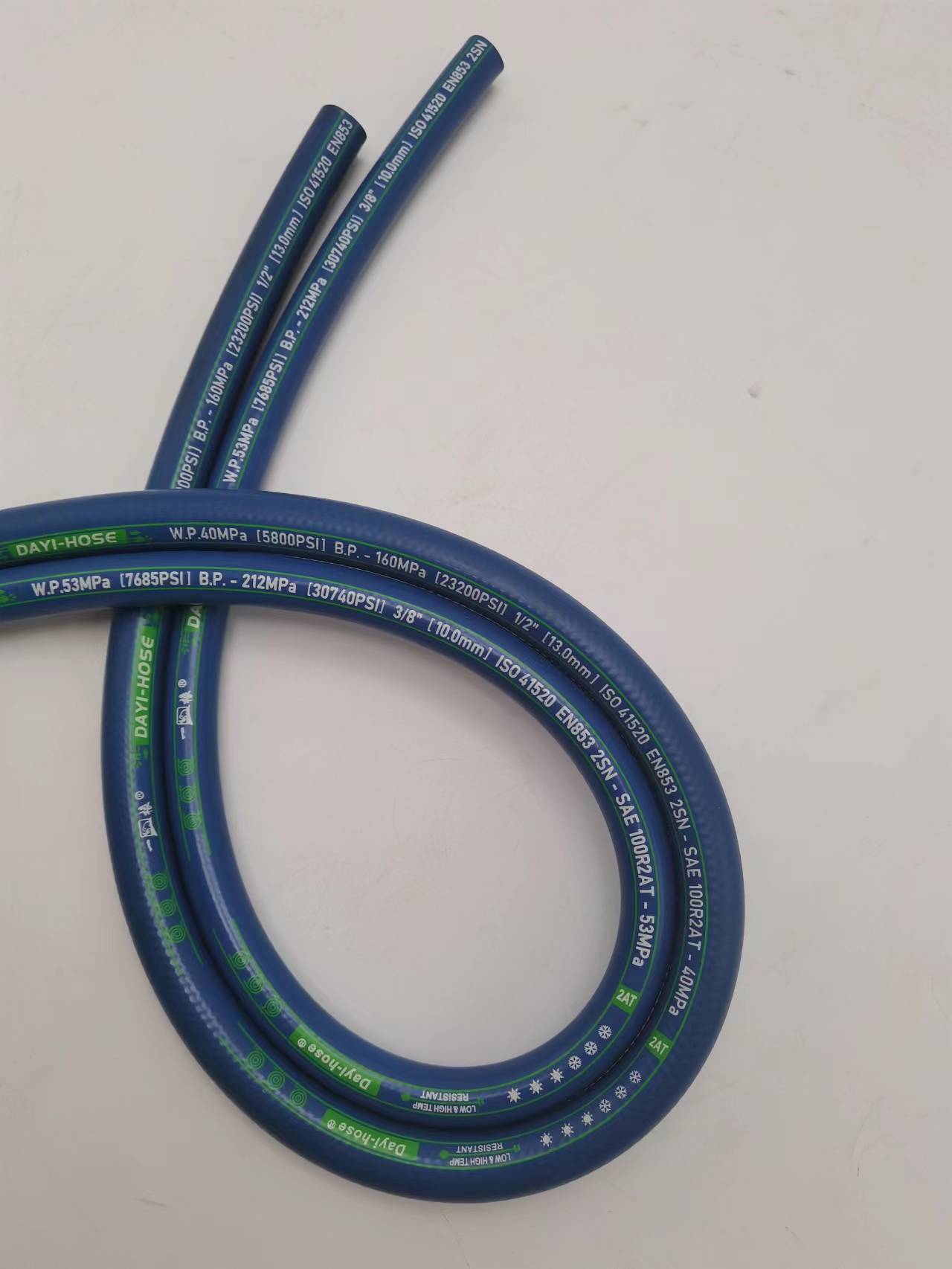
Hydraulic hose performance is dictated by several key engineering parameters. Burst pressure, the maximum pressure the hose can withstand before rupture, is a primary specification and is directly correlated with the reinforcement layer's construction (wire diameter, ply count, and braiding angle). Working pressure is typically a fraction of the burst pressure, determined by a safety factor (often 4:1). Hose flexibility, critical for routing within confined spaces, is influenced by the hose diameter, reinforcement type, and rubber compound. Fatigue resistance, the ability to withstand repeated pressure cycles, is a significant concern in dynamic applications. This is evaluated through cyclic pressure testing according to standards like ISO 6807. Environmental resistance encompasses factors like temperature range (minimum and maximum operating temperatures), ozone resistance (preventing cracking due to ozone exposure), and UV resistance (protecting against degradation from sunlight). Force analysis during hose assembly and operation is vital. Flange connections, crimped fittings, and field-attachable fittings all introduce stress concentrations. Proper fitting selection and crimping procedures are essential to prevent premature failure. Compliance requirements, dictated by industry regulations and customer specifications, necessitate adherence to specific material certifications, testing protocols, and labeling requirements. The hose’s ability to maintain dimensional stability under varying pressures and temperatures is critical to preventing leakage and ensuring system efficiency.
Technical Specifications
| Parameter | Typical Value (NBR Inner Tube, Steel Wire Reinforcement, CR Cover) | Alternative Options | Testing Standard |
|---|---|---|---|
| Working Pressure (PSI) | 2000-6000 | Up to 10,000 PSI with increased reinforcement | SAE J517 |
| Burst Pressure (PSI) | 8000-24000 | Dependent on working pressure and safety factor | SAE J517 |
| Temperature Range (°F) | -40 to +212 | EPDM: -40 to +250; FKM: -20 to +400 | ISO 6807 |
| Inner Tube Material | Nitrile Rubber (NBR) | EPDM, FKM/Viton | ASTM D2000 |
| Reinforcement Type | 4SP/6SP Braided Steel Wire | 2SP, 4SH, 6SH Spiral Wire | ISO 4889 |
| Cover Material | Chloroprene Rubber (CR) | EPDM, Polyurethane | ASTM D2000 |
Failure Mode & Maintenance
Hydraulic hose failure can manifest in various forms. Fatigue cracking, initiated by repeated pressure cycles, often originates at the reinforcement layer due to stress concentration. Pinholes, small leaks in the inner tube, can result from degradation of the rubber compound or abrasion from fluid contaminants. Bursting, a catastrophic failure, occurs when the hose exceeds its pressure rating. Kinking, caused by excessive bending, restricts fluid flow and can damage the reinforcement. External abrasion and ozone cracking degrade the outer cover, compromising its protective function. Internal degradation occurs when the fluid chemically attacks the inner tube, leading to swelling, softening, and eventual failure. Proper maintenance is crucial to extend hose life. Regular visual inspection for signs of damage (cracks, abrasions, leaks) should be conducted. Fluid cleanliness is paramount; using filtration systems prevents abrasive particles from damaging the inner tube. Avoid excessive bending and kinking during installation and operation. Hose routing should minimize contact with hot surfaces or sharp edges. When replacing hoses, ensure compatibility with the hydraulic fluid and operating conditions. Crimped fittings should be inspected for proper crimp depth and integrity. Regular pressure testing can identify potential weaknesses before catastrophic failure occurs. Record-keeping of hose installation dates, operating conditions, and maintenance activities aids in proactive failure prevention.
Industry FAQ
Q: What is the impact of hydraulic fluid type on hose selection?
A: The hydraulic fluid's chemical composition directly dictates the inner tube material. Petroleum-based fluids generally require NBR, while phosphate ester fluids are best suited for EPDM. Fluorocarbon (FKM) is necessary for fluids with aggressive chemical properties. Incorrect fluid compatibility leads to swelling, degradation, and premature failure.
Q: How does temperature affect hydraulic hose performance?
A: Extreme temperatures can significantly impact hose performance. High temperatures accelerate rubber degradation, reducing flexibility and increasing the risk of bursting. Low temperatures can cause rubber to become brittle, increasing susceptibility to cracking. Selecting a hose with an appropriate temperature range is critical.
Q: What is the significance of the hose's "lay flat diameter"?
A: The lay flat diameter is the hose's external diameter when unpressurized. It's important for routing within tight spaces and ensuring proper fit within hose clamps or routing systems. A larger lay flat diameter requires more space.
Q: How do spiral hoses differ from braided hoses in terms of application?
A: Spiral hoses generally offer higher pressure ratings and greater flexibility compared to braided hoses. They are preferred for applications requiring long runs and tight bends. Braided hoses are more cost-effective for lower-pressure applications.
Q: What are the key considerations when selecting hose fittings?
A: Fitting material (steel, stainless steel, brass) must be compatible with the fluid and operating environment. Fitting type (crimped, field-attachable, threaded) should match the hose and application requirements. Proper crimp depth (for crimped fittings) is vital for a secure connection.
Conclusion
Hydraulic industrial hoses from China represent a technically complex product demanding careful consideration of material science, manufacturing processes, and operational parameters. The selection of the appropriate hose is contingent upon a thorough understanding of the application's specific requirements, including fluid compatibility, pressure levels, temperature ranges, and environmental conditions. Prioritizing quality control, adherence to international standards, and proactive maintenance practices are crucial for ensuring reliable performance and maximizing service life.
Looking ahead, advancements in hose technology will likely focus on developing more durable rubber compounds, optimizing reinforcement designs for enhanced fatigue resistance, and incorporating smart sensors for real-time monitoring of hose condition. Continued investment in research and development, coupled with a commitment to rigorous quality assurance, will solidify China’s position as a leading supplier of high-performance hydraulic hoses to the global market.