
Apr . 01, 2024 17:55 Back to list
china hydraulic industrial hose supplier Performance Analysis

Introduction
Hydraulic industrial hoses, manufactured by suppliers such as china hydraulic industrial hose supplier, represent a critical component in fluid power systems across diverse sectors including construction, agriculture, manufacturing, and oil & gas. These hoses are engineered to safely and efficiently transmit pressurized hydraulic fluid, enabling the operation of heavy machinery and critical industrial processes. Their technical position within the industrial chain is post-component manufacturing, serving as the crucial link between power sources (pumps) and actuators (cylinders, motors). Core performance characteristics center around pressure rating, temperature resistance, fluid compatibility, and resistance to abrasion and fatigue. The selection of an appropriate hydraulic hose directly impacts system efficiency, safety, and longevity, making understanding their construction and performance parameters paramount for procurement and engineering professionals.
Material Science & Manufacturing
Hydraulic hoses are typically constructed from multiple layers, each contributing to specific performance characteristics. The innermost layer, the tube, is often composed of synthetic rubbers like nitrile (NBR), ethylene propylene diene monomer (EPDM), or fluorocarbon (FKM – Viton®) chosen for their compatibility with various hydraulic fluids (mineral oils, synthetic fluids, phosphate esters). NBR offers good resistance to petroleum-based fluids, while EPDM excels with water-based fluids and FKM provides superior chemical resistance, albeit at a higher cost. Reinforcement layers, essential for pressure containment, traditionally utilize high-tensile steel wire (single or multiple braids) or synthetic fiber braids (aramid, polyester). The number of braids directly correlates with the hose’s working pressure capacity. An outer cover, commonly made from chloroprene rubber (CR – Neoprene), provides abrasion, ozone, and weathering resistance.
Manufacturing processes vary based on hose type and specifications. Tube extrusion is the initial step, followed by the application of reinforcement layers via spiraling or braiding machines. Precise tension control during braiding is critical to ensure uniform pressure distribution and prevent premature failure. Vulcanization, a chemical process involving heat and pressure, cures the rubber components, creating a durable and resilient composite structure. Skiving, the process of removing the outer cover material at the ends, prepares the hose for fitting attachment. Quality control throughout the process includes dimensional checks, pressure testing (hydrostatic testing), impulse testing (to simulate pressure pulsations), and visual inspection for defects. Key parameter control focuses on rubber compound formulation consistency, braid density, vulcanization temperature and time, and dimensional tolerances.
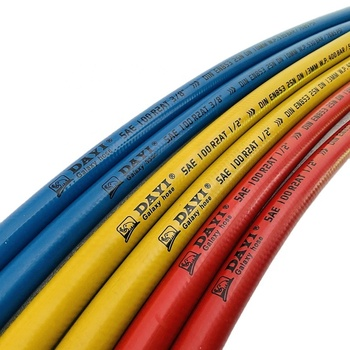
Performance & Engineering
Hydraulic hose performance is governed by several engineering principles. Burst pressure, working pressure, and safety factor are critical parameters. Working pressure represents the maximum continuous operating pressure, while burst pressure is the pressure at which the hose fails catastrophically. A typical safety factor is 4:1, meaning the burst pressure is four times the working pressure. Fatigue resistance is paramount, as hoses are subjected to cyclical pressure fluctuations. Impulse testing simulates these pulsations, assessing the hose's ability to withstand repeated stress without failure. Environmental resistance, particularly temperature extremes and exposure to corrosive substances, significantly impacts hose life.
Force analysis involves calculating hoop stress (stress in the circumferential direction of the hose wall) and longitudinal stress (stress along the hose length). These stresses are influenced by internal pressure, hose diameter, and wall thickness. Fluid compatibility is crucial; selecting a hose tube material incompatible with the hydraulic fluid can lead to swelling, degradation, and leakage. Compliance requirements depend on the application and geographical region. SAE J517, ISO 6899, and DIN EN 856 standards define hose specifications and testing procedures. Proper hose routing is essential to minimize bending stress, twisting, and abrasion. The use of appropriate hose fittings, correctly crimped, ensures a leak-free and secure connection. Failure to adhere to these principles can lead to catastrophic system failure and potential injury.
Technical Specifications
| Parameter | SAE J517 - 100R2AT | EN 856 - 4SP | Typical Range (china hydraulic industrial hose supplier offering) |
|---|---|---|---|
| Working Pressure (PSI) | 1200 | 210 bar (3045 PSI) | 1000 - 2500 PSI |
| Burst Pressure (PSI) | 4800 | 630 bar (9135 PSI) | 4000 - 10000 PSI |
| Temperature Range (°F) | -40 to +212 | -40 to +100 | -40 to +230 |
| Tube Material | Synthetic Rubber (NBR) | Synthetic Rubber (NBR) | NBR, EPDM, FKM |
| Reinforcement | Two Steel Wire Braids | Four Spiral Steel Wire | Single/Double Steel Wire Braid, Spiral Wire |
| Cover Material | Synthetic Rubber (CRM) | Synthetic Rubber (CRM) | CRM, CPE |
Failure Mode & Maintenance
Hydraulic hose failures commonly manifest as bursts, leaks, or performance degradation. Common failure modes include fatigue cracking due to repeated pressure cycles and bending stress, particularly near fittings. Pinholing, small leaks in the tube, can occur due to corrosion or internal abrasion from contaminated fluid. Abrasion of the outer cover compromises the hose’s protective layer, leading to reinforcement corrosion and eventual failure. Twisting or kinking the hose induces localized stress concentrations, accelerating wear. Degradation of the rubber compounds due to excessive heat, UV exposure, or chemical attack reduces flexibility and increases the risk of cracking. Oxidation can lead to hardening and embrittlement, particularly in hoses exposed to oxygen-rich environments.
Preventive maintenance is crucial for maximizing hose life. Regular visual inspections should identify signs of abrasion, cracking, swelling, or leaks. Pressure testing can detect weaknesses before catastrophic failure. Fluid filtration is essential to remove contaminants that can cause internal abrasion. Proper hose routing and support minimize bending stress and twisting. Hoses should be replaced at recommended intervals, even if no visible defects are present. When replacing hoses, ensure compatibility with the hydraulic fluid and operating conditions. Always use properly crimped fittings and follow manufacturer's recommendations for installation and maintenance. Training personnel on proper hose handling and inspection procedures is also paramount.
Industry FAQ
Q: What is the significance of the 'dash size' in hydraulic hose specifications?
A: The dash size (e.g., -6, -8, -10) refers to the inner diameter of the hose in sixteenths of an inch. A -6 hose has a 6/16 inch (3/8 inch) inner diameter. Selecting the correct dash size is critical for maintaining optimal flow rate and minimizing pressure drop within the hydraulic system. An undersized hose restricts flow, while an oversized hose may lead to excessive pulsation.
Q: How does temperature affect hydraulic hose performance?
A: Temperature significantly impacts rubber compound flexibility and strength. Excessive heat accelerates degradation, leading to hardening and cracking. Low temperatures can reduce flexibility, increasing the risk of kinking or cracking during bending. Hose specifications define the operating temperature range for optimal performance. Selecting a hose with a temperature rating appropriate for the application is vital.
Q: What are the key differences between braided and spiral hydraulic hoses?
A: Braided hoses utilize one or more layers of woven steel wire, offering good flexibility and resistance to kinking. Spiral hoses employ a continuous, spirally wound steel wire, providing higher pressure ratings and greater resistance to pulsation. Spiral hoses generally exhibit less flexibility than braided hoses. The choice depends on the application's pressure and flexibility requirements.
Q: How important is the correct crimping of hose fittings?
A: Correct crimping is absolutely crucial. Insufficient crimping creates a loose connection, leading to leaks and potential hose separation. Over-crimping can damage the hose reinforcement, reducing its pressure capacity and creating a weak point. Crimping should be performed by trained personnel using calibrated crimping machines and dies specifically designed for the hose and fitting combination.
Q: What is the role of hydraulic fluid compatibility in hose selection?
A: Hydraulic fluid compatibility is paramount. Using an incompatible fluid can cause the hose tube to swell, soften, or degrade, leading to leaks and premature failure. The hose tube material must be chemically resistant to the specific fluid being used. Refer to fluid compatibility charts provided by hose manufacturers to ensure proper material selection.
Conclusion
The selection and maintenance of hydraulic industrial hoses are critical for ensuring the safe and efficient operation of fluid power systems. Understanding the material science, manufacturing processes, performance characteristics, and potential failure modes is essential for procurement and engineering professionals. Suppliers like china hydraulic industrial hose supplier play a vital role in providing high-quality hoses that meet stringent industry standards.
Continued advancements in hose technology focus on developing materials with improved temperature resistance, chemical compatibility, and fatigue life. Implementing robust preventive maintenance programs, including regular inspections and fluid filtration, is paramount for maximizing hose longevity and minimizing the risk of catastrophic failure. Staying informed about evolving industry standards and best practices is crucial for maintaining system integrity and optimizing operational performance.