
Apr . 01, 2024 17:55 Back to list
china hydraulic hose coupling factory Performance Analysis

Introduction
Hydraulic hose couplings, manufactured extensively in China, represent a critical component in fluid power systems across diverse industries including construction, agriculture, manufacturing, and mining. These couplings facilitate the secure and leak-free connection between hydraulic hoses and equipment, transmitting fluid power essential for operational functionality. The Chinese manufacturing sector has become a dominant global supplier, recognized for its capacity to produce couplings conforming to international standards at competitive pricing. This guide provides a comprehensive technical overview of these couplings, covering material science, manufacturing processes, performance characteristics, potential failure modes, and relevant industry standards. A key industry pain point revolves around ensuring consistent material quality and adherence to demanding pressure and temperature requirements, alongside robust corrosion resistance, especially in harsh operating environments. Furthermore, traceability and validation of manufacturing processes are vital for long-term reliability and safety.
Material Science & Manufacturing
The primary materials utilized in hydraulic hose coupling production are carbon steel (SAE 1045, 4140), stainless steel (304, 316), and brass alloys (C36000). Carbon steel provides high tensile strength but requires protective coatings to prevent corrosion. Stainless steel offers superior corrosion resistance but is more expensive. Brass provides good corrosion resistance and is readily machinable. Manufacturing typically involves several stages. Firstly, raw material sourcing and inspection are crucial, focusing on chemical composition verification via spectroscopy and mechanical property testing (tensile strength, yield strength, elongation). Secondly, coupling bodies are often formed through hot forging or cold extrusion, followed by precision machining to achieve the required dimensions and thread specifications (NPT, BSP, DIN). Thirdly, surface treatments like zinc plating, nickel plating, or powder coating are applied to enhance corrosion resistance. Critical parameter control during forging includes temperature uniformity and precise die alignment to minimize material defects. Machining requires stringent tolerances on thread forms and sealing surfaces. Heat treatment processes, such as quenching and tempering, are employed to optimize the mechanical properties of the steel alloys. Quality control measures include non-destructive testing (NDT) like magnetic particle inspection (MPI) and ultrasonic testing (UT) to detect surface and internal flaws. The rubber hose itself is generally constructed from a synthetic rubber blend, often incorporating nitrile rubber (NBR), ethylene propylene diene monomer (EPDM) or fluorocarbon rubber (FKM) based on fluid compatibility and temperature ranges. Bonding agents are critical for adhesion between the rubber and metal components.
Performance & Engineering
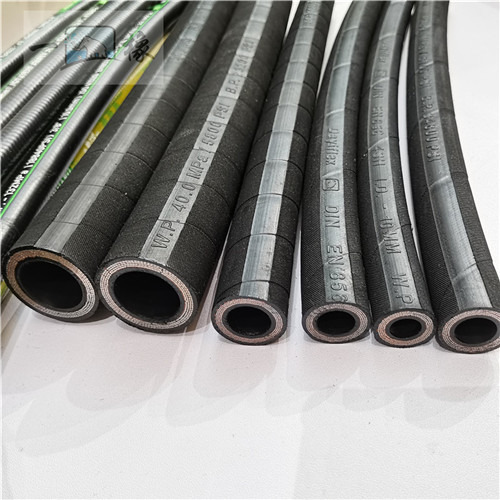
Hydraulic hose coupling performance is governed by several key engineering principles. Pressure rating is paramount, determined by the coupling's material strength, geometry, and thread engagement. Finite element analysis (FEA) is commonly used to simulate stress distribution under various pressure loads and identify potential weak points in the design. Burst pressure is typically four times the working pressure, providing a safety factor. Fatigue resistance is critical for applications involving cyclic loading. Coupling materials must withstand repeated stress cycles without crack initiation or propagation. Environmental resistance, encompassing corrosion, temperature extremes, and exposure to fluids, is crucial for longevity. Coupling designs must account for galvanic corrosion when dissimilar metals are used. Thread engagement length and quality are vital for preventing leakage. Seal integrity is maintained by O-rings or other sealing elements, requiring careful material selection based on fluid compatibility and temperature range. Coupling geometries must minimize stress concentrations that could lead to failure. Furthermore, compliance with safety standards such as ISO 4413 (Hydraulic fluid power – General rules relating to systems) is essential. Force analysis includes calculating the tensile load on the coupling during hose assembly and operation, ensuring it exceeds the coupling’s rated strength. Considerations are made for both static and dynamic loads.
Technical Specifications
| Parameter | Standard Specification (SAE J518) | Common Chinese Manufacturing Range | Unit |
|---|---|---|---|
| Working Pressure | Up to 5000 psi | 1000 – 6000 psi | psi |
| Burst Pressure | 4 x Working Pressure | 4 x Working Pressure | psi |
| Temperature Range | -40°C to +100°C | -40°C to +120°C (depending on material) | °C |
| Thread Type | NPT, BSP, SAE J1926-1 | NPT, BSP, Metric | - |
| Material (Body) | Carbon Steel, Stainless Steel, Brass | Carbon Steel (45#, 35#), Stainless Steel (304, 316) | - |
| Material (Seal) | NBR, EPDM, Viton | NBR, EPDM, FKM | - |
Failure Mode & Maintenance
Common failure modes in hydraulic hose couplings include thread stripping, corrosion-induced cracking, fatigue failure due to cyclic loading, and seal degradation. Thread stripping often results from improper installation, excessive torque, or material defects. Corrosion can occur due to exposure to corrosive fluids or environments, leading to pitting and eventual crack propagation. Fatigue failure initiates at stress concentrations and progresses through crack growth until catastrophic failure. Seal degradation is caused by chemical incompatibility, temperature extremes, or physical damage. Failure analysis techniques include fractography (examining fracture surfaces to determine the failure mechanism), chemical analysis (identifying corrosion products), and non-destructive testing (detecting internal flaws). Preventive maintenance involves regular inspection for signs of corrosion, damage, or leakage. Proper torque application during installation is crucial. Couplings should be periodically lubricated to prevent galling and corrosion. Replacement of couplings is recommended based on service life, operating conditions, and inspection findings. Implementing a robust preventative maintenance schedule significantly minimizes the risk of unexpected downtime and safety hazards. Furthermore, proper storage of couplings in a clean, dry environment prevents premature corrosion.
Industry FAQ
Q: What is the impact of fluid compatibility on the selection of coupling materials and seals?
A: Fluid compatibility is paramount. Incompatible fluids can cause seal swelling, shrinkage, or degradation, leading to leakage and failure. For example, phosphate ester fluids require Viton (FKM) seals, while petroleum-based fluids are compatible with NBR seals. The coupling body material must also resist corrosion from the fluid. Careful consideration of the fluid type and operating temperature is essential for proper material selection.
Q: How does temperature affect the performance and lifespan of hydraulic hose couplings?
A: Extreme temperatures can significantly impact coupling performance. High temperatures can degrade seals, reduce material strength, and accelerate corrosion. Low temperatures can cause seals to become brittle and reduce their sealing effectiveness. Coupling materials and seals must be selected based on the expected operating temperature range to ensure optimal performance and longevity.
Q: What are the key considerations for preventing galvanic corrosion in hydraulic systems?
A: Galvanic corrosion occurs when dissimilar metals are in contact in the presence of an electrolyte. To prevent this, use couplings made from compatible materials. If dissimilar metals are unavoidable, apply a protective coating (e.g., zinc plating) to the less noble metal or use an insulating sleeve to separate the metals. Ensure the hydraulic fluid is clean and free of contaminants that can act as electrolytes.
Q: What quality control measures are typically employed by Chinese manufacturers to ensure coupling reliability?
A: Reputable Chinese manufacturers employ a range of quality control measures including raw material inspection (chemical composition, mechanical properties), dimensional inspection during machining, non-destructive testing (MPI, UT), pressure testing, and leak testing. Many manufacturers are also ISO 9001 certified, demonstrating a commitment to quality management systems. Traceability of materials and processes is also a common practice.
Q: What is the role of surface treatments (plating, coating) in extending the service life of hydraulic hose couplings?
A: Surface treatments provide a barrier against corrosion, abrasion, and wear, significantly extending the coupling’s service life. Zinc plating offers sacrificial corrosion protection for carbon steel. Nickel plating provides enhanced corrosion resistance and wear resistance. Powder coating offers a durable, aesthetically pleasing finish with excellent corrosion protection. The selection of the appropriate surface treatment depends on the operating environment and fluid exposure.
Conclusion
Hydraulic hose couplings, particularly those manufactured in China, are essential components in a vast array of industrial applications. Their performance and reliability are contingent upon careful material selection, precise manufacturing processes, and adherence to stringent quality control standards. Understanding the potential failure modes and implementing appropriate maintenance practices are critical for maximizing service life and ensuring operational safety. The evolution of materials and manufacturing techniques continues to drive improvements in coupling performance, leading to higher pressure ratings, improved corrosion resistance, and enhanced durability.
Looking ahead, the industry trend leans toward lighter-weight materials, smart couplings with integrated sensors for leak detection and performance monitoring, and sustainable manufacturing practices. Chinese manufacturers are increasingly investing in research and development to meet these evolving demands, solidifying their position as a leading global supplier of hydraulic hose couplings. Continued focus on quality control, traceability, and adherence to international standards will be crucial for maintaining this competitive edge.