
Apr . 01, 2024 17:55 Back to list
china hydraulic hose and fittings manufacturer Performance Analysis

Introduction
Hydraulic hoses and fittings are critical components in fluid power systems, facilitating the transmission of pressurized fluid to operate machinery across diverse industries including construction, agriculture, manufacturing, and aerospace. China hydraulic hose and fittings manufacturers have emerged as significant global suppliers, driven by competitive pricing, increasing production capacity, and evolving technological capabilities. These systems demand unwavering reliability and performance to prevent catastrophic failure and ensure operational safety. This guide provides an in-depth technical overview of these components, encompassing material science, manufacturing processes, performance characteristics, potential failure modes, and relevant industry standards. A core industry pain point lies in consistently achieving high burst pressures and minimizing fluid leakage, especially in demanding applications involving extreme temperatures and aggressive fluids. Furthermore, ensuring dimensional accuracy and compatibility of fittings across different manufacturers remains a continuous challenge.
Material Science & Manufacturing
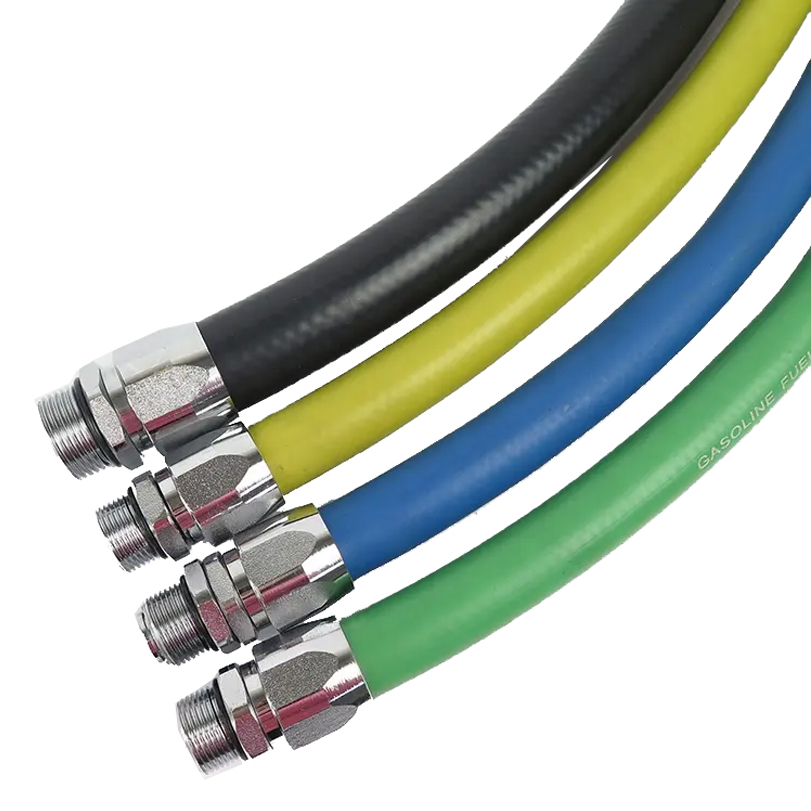
Hydraulic hoses are typically constructed from multiple layers. The inner tube, in direct contact with the fluid, is commonly made from synthetic rubbers such as nitrile (NBR), ethylene propylene diene monomer (EPDM), or fluorocarbon (FKM, Viton®). NBR exhibits good resistance to petroleum-based fluids, EPDM excels in heat and weather resistance, while FKM provides superior chemical resistance, particularly to aggressive hydraulic fluids. Reinforcement layers, providing tensile strength and burst pressure resistance, are composed of high-tensile steel wire (single or multi-spiral) or synthetic fiber braids (e.g., polyester, aramid). The outer cover, protecting the reinforcement layers from abrasion and environmental degradation, is often made from chloroprene rubber (CR) or polyurethane (PU). Fittings are generally manufactured from carbon steel, alloy steel, or stainless steel, selected based on required strength, corrosion resistance, and fluid compatibility. Manufacturing processes for hoses involve extrusion of the inner tube and cover, followed by spiral winding or braiding of the reinforcement layers. Vulcanization, a crucial step, cross-links the rubber polymers, imparting elasticity and durability. Fitting manufacturing involves precision machining, forging, and heat treatment. Parameter control is paramount during vulcanization; incorrect temperature or time can result in under-cured or over-cured rubber, compromising performance. Similarly, surface finish on fittings significantly affects sealing performance and is tightly controlled during machining.
Performance & Engineering
Hydraulic hose performance is governed by several critical parameters, including working pressure, burst pressure, temperature range, and fluid compatibility. Working pressure represents the maximum sustained pressure the hose can safely handle during operation, while burst pressure indicates the pressure at which the hose will fail catastrophically. A safety factor (typically 4:1) is applied to determine the maximum working pressure. Finite element analysis (FEA) is widely used to model stress distribution within the hose structure under various loading conditions, optimizing reinforcement layer design for maximizing burst pressure and minimizing weight. Hose assembly integrity is equally important. Proper crimping of fittings onto the hose is crucial to create a secure, leak-proof connection. The crimp process introduces compressive stress in the hose reinforcement, creating a mechanical interlock with the fitting. Improper crimping can lead to premature failure. Environmental resistance, especially to ozone, UV radiation, and abrasion, is vital for outdoor applications. Compliance requirements, such as those stipulated by SAE (Society of Automotive Engineers) and EN (European Norms), dictate performance standards and testing procedures. Fatigue life, the number of pressure cycles a hose can withstand before failure, is a critical performance metric, particularly in applications involving frequent pressure fluctuations.
Technical Specifications
| Parameter | SAE 100R1 AT | SAE 100R2 AT | EN 853 1SN | EN 857 1ST |
|---|---|---|---|---|
| Working Pressure (PSI) | 1000 | 1500 | 1500 | 1000 |
| Burst Pressure (PSI) | 3000 | 4500 | 4500 | 3000 |
| Temperature Range (°F) | -40 to +212 | -40 to +212 | -40 to +212 | -40 to +212 |
| Inner Tube Material | NBR | NBR | NBR | NBR |
| Reinforcement | Single Wire Braid | Double Wire Braid | Single Wire Braid | Single Wire Braid with Spiral Steel |
| Outer Cover Material | CR | CR | CR | CR |
Failure Mode & Maintenance
Hydraulic hose failures commonly manifest as burst failures, leaks at fittings, or degradation of the hose material. Burst failures are typically caused by exceeding the hose's working pressure, fatigue cracking due to repeated pressure cycling, or damage from external abrasion. Leaks at fittings often result from improper crimping, damaged threads, or incompatibility between the fitting and hose. Material degradation can occur due to exposure to high temperatures, aggressive fluids, or ozone. Fatigue cracking initiates from microscopic flaws within the reinforcement layers, propagating under cyclic loading. Delamination, separation of the reinforcement layers, can also lead to failure. Oxidation of the rubber material, especially at elevated temperatures, reduces its elasticity and strength. Maintenance practices include regular visual inspections for signs of wear, abrasion, or leaks. Pressure testing should be performed periodically to verify hose integrity. Hose assemblies should be replaced if any damage or degradation is detected. Proper storage conditions, avoiding direct sunlight and extreme temperatures, can extend hose service life. When replacing hoses, it's crucial to use fittings compatible with the hose material and to ensure proper crimping procedures are followed. Always depressurize the system before disconnecting hoses.
Industry FAQ
Q: What is the impact of fluid velocity on hydraulic hose life?
A: Higher fluid velocity increases frictional heat within the hose, accelerating material degradation and potentially leading to hose failure. It also exacerbates the effects of erosion from particulate matter in the fluid. Maintaining appropriate fluid velocity, typically below 15 ft/s, is crucial for maximizing hose life.
Q: How does hose layline marking contribute to safety and maintenance?
A: Layline markings provide crucial traceability information, including the manufacturer, production date, and working pressure. This information allows for proper identification of the hose and ensures that it is used within its specified operating parameters. It also aids in warranty claims and failure analysis.
Q: What are the key considerations when selecting a hose for exposure to phosphate ester hydraulic fluids?
A: Phosphate ester fluids are particularly aggressive and require hoses with specialized inner tube materials, such as FKM or FFKM, to prevent swelling and degradation. Compatibility charts from hose manufacturers should be consulted to ensure proper material selection. Stainless steel fittings are also recommended for phosphate ester fluids.
Q: How does the type of fitting (e.g., field attachable vs. permanently crimped) affect reliability?
A: Permanently crimped fittings generally offer higher reliability and leak resistance due to the secure mechanical interlock created during the crimping process. Field attachable fittings, while offering convenience for on-site repairs, may be more susceptible to leaks if not properly installed and tightened.
Q: What is the role of impulse pressure in hydraulic hose selection?
A: Impulse pressure refers to pressure spikes or surges within the hydraulic system. Hoses must be capable of withstanding these impulse pressures without fatigue failure. Hose specifications often include an impulse pressure rating, which should be carefully considered based on the system's operating characteristics.
Conclusion
China hydraulic hose and fittings manufacturers play a vital role in the global fluid power industry, offering a wide range of products to meet diverse application needs. Understanding the complex interplay between material science, manufacturing processes, and performance characteristics is essential for selecting the appropriate hose and fitting for a given application. Prioritizing proper installation, regular maintenance, and adherence to industry standards are crucial for ensuring safe and reliable operation.
Future trends in this industry will likely focus on developing hoses with enhanced durability, reduced weight, and improved environmental resistance. The adoption of advanced materials, such as thermoplastic composites, and the integration of smart sensors for real-time monitoring of hose condition are also anticipated. Continuous improvement in manufacturing processes and quality control will be paramount for maintaining competitiveness in the global market.