
Apr . 01, 2024 17:55 Back to list
china high pressure washer hose manufacturer Performance Engineering
Introduction
High-pressure washer hoses manufactured in China are critical components within the fluid transfer industry, serving a diverse range of applications from domestic cleaning to industrial operations. These hoses are engineered to withstand extreme pressures, varying temperatures, and aggressive chemical exposure. Positioned downstream from raw material suppliers (rubber compounds, steel wire, and thermoplastic polymers) and upstream from the end-users (consumers, contractors, and industrial facilities), the manufacturing process demands stringent quality control and adherence to international safety standards. Core performance characteristics include burst pressure, working pressure, kink radius, and chemical compatibility. A significant market driver is the demand for cost-effective yet reliable hoses, coupled with the increasing adoption of high-pressure cleaning systems across multiple sectors. The primary pain point within the industry revolves around consistently achieving and verifying hose durability and resistance to failure under cyclical stress and harsh operating conditions. Manufacturers face the challenge of balancing material costs with performance requirements to remain competitive in a global market.
Material Science & Manufacturing
The core material for high-pressure washer hoses is typically a combination of synthetic rubber (often a blend of SBR, NBR, and EPDM) for the inner tube, a high-tensile steel wire spiral or braid for reinforcement, and a thermoplastic polyurethane (TPU) or PVC outer cover for abrasion and weather resistance. SBR provides good abrasion resistance at a lower cost, NBR offers excellent oil resistance, and EPDM excels in weathering and ozone resistance. The selection of the rubber blend is application-specific. Steel wire reinforcement is crucial for withstanding high pressures; the wire gauge and winding pitch directly influence the hose’s burst pressure. The TPU cover provides superior flexibility and abrasion resistance compared to PVC, but is typically more expensive.
Manufacturing typically involves several stages: inner tube extrusion, steel wire spiraling or braiding, hose assembly, and outer cover extrusion. Extrusion requires precise temperature and pressure control to ensure consistent rubber thickness and density. Steel wire winding or braiding must maintain uniform tension and coverage to prevent localized stress concentrations. Curing is a critical process where the rubber is vulcanized, enhancing its elasticity and strength. Key parameters during curing include temperature, pressure, and time – deviations can significantly compromise hose performance. Quality control at each stage is essential, including dimensional checks, pressure testing, and visual inspection for defects. Advanced manufacturing techniques include automated winding/braiding systems and in-line non-destructive testing (NDT) methods like ultrasonic testing to detect wire breaks or voids within the rubber matrix. Chemical compatibility testing of the inner tube with common cleaning agents is also essential.

Performance & Engineering
Performance assessment of high-pressure washer hoses hinges on several critical engineering considerations. Burst pressure, the maximum pressure the hose can withstand before failure, is a paramount specification. This is determined through hydrostatic testing, following standards like SAE J517. Working pressure, typically 50-70% of burst pressure, represents the safe operating limit. Kink radius, the minimum bend radius without compromising flow or structural integrity, is also vital, especially in applications requiring hose maneuverability. Environmental resistance encompasses performance under varying temperatures (both hot and cold), UV exposure, and chemical exposure to detergents, solvents, and oils.
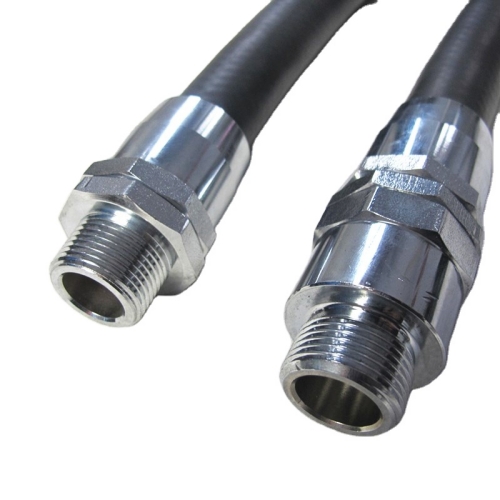
Force analysis involves evaluating stresses within the hose wall under internal pressure. Hoop stress, acting circumferentially, and longitudinal stress, acting along the hose length, are the primary stress components. Finite Element Analysis (FEA) is often employed to model stress distribution and identify potential failure points. Compliance requirements dictate adherence to industry-specific regulations and safety standards. For example, hoses used in food processing applications must comply with FDA regulations regarding material composition and leachability. Fatigue analysis is also crucial, as hoses are subjected to cyclical pressure fluctuations during operation. Understanding the fatigue life and predicting the time to failure under specific loading conditions is essential for ensuring long-term reliability. Furthermore, the connection fittings (brass, stainless steel, or plastic) must be engineered to match the hose pressure rating and provide a secure, leak-proof seal.
Technical Specifications
| Parameter | Unit | Typical Value (China Manufactured - Standard Grade) | Typical Value (China Manufactured - Premium Grade) |
|---|---|---|---|
| Burst Pressure | MPa | 35 | 50 |
| Working Pressure | MPa | 21 | 30 |
| Inner Diameter | mm | 8-16 | 8-20 |
| Outer Diameter | mm | 12-22 | 14-28 |
| Minimum Bend Radius | mm | 4D (where D is Outer Diameter) | 5D |
| Tensile Strength (Outer Cover) | MPa | 15 | 20 |
| Temperature Range | °C | -20 to +80 | -40 to +100 |
Failure Mode & Maintenance
Common failure modes in high-pressure washer hoses include burst failure due to exceeding the working pressure, kink failure from excessive bending, and degradation of the rubber material from UV exposure, ozone cracking, or chemical attack. Fatigue cracking, initiated by cyclical pressure fluctuations, is a significant concern, often starting at the steel wire/rubber interface. Delamination, the separation of layers (inner tube, reinforcement, and outer cover), can also occur due to inadequate bonding or material incompatibility. Oxidation and hydrolysis can degrade the rubber over time, reducing its elasticity and strength. Visual inspection for cracks, bulges, kinks, and abrasions is the first step in maintenance. Regular pressure testing (hydrostatic testing) can identify hoses nearing the end of their service life.
Maintenance recommendations include storing hoses out of direct sunlight, avoiding exposure to extreme temperatures and harsh chemicals, and thoroughly draining the hose after each use to prevent internal corrosion. If cracks or damage are observed, the hose should be replaced immediately. Never attempt to repair a damaged high-pressure hose, as this can compromise its integrity and create a safety hazard. Proper handling and storage practices are crucial for maximizing hose lifespan and preventing premature failure. Record keeping of hose usage and maintenance history can help identify potential issues and optimize replacement schedules. Furthermore, ensuring compatibility between the hose material and the cleaning solutions used is critical to prevent premature degradation.
Industry FAQ
Q: What is the difference between a single-wire spiral and a braided high-pressure hose, and which is more suitable for high-frequency, pulsating pressure?
A: Single-wire spiral hoses generally offer higher flexibility and are better suited for applications requiring tight bend radii. Braided hoses provide greater resistance to kinking and are better suited for high-frequency, pulsating pressure applications as the braided construction distributes stress more evenly, reducing fatigue failure. The braided construction typically has a higher burst pressure for the same diameter hose.
Q: How does the temperature of the cleaning fluid affect the lifespan of the hose?
A: Elevated temperatures accelerate the degradation of the rubber material, leading to reduced elasticity and strength. Prolonged exposure to high temperatures can cause the hose to become brittle and more susceptible to cracking. Conversely, extremely low temperatures can also affect flexibility and increase the risk of cracking. Selecting a hose with a temperature rating that exceeds the maximum expected fluid temperature is crucial.
Q: What are the common causes of hose leakage at the fittings?
A: Leakage at the fittings is typically caused by improper installation (over-tightening or under-tightening), damaged or corroded fittings, or incompatibility between the fitting material and the cleaning fluid. Using appropriate sealing tape and ensuring that the fittings are correctly crimped or threaded is essential. Regular inspection of the fittings for corrosion or damage is also recommended.
Q: What is the significance of the 'kink radius' specification?
A: The kink radius specifies the minimum bend radius that the hose can withstand without compromising its structural integrity or flow rate. Bending the hose beyond the specified kink radius can cause internal damage, reducing its lifespan and potentially leading to failure. Maintaining the recommended kink radius is particularly important in applications requiring frequent hose maneuvering.
Q: Are there specific standards for chemical resistance testing of high-pressure washer hoses?
A: Yes, chemical resistance is typically assessed according to standards like SAE J200 and ASTM D471. These standards outline procedures for immersing hose samples in various chemicals and evaluating changes in physical properties, such as tensile strength, elongation, and hardness, to determine the hose’s compatibility with the specific chemicals.
Conclusion
High-pressure washer hoses manufactured in China represent a complex interplay of material science, engineering design, and manufacturing precision. Achieving optimal performance and durability requires careful selection of rubber compounds, reinforcement materials, and cover materials, coupled with stringent quality control throughout the production process. Understanding the potential failure modes and implementing preventative maintenance practices are crucial for maximizing hose lifespan and ensuring operational safety.
Future trends in this industry will likely focus on developing more sustainable and environmentally friendly hose materials, incorporating smart sensors for real-time pressure and temperature monitoring, and optimizing hose designs to enhance flexibility and reduce weight. Continued advancements in materials science and manufacturing techniques will be essential for meeting the evolving demands of the high-pressure cleaning industry and ensuring the long-term reliability of these critical components.