
Apr . 01, 2024 17:55 Back to list
china high pressure washer hose factory Performance Analysis
Introduction
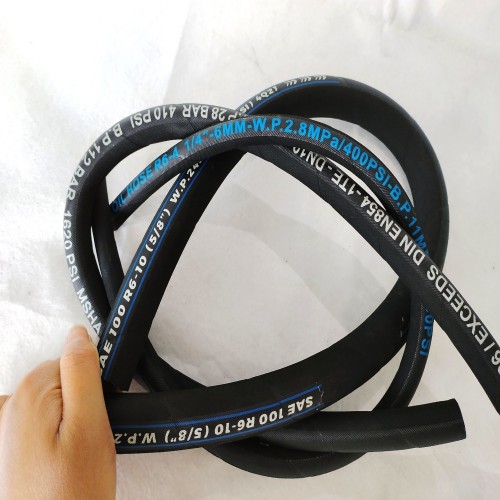
High-pressure washer hoses, manufactured by facilities like china high pressure washer hose factory, are critical components in fluid transfer systems designed for high-pressure cleaning applications. These hoses represent a specialized subset of industrial hoses, distinguished by their ability to withstand extreme pressures and dynamic bending stresses. They operate as an intermediary, connecting the pressure washer’s pump to the spray lance, delivering water (or occasionally other cleaning solutions) at high velocity. The industry chain positions these hoses downstream from raw material suppliers (rubber, steel wire, polymer compounds) and upstream from end-users encompassing commercial cleaning services, automotive detailing, industrial maintenance, and residential use. Core performance characteristics are defined by working pressure, burst pressure, temperature resistance, chemical compatibility, and overall durability, impacting operational efficiency and safety.
Material Science & Manufacturing
The manufacturing of high-pressure washer hoses typically involves a multi-layer construction designed to optimize performance and safety. The core layer traditionally consists of synthetic rubber, commonly a blend of Nitrile Rubber (NBR) or Chloroprene Rubber (CR) due to their excellent abrasion resistance, oil resistance, and flexibility. NBR offers good performance across a wide temperature range (-40°C to 100°C), while CR provides superior resistance to ozone and weathering. Embedded within the rubber core are high-tensile steel wire braids. The number of braids (typically 2, 4, or 6) directly correlates to the hose’s pressure rating. Higher braid counts provide increased reinforcement and burst strength. Between the rubber core and the steel wire, an adhesion layer ensures robust bonding. The outer cover is also typically synthetic rubber, often utilizing a blend of materials for enhanced abrasion resistance, UV protection, and flexibility. Polyurethane (PU) is gaining popularity as a cover material due to its exceptional durability and resistance to chemicals. Manufacturing processes include extrusion for the rubber layers, calendaring for reinforcement fabric, and spiral winding/braiding for the steel wire. Critical parameters during manufacturing include precise control of rubber compound mixing ratios, braid pitch and tension, vulcanization temperature and time, and dimensional accuracy of each layer. Inconsistent vulcanization can lead to premature failure due to rubber degradation or insufficient bonding between layers.

Performance & Engineering
Performance of high-pressure washer hoses is heavily dictated by force analysis and environmental resistance. Hoses are subjected to both static and dynamic pressures, as well as bending stresses during operation. The pressure rating, typically expressed in PSI or MPa, is determined through rigorous burst testing and working pressure testing. Finite Element Analysis (FEA) is increasingly used to model stress distribution within the hose layers under various loading conditions, optimizing reinforcement design. Environmental resistance is critical; hoses must withstand exposure to water, detergents, oils, and fluctuating temperatures. Chemical compatibility analysis is performed to ensure that the hose materials do not degrade or swell when exposed to common cleaning agents. Furthermore, compliance requirements dictate specific performance criteria. For example, European Standard EN 856 specifies requirements for textile reinforced non-metallic hoses, including tensile strength, elongation at break, and hydraulic pressure tests. Fatigue life is a crucial engineering parameter. Repeated flexing and pressure cycling can lead to fatigue cracking, particularly at connection points. Hose construction and material selection directly influence fatigue performance. Kink resistance is also an important factor, as kinking can reduce flow and create stress concentrations.
Technical Specifications
| Working Pressure (PSI) | Burst Pressure (PSI) | Temperature Range (°C) | Inner Diameter (inch) |
|---|---|---|---|
| 2000 | 6000 | -10 to 80 | 1/4 |
| 3000 | 9000 | -20 to 100 | 3/8 |
| 4000 | 12000 | -30 to 120 | 1/2 |
| 5000 | 15000 | -40 to 130 | 5/8 |
| 6000 | 18000 | -40 to 140 | 3/4 |
| 7000 | 21000 | -40 to 150 | 1 |
Failure Mode & Maintenance
High-pressure washer hoses are susceptible to several failure modes. Fatigue cracking is a common issue, stemming from repeated flexing and pressure cycling. Cracks typically initiate at points of high stress concentration, such as near fittings or areas with localized damage. Delamination, or separation of hose layers, can occur due to insufficient bonding between the rubber and reinforcement materials. Chemical degradation can occur if the hose is exposed to incompatible cleaning agents, causing the rubber to swell, crack, or lose its elasticity. Oxidation, particularly in the outer cover, can lead to hardening and cracking over time. Abrasion, caused by contact with rough surfaces, can wear away the outer cover, exposing the reinforcement layers. Failure analysis often involves microscopic examination of fracture surfaces to identify the root cause of the failure. Maintenance is crucial for extending hose lifespan. Regular visual inspections should be conducted to check for cracks, bulges, or abrasions. Hoses should be stored properly, protected from sunlight, extreme temperatures, and chemical exposure. Avoid kinking or sharply bending the hose during operation. Connections should be tightened securely to prevent leaks. Replace hoses immediately if any signs of damage are detected. Proper winding and coiling techniques can minimize stress and prevent kinking during storage.
Industry FAQ
Q: What is the significance of the number of steel wire braids in a high-pressure washer hose?
A: The number of steel wire braids directly impacts the hose's pressure-holding capacity. More braids provide greater reinforcement, allowing the hose to withstand higher working and burst pressures. Each additional braid layer increases the tensile strength and overall structural integrity of the hose. A hose with 4 braids will typically have a higher pressure rating than one with 2 braids.
Q: How does temperature affect the performance of a high-pressure washer hose?
A: Temperature significantly impacts the rubber compounds used in hose construction. Excessive heat can cause the rubber to degrade, lose elasticity, and potentially crack. Cold temperatures can make the rubber stiff and brittle, increasing the risk of cracking during bending. Hose manufacturers specify an operating temperature range; exceeding this range can compromise performance and safety.
Q: What rubber compounds are most commonly used in high-pressure washer hose manufacturing and why?
A: Nitrile Rubber (NBR) and Chloroprene Rubber (CR) are the most common choices. NBR offers excellent abrasion resistance, oil resistance, and a broad temperature range. CR provides superior resistance to ozone, weathering, and is often preferred for applications exposed to sunlight. Polyurethane (PU) is emerging as a high-performance cover material due to its exceptional durability and chemical resistance.
Q: How do I determine the appropriate working pressure rating for my application?
A: The working pressure rating should always exceed the maximum pressure output of your pressure washer. Consider a safety factor of at least 2:1; for example, if your pressure washer outputs 3000 PSI, select a hose with a working pressure rating of at least 6000 PSI. Also, consider any pressure spikes or surges that may occur during operation.
Q: What are the primary causes of hose failure, and how can I prevent them?
A: Common causes include fatigue cracking from repeated bending, chemical degradation from incompatible cleaning agents, abrasion from rough surfaces, and damage from kinking. Prevention involves regular inspection, proper storage, avoiding sharp bends, using compatible cleaning solutions, and replacing hoses showing signs of wear or damage.
Conclusion
High-pressure washer hoses are engineered components requiring careful consideration of material science, manufacturing processes, and operational conditions. Their performance is intrinsically linked to the robustness of their multi-layered construction – the core rubber compound, steel wire reinforcement, and protective outer cover – each element playing a vital role in withstanding extreme pressures, temperatures, and chemical exposures. Understanding failure modes and implementing proactive maintenance practices are essential for maximizing lifespan and ensuring safe and reliable operation.
The continuing evolution of materials and manufacturing techniques, alongside the increasing adoption of advanced analytical tools like FEA, promise further improvements in hose performance and durability. Future developments may focus on incorporating smart materials with self-healing capabilities or developing more environmentally friendly rubber compounds. The demand for high-performance, long-lasting hoses will continue to drive innovation in this specialized sector of the industrial hose market.