
Apr . 01, 2024 17:55 Back to list
china high pressure thermoplastic hose manufacturers Performance Analysis

Introduction
High-pressure thermoplastic hose, manufactured extensively in China, represents a critical component in fluid transfer systems across diverse industries including oil and gas, chemical processing, agriculture, and construction. These hoses are engineered to withstand extreme pressures, temperatures, and corrosive media, offering a durable and cost-effective alternative to traditional metal piping. Their position within the industrial chain is multifaceted, functioning as the final link in fluid conveyance, directly impacting operational efficiency and safety. Core performance characteristics center around burst pressure, working pressure, temperature resistance, chemical compatibility, and flexibility. The industry currently faces challenges related to maintaining consistent material quality, ensuring adherence to stringent international standards, and adapting to evolving application demands requiring specialized polymer formulations. The increasing adoption of thermoplastic hoses is driven by their lightweight nature, ease of installation, and resistance to corrosion, providing significant advantages over traditional steel pipelines in numerous applications.
Material Science & Manufacturing
The core material for high-pressure thermoplastic hoses is typically a polymer selected for its strength, flexibility, and chemical resistance. Common polymers include Polyamide (Nylon 6, Nylon 11), Polyurethane, Polypropylene, and Polyethylene. Nylon 6 offers a good balance of properties and cost-effectiveness, while Nylon 11 exhibits superior chemical resistance and dimensional stability. Polyurethane provides excellent abrasion resistance and flexibility, making it suitable for applications involving high levels of movement. The reinforcement layer is crucial for pressure containment and often consists of multiple layers of high-tensile strength synthetic fiber, such as aramid (Kevlar), polyester, or rayon, spirally wound or braided around the inner thermoplastic core. These fibers provide the necessary hoop strength to resist bursting under pressure.
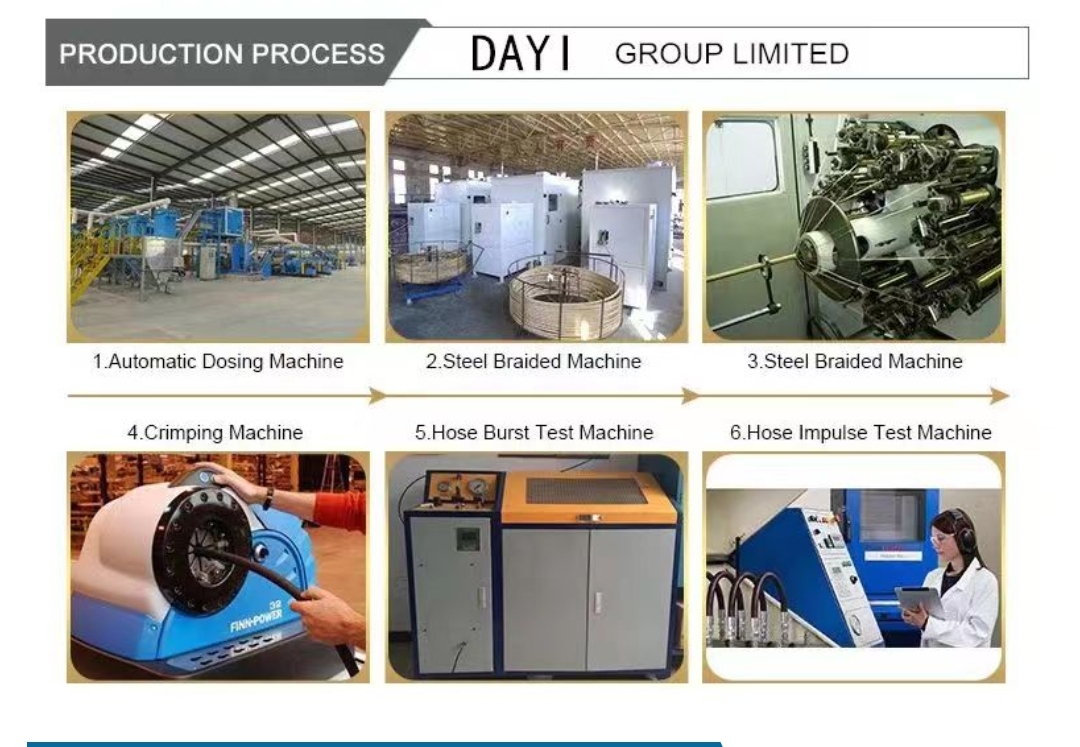
Manufacturing processes typically involve extrusion of the thermoplastic inner layer, followed by reinforcement application. Extrusion parameters – melt temperature, screw speed, and die pressure – are critical for achieving consistent wall thickness and smooth inner surfaces. Reinforcement layers are applied using automated winding or braiding machines, with tension control being paramount to ensure uniform fiber distribution and prevent premature failure. An outer protective layer, often composed of polyurethane or PVC, is then extruded to provide abrasion resistance, UV protection, and enhanced chemical compatibility. Key parameter control includes monitoring polymer melt flow index (MFI), reinforcement fiber tensile strength, and adhesion between layers. Post-production quality control involves hydrostatic pressure testing to verify burst pressure and leak testing to ensure integrity of the hose assembly. Furthermore, dimensional accuracy, including inner diameter and outer diameter, are rigorously checked.
Performance & Engineering
The performance of high-pressure thermoplastic hoses is primarily dictated by their ability to withstand internal pressure without failure. Force analysis involves calculating hoop stress (σh = PD/2t, where P is pressure, D is diameter, and t is wall thickness) and longitudinal stress within the hose wall. Finite element analysis (FEA) is often employed to model stress distribution under various loading conditions, including bending and torsional stresses. Environmental resistance is also critical. Exposure to high temperatures can reduce the tensile strength and elongation at break of the thermoplastic material, leading to premature failure. UV radiation can cause degradation of the outer protective layer, resulting in cracking and loss of flexibility. Chemical compatibility is assessed by immersing the hose in various fluids and monitoring for swelling, discoloration, or loss of mechanical properties.
Compliance requirements vary depending on the intended application. Hoses used in hydraulic systems must comply with SAE standards (e.g., SAE J517), while hoses used in food and beverage applications must meet FDA regulations. For offshore oil and gas applications, hoses must comply with API standards. Functional implementation considerations include hose bend radius, which affects internal stress concentration, and the selection of appropriate fittings. Fittings must be securely attached to the hose to prevent leakage and ensure pressure containment. Proper installation procedures, including avoiding sharp bends and excessive tension, are essential for maximizing hose lifespan and ensuring safe operation.
Technical Specifications
| Parameter | Nylon 6 (Standard Grade) | Nylon 11 (High Chemical Resistance) | Polyurethane (Abrasion Resistant) | Unit |
|---|---|---|---|---|
| Working Pressure | 250 | 300 | 200 | bar |
| Burst Pressure | 1000 | 1200 | 800 | bar |
| Temperature Range | -40 to +80 | -40 to +100 | -30 to +70 | °C |
| Tensile Strength | 80 | 90 | 70 | MPa |
| Elongation at Break | 300 | 400 | 500 | % |
| Chemical Resistance | Good (Oils, Fuels) | Excellent (Wide Range) | Fair (Solvents) | - |
Failure Mode & Maintenance
Common failure modes for high-pressure thermoplastic hoses include fatigue cracking, particularly at the connection points with fittings, due to cyclic pressure fluctuations. Delamination of the reinforcement layers can occur if adhesion between layers is compromised during manufacturing or due to prolonged exposure to harsh environments. Degradation of the thermoplastic material can result from exposure to high temperatures or UV radiation, leading to embrittlement and reduced tensile strength. Oxidation of the polymer can also occur, especially in the presence of oxygen and elevated temperatures. Abrasion damage to the outer protective layer can expose the reinforcement fibers, leading to corrosion and premature failure.
Professional maintenance solutions involve regular visual inspections to identify signs of wear, such as cracks, abrasions, or discoloration. Hydrostatic pressure testing should be performed periodically to verify the hose's ability to withstand its rated pressure. If damage is detected, the hose should be replaced immediately. Proper storage conditions are essential to prevent degradation. Hoses should be stored in a cool, dry, and dark place, away from direct sunlight and corrosive materials. Avoid bending the hose sharply during storage or handling. When connecting fittings, ensure proper torque is applied to prevent loosening or over-tightening. Regular cleaning with mild soap and water can help remove dirt and debris that can accelerate wear.
Industry FAQ
Q: What is the primary difference between Nylon 6 and Nylon 11 hoses in terms of chemical resistance?
A: Nylon 11 exhibits significantly superior chemical resistance compared to Nylon 6. While Nylon 6 offers good resistance to oils and fuels, Nylon 11 maintains its mechanical properties even when exposed to a wider range of aggressive chemicals, including strong acids, bases, and solvents. This makes Nylon 11 preferable for applications involving highly corrosive media.
Q: How does temperature affect the working pressure rating of a thermoplastic hose?
A: Increasing temperature generally reduces the working pressure rating of a thermoplastic hose. As temperature rises, the tensile strength and modulus of elasticity of the polymer decrease, leading to a reduction in its ability to withstand internal pressure. Manufacturers typically provide derating factors for different temperatures.
Q: What is the role of the reinforcement layer in a high-pressure hose?
A: The reinforcement layer, typically composed of high-tensile strength fibers like aramid or polyester, provides the primary hoop strength needed to resist bursting under pressure. It prevents the thermoplastic core from expanding excessively and failing. The type, quantity, and orientation of the reinforcement fibers directly influence the hose's pressure-bearing capacity.
Q: What are the common causes of hose failure at the fitting connection points?
A: Common causes include improper fitting installation (over-tightening or under-tightening), fatigue cracking due to cyclic pressure and vibration, and corrosion of the fitting material. Also, incompatible fitting materials can cause galvanic corrosion. Regularly inspecting fittings and ensuring correct torque specifications are crucial.
Q: What standards should be considered when selecting a hose for hydraulic applications?
A: SAE J517 is the primary standard for hydraulic hose. It specifies performance requirements for hose reinforcement types, working pressure, and burst pressure. Depending on the specific application and geographic location, other standards such as ISO 6898 and EN 853 may also be relevant.
Conclusion
High-pressure thermoplastic hoses manufactured in China offer a compelling solution for fluid transfer in diverse industrial applications, driven by their lightweight nature, corrosion resistance, and cost-effectiveness. A deep understanding of material science, manufacturing processes, and performance characteristics is essential for selecting the appropriate hose for a given application and ensuring long-term reliability.
Future developments are likely to focus on developing new polymer formulations with enhanced temperature resistance, chemical compatibility, and abrasion resistance. The adoption of advanced manufacturing techniques, such as co-extrusion and precision winding, will further improve hose quality and performance. Continued adherence to stringent international standards and rigorous quality control measures will remain paramount for maintaining the industry's reputation and ensuring safe operation.