
Apr . 01, 2024 17:55 Back to list
china high pressure rubber hose factory Performance Analysis
Introduction
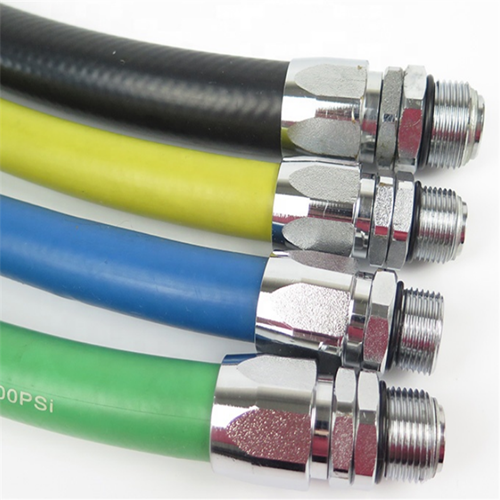
High-pressure rubber hose, manufactured extensively in China, constitutes a critical component in fluid power systems across diverse industries including construction, agriculture, oil & gas, mining, and manufacturing. These hoses are engineered to safely convey fluids – hydraulic oil, water, air, chemicals, and petroleum-based products – under significant pressure and varying environmental conditions. Their technical position within the industrial chain falls between the production of rubber compounds and reinforcement materials (steel wire, synthetic fibers) and the final assembly of hydraulic machinery, pneumatic tools, and specialized fluid transfer equipment. Core performance characteristics, crucial for assessing hose suitability, revolve around burst pressure, working pressure, temperature resistance, fluid compatibility, and abrasion resistance. A key industry pain point resides in ensuring consistent quality control across various Chinese manufacturers, coupled with verifying compliance with stringent international safety standards and lifecycle durability.
Material Science & Manufacturing
The foundation of high-pressure rubber hose lies in the interplay of several materials. The inner tube, providing fluid resistance, is typically constructed from synthetic rubbers like Nitrile (NBR) for oil-based fluids, Ethylene Propylene Diene Monomer (EPDM) for water and steam, or Chloroprene (CR) for chemical resistance. These elastomers offer varying degrees of temperature tolerance and chemical compatibility. The reinforcement layer, crucial for pressure containment, primarily utilizes high-tensile steel wire (single or multiple spiral plies) or braided synthetic fiber (e.g., polyester, aramid). Steel wire offers superior pressure handling capacity but is heavier and less flexible, while synthetic fibers provide greater flexibility and kink resistance. The outer cover, protecting against abrasion, weather, and ozone degradation, is often made of Chloroprene (CR) or a blend of synthetic rubbers. Manufacturing typically involves a layered process: inner tube extrusion, reinforcement winding/braiding, and outer cover extrusion. Critical parameters include rubber compound mixing ratios (affecting hardness, elongation, and chemical resistance), wire tension during winding (impacting burst pressure), and vulcanization time & temperature (determining the final cross-linking density and mechanical properties). Precise control of these parameters is vital to achieve desired performance and prevent premature failure. The selection of materials directly impacts the hose's performance; incorrect material choices can lead to rapid degradation and safety hazards.
Performance & Engineering
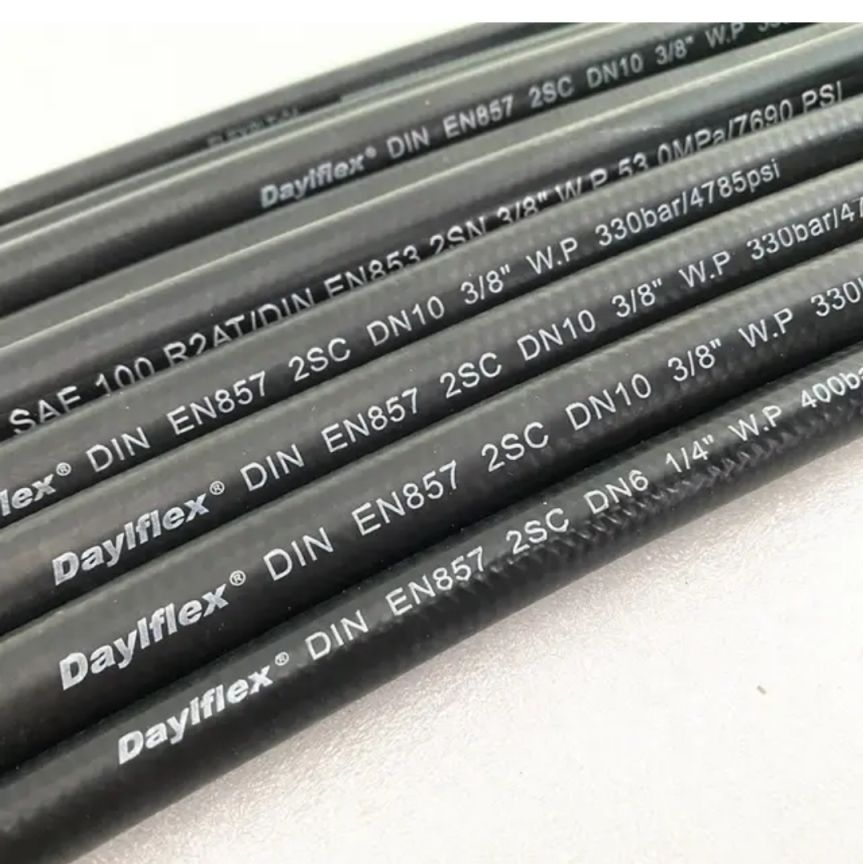
Performance assessment of high-pressure rubber hose centers on several key engineering considerations. Burst pressure, determined through hydrostatic testing, represents the maximum pressure the hose can withstand before rupture – typically four times the working pressure. Working pressure defines the safe operating limit under specified conditions. Temperature resistance impacts both the rubber compound's elasticity and the steel reinforcement's strength; performance degrades at extremes. Flexibility, assessed by bend radius, is crucial for installation in confined spaces. Environmental resistance encompasses resistance to ozone cracking, UV degradation, and chemical attack. Force analysis is essential during hose design, accounting for internal fluid pressure, external bending moments, and axial tensile forces. Finite Element Analysis (FEA) is often employed to simulate stress distribution and optimize reinforcement configurations. Compliance requirements are significant; hoses must meet standards like SAE J517 (USA), EN 856 (Europe), and GB/T 3686 (China). Leakage is a critical failure mode; meticulous attention must be paid to coupling integrity and sealing performance. The hose's ability to maintain dimensional stability under pressure and temperature cycling is also a paramount concern, often requiring rigorous laboratory testing.
Technical Specifications
| Parameter | Unit | SAE 100R2 AT | SAE 100R6 AT |
|---|---|---|---|
| Working Pressure | MPa | 34.5 | 21 |
| Burst Pressure | MPa | 138 | 84 |
| Temperature Range | °C | -40 to +100 | -40 to +60 |
| Reinforcement | - | Six Spiral High-Tensile Wire | Four Spiral High-Tensile Wire |
| Inner Tube | - | NBR (Nitrile Rubber) | NBR (Nitrile Rubber) |
| Outer Cover | - | CR (Chloroprene Rubber) | CR (Chloroprene Rubber) |
Failure Mode & Maintenance
High-pressure rubber hose failure modes are diverse. Fatigue cracking, induced by repeated pressure cycling and flexing, is a common occurrence, particularly at connection points. Delamination, separation of reinforcement layers, compromises pressure containment. Chemical degradation, caused by incompatible fluids, softens the rubber and reduces its tensile strength. Oxidation, accelerated by heat and exposure to oxygen, leads to hardening and cracking. Abrasion, resulting from external contact with abrasive surfaces, erodes the outer cover. Kinking, caused by excessive bending, restricts fluid flow and creates localized stress concentrations. Maintenance involves regular visual inspections for cracks, bulges, abrasions, and leaks. Proper storage – away from direct sunlight, heat, and ozone sources – is crucial. Hoses should be replaced if any damage is detected or if they exceed their service life. Avoid exceeding the specified working pressure and temperature limits. Proper coupling installation and torque specifications must be followed. Periodic fluid analysis can detect chemical incompatibility issues before they lead to hose failure. Preventative maintenance significantly extends hose lifespan and ensures operational safety.
Industry FAQ
Q: What is the significance of the 'dash size' designation for a high-pressure hose (e.g., -6, -8, -10)?
A: The dash size refers to the inner diameter of the hose in sixteenths of an inch. For example, a -6 hose has a 6/16 inch (or 3/8 inch) inner diameter. This designation is critical for ensuring proper flow rates and compatibility with fittings and hydraulic systems. Using an incorrect dash size can lead to flow restriction, pressure drops, and system inefficiency.
Q: How do different reinforcement types (wire spiral vs. fiber braid) affect hose performance?
A: Wire spiral reinforcement provides higher burst pressure and excellent kink resistance, making it suitable for demanding applications. However, it’s less flexible and more expensive. Fiber braid reinforcement offers greater flexibility and lower cost but has a lower burst pressure capacity. The choice depends on the application's pressure requirements and routing constraints.
Q: What are the implications of using a hose with an incompatible fluid?
A: Incompatible fluids can cause swelling, softening, or cracking of the inner tube material, leading to leaks and hose failure. This can result in environmental contamination, equipment damage, and potential safety hazards. Always verify fluid compatibility before selecting a hose.
Q: What is the importance of proper coupling installation?
A: Incorrectly installed couplings are a major source of hose failures. Improper crimping, over-tightening, or using incompatible fittings can damage the hose and create leak paths. Following manufacturer’s torque specifications and using calibrated crimping tools are essential for ensuring a secure and reliable connection.
Q: How often should high-pressure hoses be inspected and replaced?
A: The inspection frequency depends on the severity of the application. Regular visual inspections should be conducted weekly or monthly, looking for signs of wear, damage, or leaks. Hoses should be replaced immediately if any damage is detected. As a general guideline, hoses should be replaced every 5-7 years, regardless of visual condition, or sooner if exposed to harsh environments or frequent pressure cycling.
Conclusion
The selection and application of high-pressure rubber hose demand a thorough understanding of material science, manufacturing processes, performance characteristics, and potential failure modes. Ensuring compatibility between the hose, fluid, and operating conditions is paramount for maintaining system integrity and preventing catastrophic failures. The increasing demand for reliable and durable hose solutions necessitates a focus on quality control, adherence to international standards, and proactive maintenance programs.
Ultimately, optimizing the lifespan and safety of high-pressure rubber hose systems requires a holistic approach that encompasses careful material selection, precise manufacturing techniques, diligent inspection procedures, and a commitment to continuous improvement within the China high pressure rubber hose factory supply chain.