
Apr . 01, 2024 17:55 Back to list
china high pressure hydraulic rubber hose suppliers Performance Analysis
Introduction
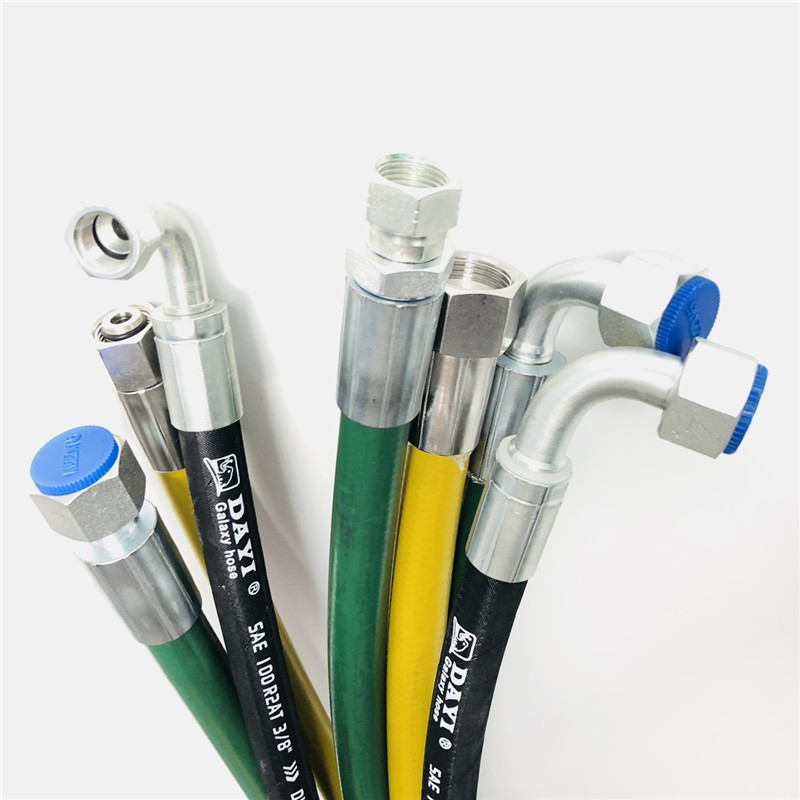
High-pressure hydraulic rubber hoses are critical components in fluid power systems, transmitting hydraulic fluid to actuators and machinery. Chinese manufacturers have become significant players in the global supply chain for these hoses, offering competitive pricing and increasingly sophisticated production capabilities. This guide details the material science, manufacturing processes, performance characteristics, failure modes, and maintenance requirements for high-pressure hydraulic rubber hoses sourced from China. The hoses operate under extreme conditions - high pressure, fluctuating temperatures, and potential exposure to corrosive fluids – demanding stringent quality control and adherence to international standards. A key industry pain point revolves around consistent material quality and reliable performance at specified pressure ratings, requiring meticulous validation beyond basic burst pressure testing. Understanding the nuances of construction and materials is crucial for engineers and procurement professionals alike.
Material Science & Manufacturing
High-pressure hydraulic hoses are typically constructed of several layers. The inner tube, in direct contact with the hydraulic fluid, is commonly made of oil-resistant synthetic rubber such as nitrile (NBR), hydrogenated nitrile butadiene rubber (HNBR), or fluorocarbon rubber (FKM/Viton), selected based on fluid compatibility. NBR is cost-effective for general petroleum-based fluids, while HNBR offers improved heat and ozone resistance. FKM provides superior resistance to aggressive chemicals and high temperatures but is the most expensive option. The reinforcement layer, responsible for pressure containment, is usually comprised of multiple braids of high-tensile steel wire. The number of braids dictates the working pressure capacity; typically ranging from 2 to 6 braids. Between the inner tube and reinforcement, a bonding layer ensures adhesion and prevents separation. The outer cover, providing abrasion and weather resistance, is commonly made of synthetic rubber like chloroprene (CR) or ethylene propylene diene monomer (EPDM).
Manufacturing involves several key processes. Inner tube extrusion utilizes specialized mixing and molding equipment to achieve precise dimensions and material consistency. Reinforcement braiding is automated, ensuring uniform wire coverage and minimizing voids. Bonding agents are applied meticulously before vulcanization, a critical heat-curing process that crosslinks the rubber compounds, developing their mechanical properties. Vulcanization parameters (temperature, pressure, time) are stringently controlled as they directly impact hose performance. Quality control at each stage, including rubber compound testing (tensile strength, elongation, hardness), wire inspection, and dimensional checks, is paramount. Chinese suppliers often employ continuous vulcanization processes to enhance production efficiency. A common challenge is maintaining consistent batch-to-batch material properties due to variations in raw material sourcing and compounding techniques.

Performance & Engineering
The performance of a hydraulic hose is defined by its ability to withstand internal pressure, external damage, and environmental factors. Burst pressure, the pressure at which the hose fails, is a critical specification, but working pressure – typically 75% of burst pressure – is the more relevant parameter for operational safety. Hose designs must account for pressure spikes and dynamic loading during system operation. Fatigue life, the number of pressure cycles the hose can endure before failure, is a crucial consideration, particularly in applications with frequent actuation. Environmental resistance includes protection against ozone cracking, UV degradation, and fluid compatibility.
Engineering calculations involve determining the appropriate reinforcement layer configuration (number and size of braids) based on desired working pressure and safety factor. Finite element analysis (FEA) is increasingly used to model stress distribution within the hose wall under various loading conditions. Hose end connections (crimping, swaging, or field-attachable fittings) are critical points of potential failure and require careful consideration. Proper crimp size and fitting compatibility are essential to prevent leaks and blow-offs. Chinese manufacturers are improving their engineering capabilities, but a common area for improvement is implementing more robust validation testing beyond standard burst pressure measurements, including long-term pressure cycling and fluid compatibility testing under varying temperature conditions. Compliance with industry standards like SAE J517 and EN 853 is essential for ensuring interchangeability and safety.
Technical Specifications
| Parameter | Unit | Typical Value (DN13, 2 Wire Braid) | Test Standard |
|---|---|---|---|
| Working Pressure | MPa | 20 | SAE J517 |
| Burst Pressure | MPa | 80 | SAE J517 |
| Inner Tube Material | - | NBR | ASTM D2000 |
| Reinforcement Material | - | Steel Wire | ASTM A938 |
| Outer Cover Material | - | CR | ASTM D2000 |
| Temperature Range | °C | -40 to +100 | SAE J517 |
| Minimum Bend Radius | mm | 4D (D = Hose ID) | Manufacturer Specification |
Failure Mode & Maintenance
Common failure modes in hydraulic hoses include burst, leaks, and hose degradation. Bursting typically results from exceeding the working pressure, fatigue failure due to repeated pressure cycling, or damage to the reinforcement layer. Leaks can occur at the hose ends due to improper crimping or fitting corrosion, or through the hose wall due to pinholes or cracks. Hose degradation can be caused by exposure to extreme temperatures, UV radiation, ozone, or incompatible hydraulic fluids. Fatigue cracking, often initiating at areas of high stress concentration (e.g., near fittings), is a common long-term failure mechanism. Internal abrasion caused by contaminated fluid can also damage the inner tube, leading to leaks. Oxidation of the rubber compounds, particularly in the outer cover, can cause hardening and cracking.
Preventive maintenance is critical for maximizing hose life and preventing catastrophic failures. Regular visual inspections should be conducted to check for signs of damage, such as cuts, abrasions, cracks, and leaks. Hose routing should be optimized to minimize bending stress and avoid contact with hot surfaces or sharp edges. Hydraulic fluid should be kept clean and free of contaminants. Hose connections should be inspected for tightness and corrosion. Replacement should be based on a planned schedule, considering operating conditions and hose age, rather than waiting for a failure to occur. When replacing hoses, ensure compatibility with the hydraulic fluid and the system’s operating pressure. Always follow the manufacturer's recommendations for hose installation and maintenance.
Industry FAQ
Q: What is the typical lead time for a large order of custom-spec hydraulic hoses from a Chinese supplier?
A: Lead times vary depending on the complexity of the specification, the quantity ordered, and the supplier's current production schedule. Generally, for a large, custom order requiring new tooling or specialized materials, expect a lead time of 8-12 weeks. Standard specifications with readily available materials can be delivered in 4-6 weeks. It's crucial to clearly communicate requirements and obtain a firm delivery schedule upfront.
Q: How do Chinese hydraulic hose manufacturers address quality control for steel wire braiding?
A: Reputable manufacturers employ a multi-stage quality control process for steel wire. This includes incoming material inspection (chemical composition, tensile strength), dimensional checks of the wire diameter and surface finish, and inspection of the braid angle and coverage during the braiding process. Non-destructive testing methods, such as eddy current testing, are used to detect wire defects. Burst pressure testing of finished hoses provides a final verification of reinforcement integrity.
Q: What certifications should I look for from a Chinese hydraulic hose supplier?
A: Key certifications include ISO 9001 (quality management system), ISO 14001 (environmental management system), and potentially product-specific certifications such as CE marking (for European markets). Verification of compliance with relevant industry standards (SAE J517, EN 853) is also crucial. Auditing the supplier's facility and reviewing their quality control procedures are highly recommended.
Q: What are the common challenges with fluid compatibility when sourcing from Chinese suppliers?
A: Ensuring fluid compatibility requires careful specification of the inner tube material (NBR, HNBR, FKM) based on the hydraulic fluid being used. Chinese suppliers may sometimes substitute materials without prior notification. Therefore, detailed material specifications and independent testing of the inner tube material’s compatibility with the fluid are essential.
Q: How do Chinese suppliers typically handle variations in raw material costs (e.g., steel, rubber)?
A: Raw material price fluctuations are common. Most suppliers include a clause in their contracts allowing for price adjustments based on changes in raw material indices. It's important to negotiate a clear pricing mechanism and understand the basis for any potential price increases. Long-term contracts with fixed pricing or price escalation caps can provide greater cost stability.
Conclusion
High-pressure hydraulic rubber hoses from China offer a compelling combination of cost-effectiveness and increasingly sophisticated manufacturing capabilities. However, consistent quality and reliable performance require diligent attention to material selection, manufacturing processes, and quality control. Understanding the potential failure modes and implementing a robust preventive maintenance program are essential for maximizing hose life and ensuring operational safety. The key to successful sourcing lies in clear communication of technical specifications, rigorous supplier qualification, and ongoing monitoring of product quality.
The industry is moving towards more advanced hose designs incorporating new materials and manufacturing techniques. Chinese suppliers are actively investing in research and development to meet evolving market demands. Collaboration between engineers and procurement professionals is crucial to leverage the benefits of Chinese sourcing while mitigating potential risks. A proactive approach to quality assurance and a commitment to continuous improvement will ensure a reliable supply of high-performance hydraulic hoses.