
Apr . 01, 2024 17:55 Back to list
china high pressure car washer hose supplier Performance Analysis
Introduction
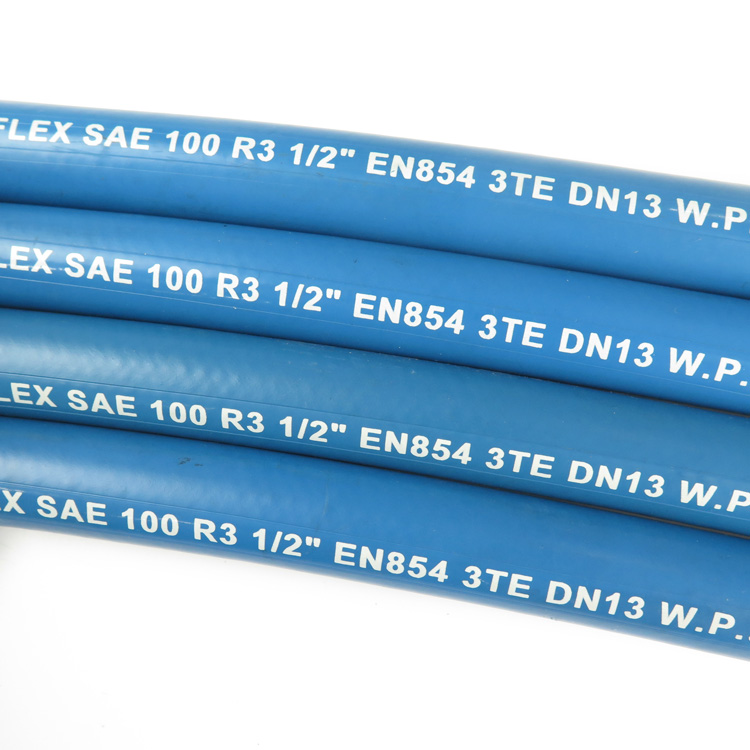
High-pressure car wash hoses, manufactured by suppliers in China, represent a critical component within the vehicle detailing and industrial cleaning sectors. These hoses are specifically engineered to withstand substantial fluid pressures, typically ranging from 150 to 300 bar (2175-4350 PSI), and aggressive chemical exposure associated with detergents and cleaning agents. Positioned within the industrial supply chain between raw material providers (rubber, polymers, steel wire) and end-users (car washes, industrial facilities, detailing businesses), their performance directly impacts operational efficiency, safety, and lifespan of car wash equipment. The core performance characteristics defining these hoses are burst pressure, working pressure, temperature resistance, chemical compatibility, and abrasion resistance, all of which are meticulously controlled during the manufacturing process. Addressing common industry pain points like premature hose failure due to material degradation and coupling leakage is paramount for reliable operation and cost-effective maintenance.
Material Science & Manufacturing
The construction of high-pressure car wash hoses relies heavily on a multi-layered design utilizing specific material properties. The inner tube, critical for fluid containment, is typically composed of oil-resistant synthetic rubber compounds like Nitrile Rubber (NBR) or Chloroprene Rubber (CR) due to their excellent resistance to water, solvents, and petroleum-based products. NBR provides superior oil resistance, while CR offers better ozone and weathering resistance. The reinforcement layer is crucial for withstanding high pressures. It usually consists of high-tensile steel wire spirally wound or braided around the inner tube. The number of layers and wire diameter directly correlate with the hose’s rated working and burst pressures. An intermediate cover layer provides adhesion between the reinforcement and outer cover. Finally, the outer cover, providing abrasion and UV resistance, is often made from a blend of synthetic rubbers such as PVC or Polyurethane (PU). Manufacturing processes primarily involve extrusion of the inner tube and outer cover, followed by precise winding or braiding of the reinforcement layer. Critical parameters include extrusion temperature control for consistent rubber density, wire tension during winding to ensure uniform pressure distribution, and vulcanization (curing) temperature and time to achieve optimal rubber crosslinking and mechanical properties. Quality control includes hydrostatic pressure testing to verify burst pressure, impulse testing to evaluate fatigue resistance, and chemical resistance assessments.
Performance & Engineering
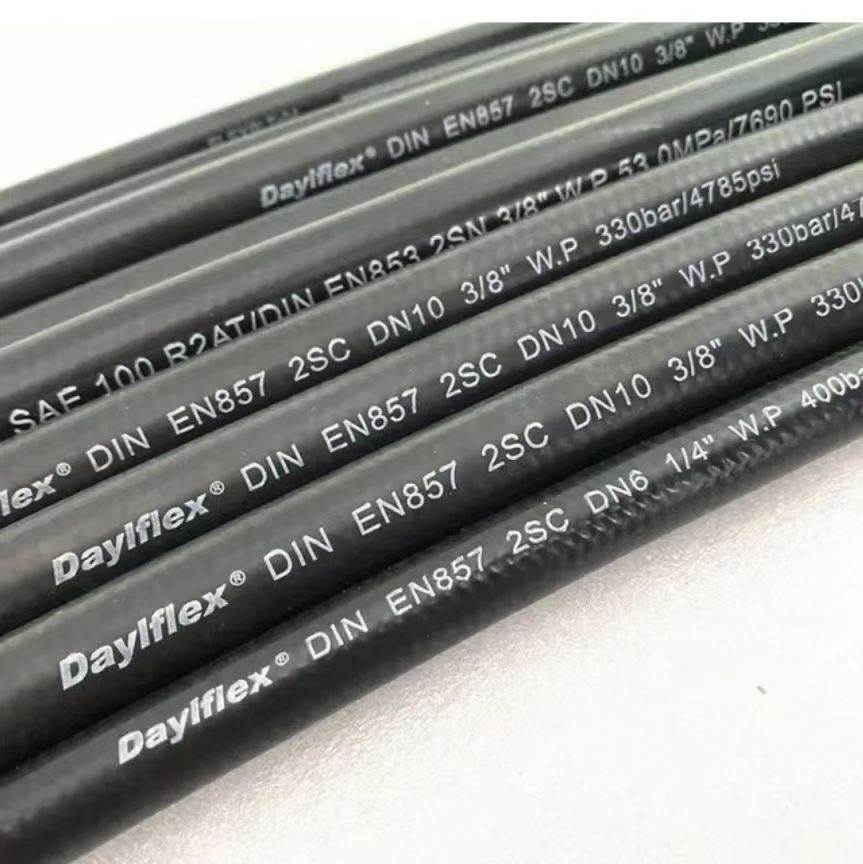
Performance of high-pressure car wash hoses is fundamentally dictated by the principles of fluid mechanics and material strength. Force analysis focuses on hoop stress within the hose walls resulting from internal pressure. The steel wire reinforcement bears the majority of this stress, distributing it evenly to prevent rupture. Bernoulli's principle governs fluid flow within the hose, and frictional losses due to the inner tube's surface roughness are minimized through smooth extrusion processes. Environmental resistance is paramount. Prolonged exposure to UV radiation can cause rubber degradation and cracking. Therefore, UV stabilizers are incorporated into the outer cover formulation. Temperature variations affect rubber elasticity; hoses are rated for specific temperature ranges (typically -40°C to +80°C) to maintain flexibility and prevent brittleness. Chemical compatibility is critical, as exposure to harsh detergents can cause swelling, softening, or cracking of the inner tube. Compliance requirements necessitate adherence to safety standards regarding burst pressure and leakage prevention. Functional implementation involves securely attaching couplings (typically brass or stainless steel) to the hose ends using crimping or swaging techniques. The integrity of the coupling-hose connection is essential for preventing leaks and ensuring safe operation. Finite Element Analysis (FEA) is often employed during the design phase to optimize hose geometry and reinforcement configuration for maximum pressure resistance and durability.
Technical Specifications
| Parameter | Unit | Typical Value (Standard Grade) | High-Performance Grade |
|---|---|---|---|
| Working Pressure | bar | 200 | 300 |
| Burst Pressure | bar | 600 | 900 |
| Inner Diameter | mm | 8 | 10 |
| Outer Diameter | mm | 16 | 20 |
| Temperature Range | °C | -40 to +80 | -50 to +100 |
| Reinforcement | - | 2 layers steel wire braid | 4 layers steel wire spiral |
| Inner Tube Material | - | NBR | NBR/CR Blend |
Failure Mode & Maintenance
High-pressure car wash hoses are susceptible to various failure modes in practical applications. Fatigue cracking, occurring over time due to repeated pressure cycles, is a common issue, particularly at the hose ends near the couplings. This is often initiated by microscopic flaws in the reinforcement layer or stress concentrations around coupling crimps. Delamination, the separation of layers within the hose wall, can result from inadequate adhesion between the rubber compounds and the reinforcement. Chemical degradation can occur if the inner tube material is incompatible with the cleaning agents used, leading to swelling, softening, and eventual cracking. Oxidation, accelerated by exposure to ozone and UV radiation, causes rubber to become brittle and lose elasticity. Kinking or twisting the hose excessively can create localized stress concentrations and lead to rupture. Maintenance strategies include regular visual inspections for cracks, bulges, or signs of degradation. Hoses should be properly stored when not in use, avoiding direct sunlight and extreme temperatures. Couplings should be inspected for tightness and corrosion. Hydrostatic pressure testing, performed annually, can identify potential weaknesses before catastrophic failure. Prompt replacement is crucial if any signs of damage or degradation are observed. Using a hose reel can prevent kinking and prolong service life. Avoid exceeding the maximum working pressure specified by the manufacturer.
Industry FAQ
Q: What is the difference between spiral and braided reinforcement in high-pressure hoses?
A: Spiral reinforcement, utilizing a continuously wound wire, typically provides higher pressure ratings and improved flexibility compared to braided reinforcement. Braided reinforcement, while offering excellent burst strength, tends to be stiffer and less resistant to bending. Spiral reinforcement is favored for applications requiring frequent bending, while braided reinforcement is suitable for static installations where flexibility is less critical.
Q: How does the chemical composition of the cleaning agents affect hose lifespan?
A: Highly alkaline or acidic cleaning agents can accelerate the degradation of the inner tube material. Specifically, strong oxidizers can attack the rubber polymer chains, leading to swelling, softening, and cracking. Selecting a hose with an inner tube specifically formulated for compatibility with the intended cleaning agents is crucial for maximizing lifespan.
Q: What is the significance of impulse testing?
A: Impulse testing simulates the pulsating pressure fluctuations commonly encountered in car wash applications. It evaluates the hose’s ability to withstand repeated pressure surges without experiencing premature failure. A hose that passes impulse testing demonstrates superior fatigue resistance and durability.
Q: What are the common causes of leaks at the hose-coupling interface?
A: Leaks can result from inadequate crimping during coupling attachment, corrosion of the coupling material, or damage to the hose end. Proper crimping technique and the use of corrosion-resistant couplings (e.g., stainless steel) are essential for preventing leaks. Regularly inspecting couplings for signs of corrosion or damage is also vital.
Q: What safety measures should be taken when handling damaged high-pressure hoses?
A: Damaged high-pressure hoses pose a significant safety hazard. A ruptured hose can release high-pressure fluid, causing serious injury. Immediately shut off the water supply and isolate the damaged hose. Wear appropriate personal protective equipment (PPE), including safety glasses and gloves, when handling the hose. Dispose of the damaged hose properly and replace it with a new, undamaged hose.
Conclusion
High-pressure car wash hoses are complex engineered products requiring meticulous material selection, manufacturing control, and adherence to stringent performance standards. Understanding the interplay between material properties, fluid dynamics, and environmental factors is crucial for selecting the appropriate hose for a given application. Proper maintenance and regular inspection are essential for ensuring safe and reliable operation, maximizing service life, and minimizing downtime.
The evolving demands of the car wash and industrial cleaning sectors are driving innovation in hose technology, focusing on enhanced chemical resistance, improved flexibility, and extended durability. Future developments may include the integration of smart sensors for real-time pressure monitoring and leak detection, as well as the use of advanced polymer materials for increased resistance to degradation. Suppliers prioritizing quality control and continuous improvement will remain competitive in this demanding market.