
Apr . 01, 2024 17:55 Back to list
china gasoline hose suppliers Performance Analysis
Introduction
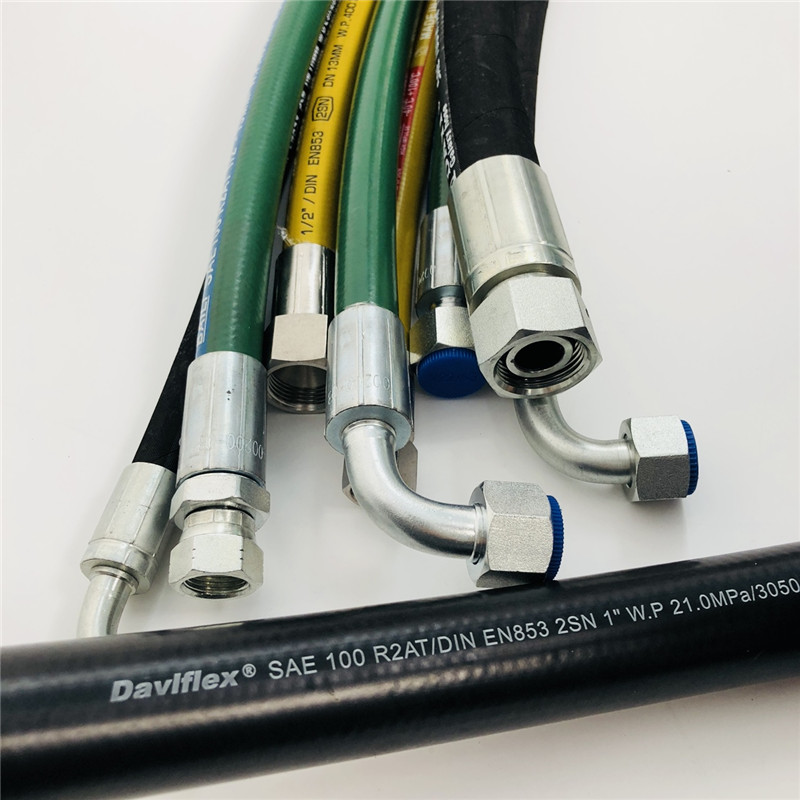
Gasoline hose, supplied extensively by manufacturers in China, represents a critical component within fuel delivery systems across automotive, industrial, and agricultural sectors. These hoses are engineered to safely and efficiently transfer gasoline, requiring a precise balance of chemical resistance, mechanical strength, and adherence to stringent safety regulations. The Chinese supply chain has become a dominant force in the global market due to its competitive pricing and increasing technical capabilities. This guide details the material science, manufacturing processes, performance characteristics, failure modes, and industry standards associated with gasoline hoses sourced from China, addressing common procurement challenges and technical considerations for B2B buyers. The core performance metrics revolve around fuel permeation, burst pressure, and aging resistance, all of which are directly impacted by the hose’s construction and the quality control measures employed during manufacturing.
Material Science & Manufacturing
The fundamental material for gasoline hose construction is typically a synthetic rubber compound, predominantly comprised of nitrile rubber (NBR) due to its excellent resistance to aliphatic hydrocarbons found in gasoline. However, premium hoses may incorporate fluorocarbon elastomers (FKM) like Viton for superior resistance to aggressive fuel blends, including ethanol-enriched gasoline (E85). Reinforcement layers are critical. These are often constructed from multiple plies of high-tensile textile braiding – typically polyester or nylon – to provide burst strength and prevent kinking. The cover layer is generally an ethylene-propylene-diene monomer (EPDM) rubber, providing weather resistance and abrasion protection. Manufacturing begins with the compounding of the rubber formulations, meticulously controlling ingredient ratios to achieve desired properties. Extrusion is then employed to create the inner tube and cover layers. The reinforcement braid is simultaneously applied during the extrusion process or as a separate winding operation. Following braiding, the hose undergoes vulcanization – a curing process using heat and pressure – to crosslink the rubber polymers, enhancing strength, elasticity, and chemical resistance. Critical parameters during vulcanization include temperature, pressure, and curing time. Post-vulcanization, hoses are subjected to rigorous quality control, including pressure testing, dimensional inspection, and fuel permeation testing. China’s suppliers are increasingly adopting automated manufacturing processes to improve consistency and reduce defects, but variations in quality control between manufacturers remain a significant concern.

Performance & Engineering
Gasoline hose performance is dictated by several engineering principles. The primary consideration is burst pressure, determined by the reinforcement layer’s tensile strength and the rubber compound’s cohesive strength. Force analysis involves calculating the hoop stress within the hose wall under internal pressure. Environmental resistance is equally critical. Prolonged exposure to ultraviolet (UV) radiation, ozone, and extreme temperatures can lead to rubber degradation, reducing flexibility and increasing the risk of cracking. Fuel permeation is a significant performance parameter, governed by Fick’s Law of Diffusion, relating permeation rate to concentration gradient and the rubber’s diffusion coefficient. Regulations, such as SAE J30R9 (USA) and EN 12115 (Europe), dictate maximum allowable permeation rates to minimize fuel vapor emissions. Compliance also extends to static electricity dissipation. Hoses must incorporate conductive fillers (typically carbon black) to prevent static buildup, mitigating the risk of ignition during fuel transfer. Long-term durability is assessed through accelerated aging tests, simulating years of service life in controlled laboratory conditions. The design must also consider the hose's flexibility and bend radius to prevent kinking and ensure smooth fuel flow, impacting fuel pump efficiency. The impact of ethanol content in gasoline blends is a major engineering challenge as ethanol can cause swelling and degradation of certain rubber compounds, necessitating the use of ethanol-resistant formulations.
Technical Specifications
| Parameter | Unit | Standard Specification (SAE J30R9) | Typical Chinese Supplier Range |
|---|---|---|---|
| Working Pressure | PSI | 150 | 120 – 200 |
| Burst Pressure | PSI | 600 | 480 – 720 |
| Tensile Strength (Reinforcement) | PSI | 500 | 400 – 600 |
| Fuel Permeation (Gasoline) | g/m²/day | ≤ 2 | 1.5 – 3.5 |
| Operating Temperature Range | °F | -40 to 212 | -30 to 248 |
| Electrical Conductivity | Ω/m | < 0.1 | < 0.2 |
Failure Mode & Maintenance
Gasoline hoses are susceptible to several failure modes. Fatigue cracking, initiated by repeated flexing and pressure cycles, is a common cause of failure, particularly near fittings. Delamination of the reinforcement layer from the rubber matrix can occur due to inadequate bonding during vulcanization or chemical attack. Rubber degradation, resulting from UV exposure, ozone cracking, and ethanol swelling, reduces flexibility and increases the risk of cracking. Oxidation, caused by exposure to oxygen and heat, leads to hardening and embrittlement. Abrasion from contact with surrounding surfaces can damage the cover layer, exposing the reinforcement braid. Proper maintenance includes regular visual inspection for cracks, swelling, or abrasion. Avoid kinking the hose, as this can weaken the reinforcement layer. Store hoses in a cool, dry place, away from direct sunlight and ozone sources. When replacing a hose, ensure the new hose is compatible with the fuel type being used, especially regarding ethanol content. China’s suppliers are improving quality control measures, but inconsistencies still exist; therefore, independent testing of samples is advisable. Failure analysis often reveals that lower-grade Chinese hoses utilize insufficient rubber compounding, leading to faster degradation and reduced service life.
Industry FAQ
Q: What is the primary difference between NBR and FKM rubber in gasoline hose applications?
A: NBR (Nitrile Butadiene Rubber) offers good resistance to aliphatic hydrocarbons (standard gasoline) and is more cost-effective. However, FKM (Fluorocarbon Elastomer, like Viton) provides superior resistance to aggressive fuel blends, particularly those containing high concentrations of ethanol, and maintains its properties at higher temperatures. FKM is preferred for E85 compatibility and extended service life, despite the higher cost.
Q: How does the reinforcement braiding impact the hose's burst pressure rating?
A: The reinforcement braiding, typically polyester or nylon, directly dictates the hose’s burst pressure. Higher tensile strength braiding, combined with tighter weave density, provides greater resistance to hoop stress under internal pressure. The number of plies in the braid also influences the burst pressure; more plies generally equate to a higher rating.
Q: What are the typical quality control tests performed by reputable Chinese gasoline hose suppliers?
A: Reputable suppliers should perform pressure testing (hydrostatic and burst), dimensional inspection, fuel permeation testing, and electrical conductivity testing. They should also provide material certifications and traceability documentation. Independent third-party testing is recommended to verify compliance with international standards.
Q: How do I determine if a gasoline hose is compatible with ethanol-enriched fuels like E85?
A: The hose specification sheet should explicitly state its compatibility with E85. Look for hoses specifically formulated with FKM rubber or other ethanol-resistant elastomers. Avoid using NBR hoses with E85, as ethanol can cause significant swelling and degradation, leading to premature failure.
Q: What are the implications of using a hose with inadequate electrical conductivity?
A: Inadequate electrical conductivity can allow static electricity to build up during fuel transfer, creating a potential ignition hazard. This is especially dangerous when transferring gasoline in flammable environments. All gasoline hoses should incorporate conductive fillers (typically carbon black) to dissipate static charge effectively.
Conclusion
The selection of gasoline hoses from Chinese suppliers necessitates a thorough understanding of material science, manufacturing processes, and performance specifications. While offering competitive pricing, quality control variations demand rigorous vetting and independent testing to ensure adherence to international safety standards. The increasing prevalence of ethanol-enriched fuels underscores the importance of selecting hoses formulated with compatible elastomers like FKM.
Ultimately, a technically informed procurement strategy, prioritizing quality over solely cost, is crucial for mitigating risk and ensuring long-term reliability and safety within fuel handling systems. Ongoing monitoring of industry standards and supplier capabilities will be paramount in navigating the evolving landscape of gasoline hose technology.