
Apr . 01, 2024 17:55 Back to list
china gasoline hose manufacturer Performance Analysis
Introduction
Gasoline hoses manufactured in China are critical components in the fuel delivery infrastructure, serving diverse applications from retail fueling stations to commercial and industrial fuel transfer operations. These hoses are engineered to safely and efficiently convey gasoline, requiring stringent adherence to international safety and performance standards. The industry is currently facing increased demands for enhanced chemical resistance, static dissipation, and extended service life due to the evolving fuel compositions—including increased ethanol content—and stringent environmental regulations. This guide provides a comprehensive overview of the materials, manufacturing processes, performance characteristics, failure modes, and maintenance procedures associated with China-manufactured gasoline hoses, aimed at procurement managers, engineers, and quality control personnel within the broader fuel handling and distribution sector. The competitive landscape necessitates understanding the nuances of material selection and manufacturing capabilities to ensure optimal performance and regulatory compliance. The increasing adoption of automated fuel transfer systems also necessitates hoses with superior kink resistance and durability.
Material Science & Manufacturing
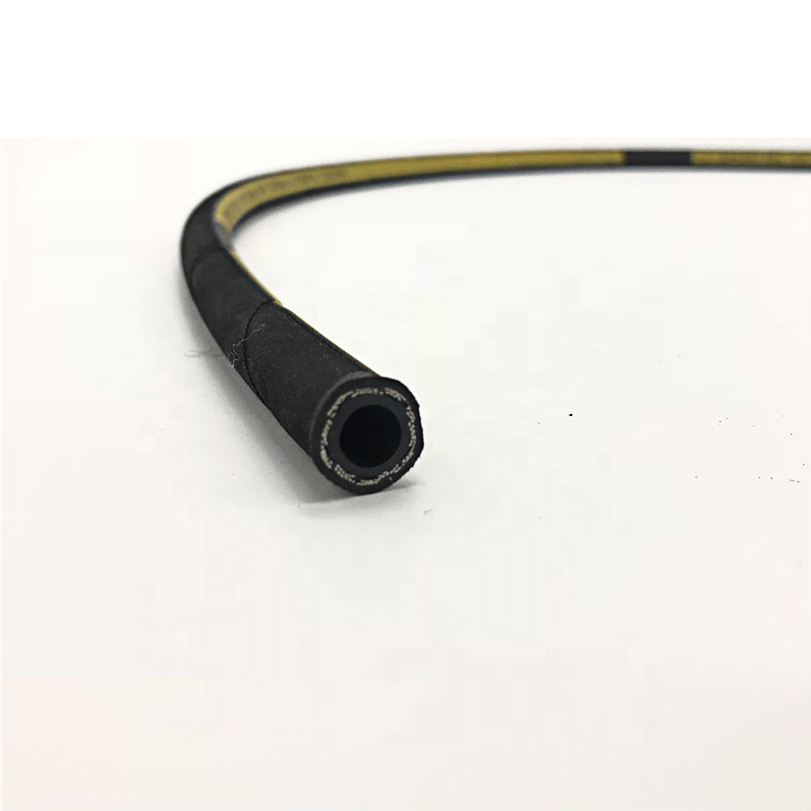
China gasoline hoses are typically constructed from multiple layers, each serving a specific function. The inner tube, in direct contact with gasoline, is most commonly composed of nitrile rubber (NBR) due to its excellent resistance to aliphatic hydrocarbons. However, for gasoline blends containing higher concentrations of ethanol (E85, for example), specialized compounds like fluorocarbon rubber (FKM) or nitrile rubber with enhanced ethanol resistance are increasingly employed. The reinforcement layer is critical for providing burst pressure resistance and structural integrity. Common reinforcement materials include synthetic textiles (typically polyester or nylon) braided in a helical pattern. The number of braids directly correlates with the hose's working pressure capacity. The cover layer, providing abrasion and weather resistance, is typically made from chloroprene rubber (CR), also known as neoprene, or ethylene propylene diene monomer (EPDM) rubber, chosen for its resistance to ozone, weathering, and UV degradation. Manufacturing processes begin with the compounding of the rubber materials, precisely blending polymers, plasticizers, fillers (e.g., carbon black for reinforcement and UV protection), and curing agents. The inner tube is extruded, followed by the application of the reinforcement layer via braiding. The cover is then extruded over the reinforcement, and the entire assembly undergoes vulcanization – a heating process that crosslinks the rubber polymers, imparting elasticity and durability. Key parameter control during manufacturing includes precise temperature and pressure regulation during extrusion and vulcanization, consistent braid tension, and rigorous quality control checks for material composition and dimensional accuracy. Post-vulcanization, hoses are subjected to hydrostatic pressure testing to verify burst strength and leak tightness.
Performance & Engineering
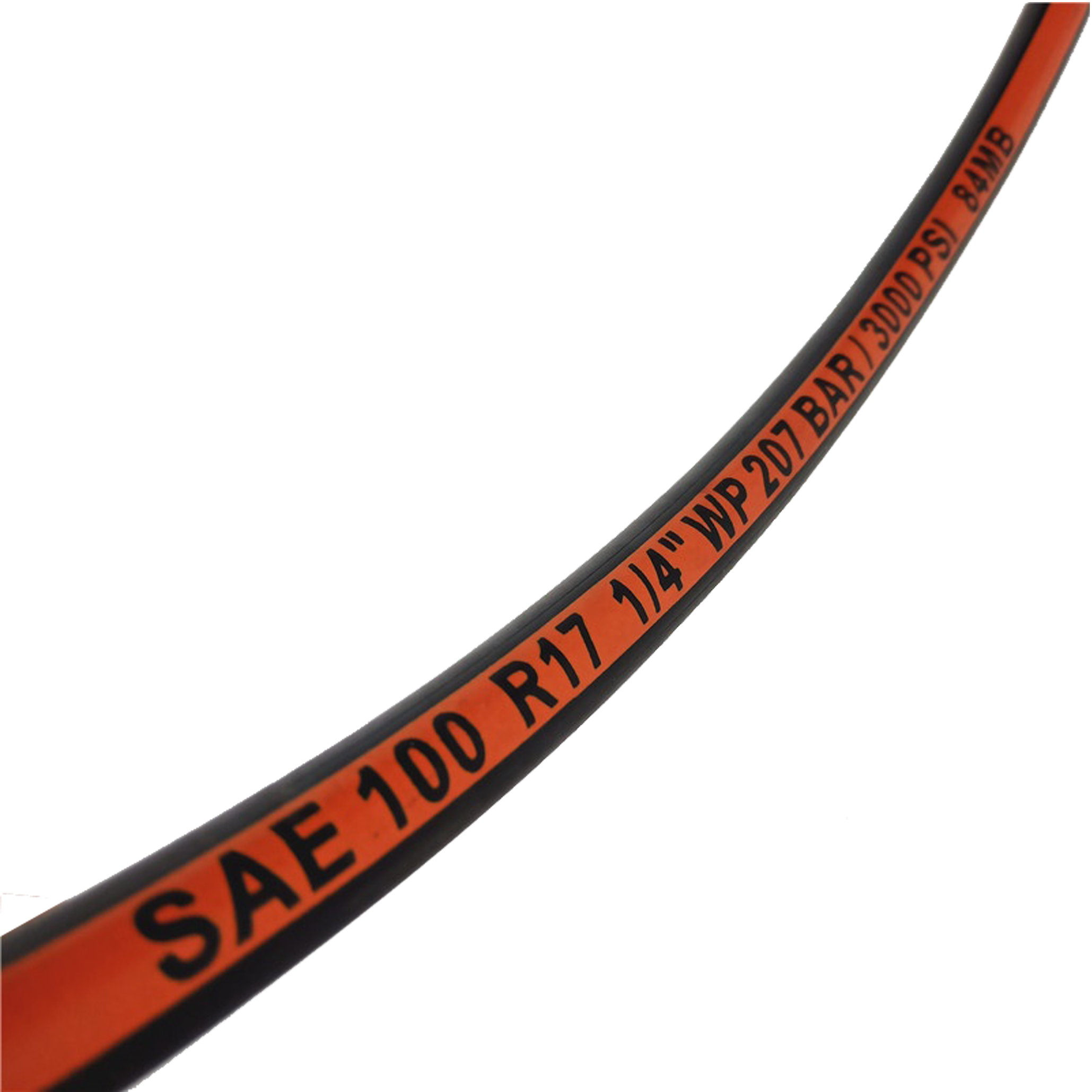
The performance of a gasoline hose is governed by several critical engineering parameters. Burst pressure, typically specified in PSI or bar, is the maximum pressure the hose can withstand before rupture. Working pressure is significantly lower and represents the safe operating pressure. Tensile strength, measured in MPa or PSI, indicates the hose's resistance to stretching and tearing. Elongation at break indicates the maximum strain the hose can undergo before failure. Environmental resistance is a paramount concern; gasoline hoses must maintain their integrity under a wide range of temperatures (-40°C to +100°C is a common range) and exposure to ozone, UV radiation, and various fuel additives. Static dissipation is crucial to prevent the buildup of static electricity, which could ignite flammable vapors. This is achieved by incorporating conductive fillers (e.g., carbon black) into the rubber compounds. Kink resistance is also important, particularly in applications involving frequent bending or maneuvering. Hose design, including wall thickness and reinforcement configuration, plays a significant role in achieving adequate kink resistance. Compliance requirements, dictated by organizations like the National Fire Protection Association (NFPA) and international standards (detailed in the footer), mandate specific performance characteristics and testing procedures. Force analysis during hose bending and flexing is vital to predict stress concentrations and potential failure points. Finite element analysis (FEA) is often used to optimize hose design for enhanced durability and performance.
Technical Specifications
| Parameter | Unit | Typical Value (Standard Grade) | Typical Value (Ethanol Resistant Grade) |
|---|---|---|---|
| Working Pressure | PSI | 300 | 300 |
| Burst Pressure | PSI | 900 | 900 |
| Inner Tube Material | - | NBR | FKM/NBR Blend |
| Reinforcement | - | Polyester Braid (4:1 Ratio) | Polyester Braid (4:1 Ratio) |
| Cover Material | - | CR | EPDM |
| Temperature Range | °C | -40 to +100 | -40 to +100 |
| Electrical Conductivity | Ω/m | <100 | <100 |
Failure Mode & Maintenance
Gasoline hose failure can manifest in several ways. Fatigue cracking, caused by repeated bending and flexing, is a common failure mode, particularly near the fittings. Delamination, the separation of layers, can occur due to poor adhesion during manufacturing or exposure to aggressive chemicals. Rubber degradation, resulting from exposure to ozone, UV radiation, and extreme temperatures, leads to hardening, cracking, and loss of elasticity. Oxidation, accelerated by heat and oxygen, causes the rubber to become brittle and prone to failure. Swelling or softening of the inner tube can occur due to incompatibility with specific fuel additives. Fitting failures, such as corrosion or loosening, can also compromise hose integrity. Preventive maintenance is crucial to extend hose service life. Regular visual inspections should be conducted to identify any signs of cracking, swelling, or delamination. Hoses should be replaced if any defects are observed. Avoid over-bending or kinking the hose during use. Proper storage, away from direct sunlight and extreme temperatures, is essential. Cleaning the hose exterior with a mild detergent solution can remove contaminants. Fittings should be periodically inspected for tightness and corrosion. Record keeping of hose usage and maintenance activities is recommended to track performance and predict potential failures.
Industry FAQ
Q: What is the primary difference between NBR and FKM inner tubes in gasoline hoses?
A: NBR (Nitrile Rubber) offers good resistance to aliphatic hydrocarbons found in standard gasoline, and is generally more cost-effective. However, FKM (Fluorocarbon Rubber) provides superior resistance to ethanol-blended gasoline (E10, E15, E85), preventing swelling, softening, and permeation, which can lead to fuel leakage and hose degradation. FKM hoses are essential when handling fuels with higher ethanol content.
Q: How does the reinforcement braid ratio affect hose performance?
A: The braid ratio (e.g., 4:1, 6:1) refers to the number of braid picks per inch of hose circumference. A higher braid ratio indicates a denser and stronger reinforcement layer, resulting in increased burst pressure resistance and improved kink resistance. However, higher braid ratios also generally increase hose stiffness and cost.
Q: What testing standards are critical for ensuring gasoline hose safety?
A: Key testing standards include ASTM D1330 (Rubber Hose – Specification), which covers dimensional requirements and physical properties; ASTM D1331 (Rubber Hose – Burst Pressure Testing); and SAE J30R9 (Fuel Lines – Gasoline and Diesel). Compliance with these standards ensures the hose meets minimum safety and performance criteria.
Q: What causes static electricity buildup in gasoline hoses and how is it mitigated?
A: Static electricity can build up due to the flow of gasoline through the hose, especially in low-humidity environments. This poses a fire hazard. Static dissipation is achieved by incorporating conductive fillers, such as carbon black, into the rubber compounds, providing a conductive path for static charges to dissipate safely to ground.
Q: What is the expected service life of a typical gasoline hose, and what factors can shorten it?
A: The expected service life of a gasoline hose typically ranges from 5 to 10 years, depending on operating conditions and frequency of use. Factors that can shorten service life include exposure to extreme temperatures, UV radiation, ozone, aggressive fuel additives, and physical damage (e.g., abrasion, kinking, over-bending). Regular inspections and proper maintenance are crucial for maximizing service life.
Conclusion
China-manufactured gasoline hoses are integral to the safe and efficient distribution of fuel, requiring a nuanced understanding of material science, manufacturing processes, and performance characteristics. The evolution of fuel compositions, particularly the increasing prevalence of ethanol blends, demands the use of specialized rubber compounds like FKM to prevent degradation and ensure long-term reliability. Adherence to rigorous international standards (ASTM, SAE, etc.) is paramount for ensuring product safety and compliance.
Proactive maintenance and regular inspections are essential for maximizing hose service life and preventing catastrophic failures. As the industry moves toward more automated fuel handling systems, further advancements in hose design—focused on enhanced kink resistance, durability, and static dissipation—will be critical to meet evolving operational demands and safety requirements.