
Apr . 01, 2024 17:55 Back to list
china flexible ptfe hose supplier Performance Analysis

Introduction
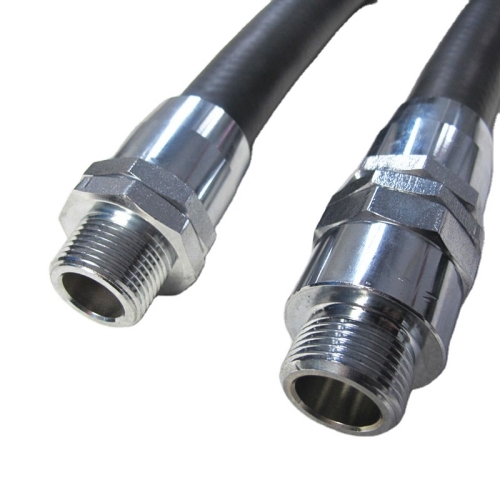
Flexible PTFE hose represents a critical component in numerous industrial fluid transfer applications, characterized by its exceptional chemical resistance, high-temperature performance, and flexibility. China has emerged as a significant global supplier of these hoses, offering a broad range of configurations to meet diverse industrial needs. This guide provides an in-depth technical analysis of flexible PTFE hoses manufactured in China, covering material science, manufacturing processes, performance characteristics, failure modes, and relevant industry standards. These hoses typically consist of a PTFE inner liner, often reinforced with a braided stainless steel or other alloy structure for pressure resistance, and an outer cover providing abrasion and environmental protection. Core applications span the chemical processing, pharmaceutical, automotive, aerospace, food and beverage, and semiconductor industries, where compatibility with aggressive media and process reliability are paramount. The increasing demand for high-performance fluid transfer solutions, coupled with competitive manufacturing capabilities in China, has solidified its position as a leading source for these essential industrial components. Understanding the nuances of PTFE hose construction and performance is vital for engineers, procurement managers, and maintenance personnel to ensure optimal system integration and longevity.
Material Science & Manufacturing
The core material in flexible PTFE hose is polytetrafluoroethylene (PTFE), a synthetic fluoropolymer renowned for its outstanding chemical inertness. PTFE’s structure consists of long carbon chains with strong carbon-fluorine bonds, resulting in exceptional resistance to virtually all chemicals, including strong acids, bases, and solvents. Raw PTFE resin typically exhibits limited processability due to its high melt viscosity. Therefore, manufacturing often begins with the production of fine PTFE powder through emulsion or suspension polymerization. The reinforcement layer, commonly braided stainless steel (typically 304 or 316 grade), provides the necessary burst pressure resistance. The stainless steel wire undergoes a precise braiding process, with braid angles influencing the hose’s flexibility and pressure rating. The outer cover is often constructed from materials like PVC, polyurethane, or another layer of PTFE, offering abrasion resistance and environmental protection. Manufacturing steps include extrusion of the PTFE liner, braiding of the reinforcement, jacketing with the outer cover, and finally, termination with fittings. Key parameters include maintaining strict control over PTFE resin purity, precise braid density, and consistent extrusion temperatures to ensure dimensional accuracy and material integrity. Sintering is crucial; PTFE powder is compacted and heated to a temperature below its melting point, causing the particles to fuse together, creating a dense, homogenous structure. Post-sintering cooling rates influence crystalline structure and mechanical properties. Chemical compatibility testing is routinely performed on the PTFE liner to verify its resistance to specific process fluids. Improper sintering can lead to porosity and compromised chemical resistance.
Performance & Engineering
The performance of flexible PTFE hose is dictated by several engineering considerations. Burst pressure, determined by the reinforcement layer (braid density and material grade), is a critical parameter, often tested according to SAE J526. Flexibility, essential for routing in confined spaces, is influenced by braid angle and hose diameter. A lower braid angle generally provides greater flexibility but may reduce burst pressure. Temperature range, typically from -60°C to +260°C, is a key specification, with performance dependent on both the PTFE liner and outer cover materials. Chemical compatibility is paramount; PTFE exhibits excellent resistance to a wide array of chemicals, but specific applications require verifying compatibility with the intended fluid. Permeation, the diffusion of gases or liquids through the hose wall, must be considered in applications involving hazardous or high-purity media. Static electricity buildup can be a concern with PTFE; conductive PTFE liners or grounding features may be necessary. Fatigue life, the resistance to repeated flexing and pressure cycling, is a critical consideration in dynamic applications. Force analysis, considering internal pressure, external loads, and bending stresses, is vital for ensuring structural integrity. Compliance requirements vary by industry; for example, FDA compliance is essential for food and beverage applications, while aerospace applications demand adherence to stringent material specifications and testing protocols. Ensuring proper fitting selection and installation is critical to prevent leakage and maintain rated performance.
Technical Specifications
| Parameter | Typical Value (China Flexible PTFE Hose) | Test Standard | Units |
|---|---|---|---|
| Burst Pressure | Up to 4500 psi | SAE J526 | psi |
| Temperature Range | -60°C to +260°C | ASTM D348 | °C |
| Chemical Resistance | Excellent to most chemicals | ASTM F1554 | Qualitative |
| Inner Diameter | 1/8" to 4" | Manufacturer Specification | inches |
| Outer Diameter | 3/16" to 5" | Manufacturer Specification | inches |
| Braid Material | 304/316 Stainless Steel | ASTM A975 | - |
Failure Mode & Maintenance
Flexible PTFE hose, while durable, is susceptible to several failure modes. Permeation, especially at elevated temperatures, can lead to loss of contained fluid. Fatigue cracking in the braid layer, induced by repeated flexing or vibration, can compromise burst pressure. Abrasion of the outer cover can expose the braid to corrosion or damage. Chemical attack, though rare due to PTFE's inertness, can occur with highly aggressive or unusual media. Fitting failure, due to improper installation or corrosion, is a common point of leakage. Creep, the gradual elongation under sustained pressure, can lead to dimensional changes and potential failure. Delamination of the PTFE liner from the reinforcement can occur due to inadequate bonding or thermal cycling. Maintenance includes regular visual inspection for abrasion, cracking, or swelling. Pressure testing can verify the integrity of the hose. Proper fitting torque is critical to prevent leakage and ensure a secure connection. Avoid sharp bends or excessive twisting that can stress the hose. Storage should be in a cool, dry environment away from direct sunlight. If chemical exposure is suspected, a thorough cleaning or replacement may be necessary. Periodic replacement based on application severity and operating conditions is recommended to mitigate the risk of catastrophic failure. Detailed failure analysis, including microscopic examination of fractured surfaces, can identify the root cause of failures and inform preventative maintenance strategies.
Industry FAQ
Q: What is the typical lifespan of a PTFE hose in a chemical processing application handling concentrated sulfuric acid?
A: The lifespan is highly dependent on temperature and concentration, but with continuous exposure to concentrated sulfuric acid (98%+) at moderate temperatures (below 80°C), a well-maintained PTFE hose can typically last 2-5 years. Regular inspections are crucial to detect any signs of degradation, and replacement should be considered proactively.
Q: How does the braid angle affect the pressure rating and flexibility of the hose?
A: A steeper braid angle (closer to 90 degrees) generally results in a higher pressure rating because it provides greater reinforcement. However, it also reduces flexibility. Conversely, a shallower braid angle increases flexibility but lowers the pressure rating.
Q: What are the key differences between single-layer and double-layer PTFE hoses?
A: Double-layer PTFE hoses offer enhanced permeation resistance and improved chemical protection. The second layer acts as a barrier, reducing the diffusion of gases or liquids through the hose wall. They are often used in applications involving highly toxic or corrosive fluids.
Q: What fitting materials are compatible with PTFE hose, and what precautions should be taken during installation?
A: Common fitting materials include stainless steel, polypropylene, and PTFE itself. Ensure the fitting material is chemically compatible with the fluid being conveyed. Proper installation involves using appropriate tools, applying the correct torque, and avoiding over-tightening, which can damage the hose or fittings.
Q: Can PTFE hose be used for vacuum applications? What are the limitations?
A: Yes, PTFE hose can be used for vacuum applications, but it's prone to collapse under high vacuum if not adequately reinforced. Specialized vacuum-rated PTFE hoses with internal support structures are recommended to prevent implosion.
Conclusion
China’s flexible PTFE hose industry has evolved to become a significant global supplier, delivering products that meet demanding industrial requirements. Understanding the material science, manufacturing processes, and performance characteristics of these hoses is essential for engineers and procurement professionals. The chemical inertness, high-temperature resistance, and flexibility of PTFE hoses make them invaluable in diverse applications, from chemical processing to aerospace.
Continued advancements in PTFE resin technology, braiding techniques, and quality control measures will further enhance the performance and reliability of these critical components. Proactive maintenance, coupled with adherence to relevant industry standards, will maximize service life and minimize the risk of failure. Selecting the appropriate PTFE hose, considering application-specific parameters such as pressure, temperature, and chemical compatibility, is paramount for ensuring long-term operational efficiency and safety.