
Apr . 01, 2024 17:55 Back to list
china en857 2sc supplier Performance Analysis

Introduction
EN857 2SC hose, manufactured by suppliers in China, represents a critical component in pneumatic conveying systems utilized across diverse industries, including bulk material handling, agricultural processing, and construction. Designated as a low-pressure hose conforming to EN857 standards, the 2SC classification denotes a smooth bore, reinforced construction designed for conveying dry, free-flowing materials. This technical guide provides a comprehensive overview of its material science, manufacturing processes, performance characteristics, potential failure modes, and maintenance protocols, tailored for procurement managers and engineers responsible for specifying and deploying these systems. The core performance characteristics revolve around its burst pressure, flexibility, abrasion resistance, and ability to mitigate static electricity build-up, all vital for safe and efficient material transfer. A primary industry pain point is ensuring consistent quality and adherence to EN857 specifications from various Chinese suppliers, particularly regarding reinforcement material and wall thickness.
Material Science & Manufacturing
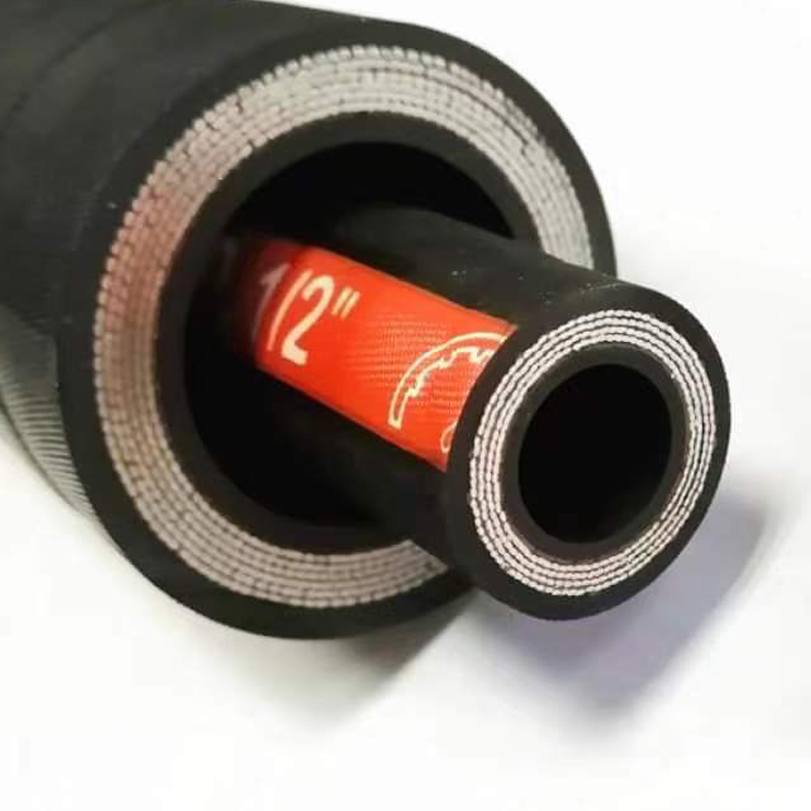
The fundamental material composition of EN857 2SC hose typically consists of three primary layers: an inner liner, a reinforcement layer, and an outer cover. The inner liner is commonly constructed from Polyvinyl Chloride (PVC), chosen for its smooth surface, abrasion resistance, and compatibility with a wide range of dry materials. PVC's glass transition temperature (Tg) impacts its flexibility, particularly in colder environments. The reinforcement layer is crucial for providing burst pressure resistance and typically utilizes a high-tensile strength polyester yarn, spirally wound. The yarn denier and winding angle directly affect the hose’s pressure rating. Variations in yarn quality from different suppliers are a significant quality control concern. The outer cover is generally made of a PVC compound formulated for weather resistance, abrasion protection, and resistance to ozone cracking. Manufacturing involves extrusion of the inner and outer layers, followed by precise winding of the reinforcement layer. Critical parameters during extrusion include melt temperature, die pressure, and cooling rate, all influencing layer thickness and uniformity. Post-extrusion, the hose undergoes dimensional inspection, pressure testing (hydrostatic or pneumatic), and electrical conductivity testing. Maintaining consistent wall thickness, correct reinforcement ply angle, and proper PVC formulation are paramount to achieving the required EN857 specifications.
Performance & Engineering
The performance of EN857 2SC hose is governed by several engineering principles. Burst pressure, a critical safety parameter, is determined by the tensile strength of the reinforcement layer and the adhesion between layers. The hose is designed with a safety factor, typically 4:1, meaning it can withstand four times its working pressure before failure. Flexibility is crucial for ease of installation and handling, and is influenced by the PVC formulation and wall thickness. Abrasion resistance is particularly important when conveying abrasive materials like grains or powders. The outer cover formulation directly impacts this property. Electrostatic discharge (ESD) is a significant concern when conveying flammable materials. EN857 2SC hoses are typically designed with a conductive PVC formulation or a grounding wire embedded in the wall to dissipate static charges, minimizing the risk of ignition. Compliance with ATEX directives (for potentially explosive atmospheres) is often required. Force analysis during pneumatic conveying reveals that the hose experiences both internal pressure and external bending stresses. Proper hose support and radius bends are essential to prevent fatigue failure. Environmental resistance, including UV degradation and temperature fluctuations, are also critical factors, dictating the lifespan of the hose in outdoor applications.
Technical Specifications
| Parameter | Unit | Typical Value (EN857 2SC) | Testing Standard |
|---|---|---|---|
| Working Pressure | Bar | 2 | EN857 |
| Burst Pressure | Bar | 8 | EN857 |
| Tensile Strength (Reinforcement) | N/mm² | >15 | ISO 527 |
| Elongation at Break (Inner Liner) | % | >200 | ISO 527 |
| Electrical Resistance | Ohm | < 1 Megaohm | IEC 60093 |
| Operating Temperature Range | °C | -20 to +60 | EN857 |
Failure Mode & Maintenance
EN857 2SC hoses are susceptible to several failure modes. Fatigue cracking, arising from repeated bending and pressure cycles, is a common issue, particularly near fittings. Delamination, or separation of layers, can occur due to poor adhesion during manufacturing or prolonged exposure to moisture. Abrasion wear, concentrated on the inner liner, reduces wall thickness and compromises burst pressure. Chemical degradation can occur if the hose is exposed to incompatible substances. Oxidation of the PVC material, especially in outdoor environments, leads to embrittlement and cracking. A key failure analysis step is to identify the root cause of the failure - was it material defect, improper installation, exceeding pressure limits, or exposure to incompatible substances? Preventative maintenance includes regular visual inspections for cracks, abrasions, and delamination. Pressure testing should be conducted periodically to verify the integrity of the hose. Proper hose support and minimizing sharp bends are crucial for extending service life. When replacing sections of hose, ensure compatibility of the replacement material with the conveyed product and adhere strictly to EN857 standards. Avoid using abrasive cleaning agents that could damage the PVC material.
Industry FAQ
Q: What is the acceptable tolerance for diameter variation in an EN857 2SC hose?
A: EN857 specifies a diameter tolerance of ±2% of the nominal inner diameter. Significant deviations can affect flow rates and fitting compatibility. A quality control check should verify adherence to this tolerance.
Q: How does the choice of PVC plasticizer impact the low-temperature flexibility of the hose?
A: The type and concentration of plasticizer in the PVC formulation directly influence its flexibility at low temperatures. Phthalate plasticizers are commonly used, but alternatives like DINP and DOTP offer improved low-temperature performance and environmental profiles.
Q: What tests should be performed to verify the electrical conductivity of the hose?
A: Electrical resistance should be measured according to IEC 60093, using a megohmmeter. The resistance should be below 1 Megaohm to ensure effective static dissipation. Testing should be performed on multiple points along the hose length.
Q: How critical is the winding angle of the reinforcement ply in determining the burst pressure?
A: The winding angle is highly critical. A shallower angle provides greater hoop strength (resistance to bursting) but may reduce flexibility. A steeper angle offers greater flexibility but reduces burst pressure. The optimal angle is determined through engineering calculations and testing.
Q: What is the recommended storage procedure for EN857 2SC hose to prevent degradation?
A: Hose should be stored in a cool, dry, well-ventilated area, away from direct sunlight, heat sources, and ozone. Avoid stacking heavy objects on top of the hose, as this can cause deformation. Long-term storage may require periodic inspection for signs of degradation.
Conclusion
EN857 2SC hose represents a standardized solution for pneumatic conveying, offering a balance of performance, durability, and cost-effectiveness. Understanding the underlying material science, manufacturing nuances, and performance characteristics is vital for ensuring proper specification and deployment. Careful consideration of potential failure modes and implementation of a robust maintenance program are essential for maximizing hose lifespan and maintaining system safety.
The variability in quality among Chinese suppliers necessitates rigorous quality control checks, including thorough testing against EN857 standards. Proactive engagement with suppliers to verify material certifications and manufacturing processes is also highly recommended. Continued innovation in PVC formulations and reinforcement materials will likely lead to further improvements in hose performance and durability in the future.

