
Apr . 01, 2024 17:55 Back to list
china en857 2sc manufacturer Performance Analysis

Introduction
EN857 2SC rubber hoses, manufactured in China, represent a critical component in pneumatic applications across diverse industrial sectors. Classified under EN857, these hoses are specifically designated as ‘2SC’ indicating a working pressure of 20 bar and are reinforced with synthetic yarn for improved tensile strength and resistance to kinking. This technical guide details the material science, manufacturing processes, performance characteristics, potential failure modes, and maintenance procedures for these hoses. They are fundamentally utilized for conveying compressed air, operating within temperature ranges of -30°C to +70°C, and find applications in construction, mining, automotive repair, and general manufacturing where reliable air delivery is paramount. A significant pain point within the industry revolves around maintaining consistent product quality across different Chinese manufacturers, coupled with ensuring adherence to stringent European safety standards and resistance to common industrial fluids. The guide will also cover comparative analysis and the relevant international standards that define their performance.
Material Science & Manufacturing
The core material for EN857 2SC hoses is a blend of synthetic rubbers, primarily comprising a mixture of Nitrile (NBR) and Polyvinyl Chloride (PVC). NBR provides excellent resistance to oils, fuels, and abrasion, while PVC contributes to flexibility and cost-effectiveness. The reinforcement layer is crucial; it’s typically a high-tenacity polyester yarn braid, providing the hose with its pressure resistance and kink resistance. Manufacturing begins with compounding the rubber mixture, ensuring precise ratios of NBR, PVC, plasticizers, stabilizers, and curing agents. This is followed by extrusion, where the compound is forced through a die to create the inner and outer layers of the hose. The polyester yarn braid is simultaneously wound onto the extruded inner layer. A subsequent curing (vulcanization) process, typically employing heat and pressure, chemically crosslinks the rubber molecules, enhancing its strength, elasticity, and temperature resistance. Critical parameters during manufacturing include maintaining consistent extrusion temperature (typically 140-160°C), yarn tension during braiding (monitored via load cells), and precise curing time and temperature (typically 150°C for 20-30 minutes). Any deviation can lead to reduced burst pressure, premature cracking, or decreased flexibility. The outer cover may also include anti-static additives to mitigate electrostatic discharge in sensitive environments. Quality control utilizes destructive testing of samples to verify burst pressure, tensile strength and elongation at break.
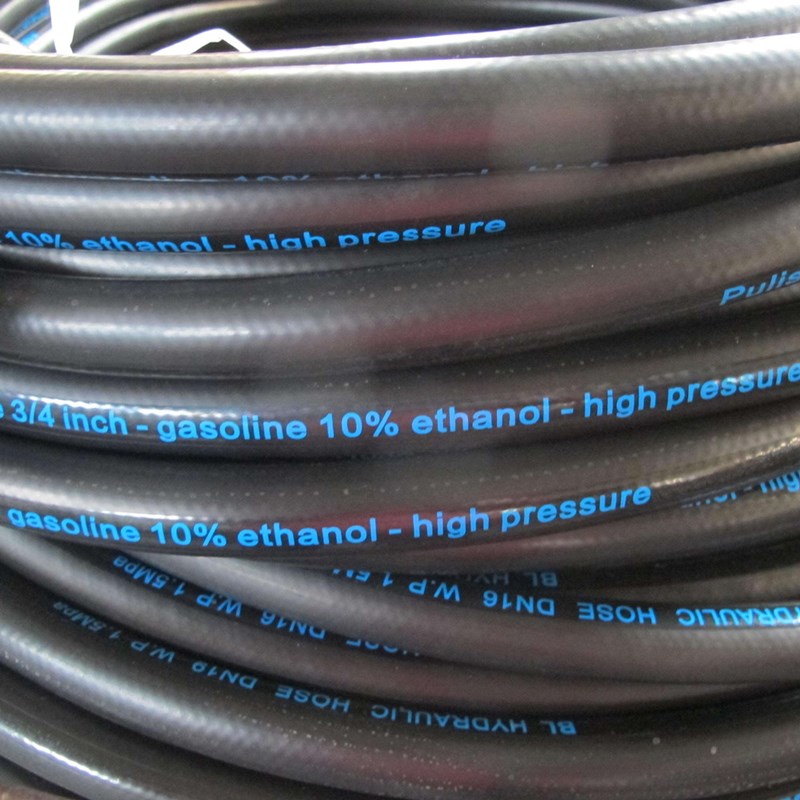
Performance & Engineering
The performance of EN857 2SC hoses is fundamentally governed by pressure-temperature ratings, tensile strength, elongation at break, and resistance to external factors like ozone, UV radiation, and chemical exposure. Force analysis reveals that the reinforcement layer bears the majority of the hoop stress generated by internal pressure. The rubber layers primarily resist radial expansion and provide a fluid-tight seal. Engineering considerations include minimizing stress concentrations at fittings (achieved through proper crimping techniques) and ensuring sufficient bend radius to prevent kinking and premature fatigue failure. Compliance with EN857 mandates specific testing procedures for burst pressure, minimum bend radius, and resistance to migration of plasticizers. Environmental resistance is crucial; prolonged exposure to ozone can cause cracking in the rubber compound, while UV radiation degrades the polymer chains, reducing flexibility and strength. Chemical resistance testing involves immersing the hose in various industrial fluids (oils, solvents, acids) to assess swelling, hardening, or degradation. The acceptable level of swelling is typically less than 10% by volume. Fatigue life is a critical parameter, particularly in applications involving repetitive bending or pulsation. Accelerated fatigue testing simulates real-world usage and predicts the hose's expected lifespan under dynamic loading conditions.
Technical Specifications
| Parameter | Unit | EN857 2SC Standard | Typical Chinese Manufacturer Range |
|---|---|---|---|
| Working Pressure | bar | 20 | 20 - 22 |
| Burst Pressure | bar | 60 | 60 - 70 |
| Temperature Range | °C | -30 to +70 | -35 to +75 |
| Tensile Strength | MPa | ≥10 | 10 - 12 |
| Elongation at Break | % | ≥300 | 300 - 400 |
| Minimum Bend Radius | mm | ≥ 5D (D=Inner Diameter) | 4D - 6D |
Failure Mode & Maintenance
Common failure modes for EN857 2SC hoses include burst failure due to exceeding the working pressure, fatigue cracking from repeated bending, kinking leading to localized stress concentrations and eventual rupture, and degradation of the rubber compound due to ozone, UV exposure, or chemical attack. A frequent failure point is the hose-to-fitting connection if crimping is inadequate or fittings are corroded. Failure analysis often reveals cracks initiating at the inner surface, particularly in areas exposed to abrasive particles. Maintenance procedures should include regular visual inspections for cracks, abrasions, or swelling. Hoses should be stored in a cool, dry, and dark environment to minimize degradation. Avoid sharp bends and ensure the hose is not subjected to excessive tension or twisting. If chemical exposure is anticipated, select a hose specifically rated for those chemicals. Periodic pressure testing can identify hoses nearing the end of their service life. Damaged hoses should be replaced immediately; repairs are generally not recommended as they compromise the hose’s integrity. When replacing hoses, ensure compatibility of the fittings with the new hose material. Proper cleaning with mild soap and water can remove surface contaminants, but avoid harsh solvents that can damage the rubber compound.
Industry FAQ
Q: What is the impact of exceeding the working pressure on the hose's lifespan?
A: Exceeding the working pressure significantly reduces the hose's lifespan and dramatically increases the risk of catastrophic failure. Even short-term overpressure events induce stress on the reinforcement layer, leading to micro-cracks and eventual rupture. Repeated overpressure events accelerate fatigue failure.
Q: How does the choice of fitting material affect the hose's performance and longevity?
A: Incompatible fitting materials can lead to galvanic corrosion, particularly in humid environments, weakening the hose-fitting connection. Fittings should be made of materials compatible with both the hose and the conveyed medium. Proper crimping is also essential to ensure a secure and leak-proof seal.
Q: What specific chemicals are EN857 2SC hoses typically not resistant to?
A: While NBR offers good resistance to many oils and fuels, EN857 2SC hoses are generally not resistant to strong oxidizing acids (e.g., nitric acid), ketones (e.g., acetone), and chlorinated hydrocarbons. Exposure to these chemicals can cause rapid swelling and degradation of the rubber compound.
Q: What are the implications of using a hose with a bend radius that is too small?
A: Using a bend radius smaller than the manufacturer's specification creates localized stress concentrations in the hose wall, leading to premature fatigue cracking and potential rupture. This is particularly critical in applications involving repeated bending.
Q: How can I verify the quality and compliance of EN857 2SC hoses sourced from Chinese manufacturers?
A: Request documentation demonstrating compliance with EN857 standards, including test reports for burst pressure, tensile strength, and elongation at break. Conduct independent quality control checks, including visual inspections and pressure testing, to verify the hose’s performance characteristics.
Conclusion
EN857 2SC rubber hoses are indispensable components in numerous industrial pneumatic systems. Understanding their material composition, manufacturing nuances, performance characteristics, and potential failure modes is crucial for ensuring safe and reliable operation. Maintaining adherence to EN857 standards, coupled with rigorous quality control and proper maintenance practices, are paramount for maximizing hose lifespan and minimizing downtime. The selection of appropriate fittings and avoidance of incompatible chemicals are also essential considerations.
Looking ahead, innovations in rubber compounding and reinforcement materials will likely lead to hoses with enhanced chemical resistance, improved fatigue life, and reduced weight. Continued focus on quality control and compliance verification, particularly within the Chinese manufacturing sector, will be vital to ensure the consistent delivery of high-performance and reliable EN857 2SC hoses to the global market. The long-term success relies on a commitment to technical excellence and adherence to international standards.