
Apr . 01, 2024 17:55 Back to list
china en857 2sc factory Performance Analysis
Introduction
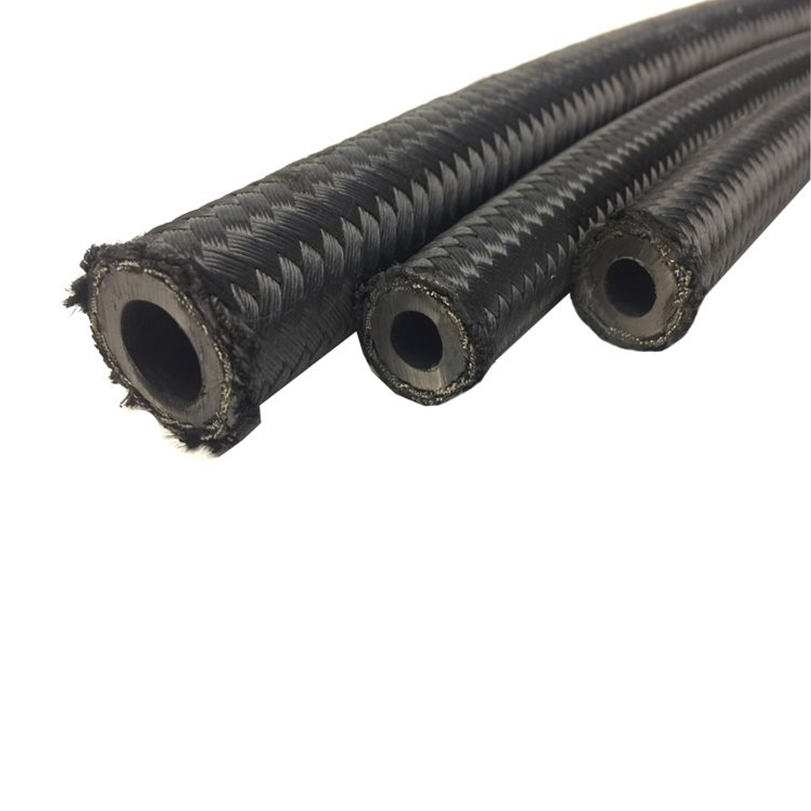
EN857 2SC hose, manufactured by facilities such as china en857 2sc factory, represents a critical component in high-pressure hydraulic systems across diverse industrial sectors. This hose is specifically designed for the conveyance of hydraulic fluid under demanding conditions, conforming to the European standard EN857 and characterized by its two steel wire braid reinforcement (2SC). Its technical positioning within the supply chain involves manufacturers specializing in rubber and steel processing, culminating in a product vital for construction machinery, agricultural equipment, mining operations, and various manufacturing processes. Core performance characteristics include high burst pressure, resistance to hydraulic fluid degradation, and flexibility permitting complex routing within machinery. A key industry pain point revolves around consistently achieving the specified dimensional tolerances and ensuring long-term fluid compatibility to prevent premature failure and costly downtime.
Material Science & Manufacturing
The construction of an EN857 2SC hose fundamentally relies on a layered material composition. The inner tube, typically composed of a nitrile rubber (NBR) compound, exhibits excellent resistance to petroleum-based hydraulic fluids. NBR's properties, including tensile strength (typically 17-25 MPa), elongation at break (300-500%), and hardness (60-70 Shore A), are critical for withstanding internal fluid pressure. The reinforcement layer consists of two braids of high-tensile steel wire, providing the necessary burst strength. Steel wire specifications often adhere to standards like SAE J517, demanding specific yield and tensile strengths (yield strength > 1700 MPa, tensile strength > 2000 MPa). The outer cover, generally made of a chloroprene rubber (CR) compound, provides environmental protection against abrasion, ozone, and UV degradation. CR offers excellent weathering resistance and a temperature range of -40°C to +120°C. Manufacturing involves extrusion of the inner tube and outer cover, followed by the precise winding of the steel wire braids. Critical process parameters include extrusion temperature control (NBR: 140-160°C, CR: 160-180°C), braid tension (maintained within ±5% of target), and vulcanization time/temperature (typically 150°C for 30-40 minutes). Quality control relies heavily on dimensional checks (inner diameter, outer diameter, bend radius) and burst pressure testing in accordance with EN857 standards.
Performance & Engineering
The performance of an EN857 2SC hose is governed by several engineering principles. Burst pressure, the paramount performance criterion, is determined by the tensile strength of the steel wire reinforcement and the adhesion between the rubber compounds and the steel. Calculations based on Barlow's formula (P = 2St/D, where P is pressure, S is tensile strength, t is wall thickness, and D is diameter) underpin the design process. Fatigue life, crucial for applications involving cyclical pressure loading, is assessed through repeated pressure cycling tests. Environmental resistance, particularly against hydraulic fluid degradation and temperature extremes, requires careful selection of rubber compounds and additives. Chemical compatibility testing, involving immersion of hose samples in various hydraulic fluids (mineral oil, synthetic fluids, phosphate ester fluids), verifies the long-term stability of the rubber compounds. Flexibility, measured by bend radius, is critical for installation and operation in confined spaces. EN857 specifies minimum bend radius requirements to prevent kinking and damage. Compliance requirements encompass adherence to REACH and RoHS directives, restricting the use of hazardous substances. Furthermore, static electricity dissipation is often a requirement in certain applications (e.g., flammable fluid handling), necessitating the incorporation of conductive fillers in the rubber compounds.
Technical Specifications
| Parameter | Unit | Specification (Typical) | Test Standard |
|---|---|---|---|
| Working Pressure | MPa | 20.5 | EN857 |
| Burst Pressure | MPa | 82 | EN857 |
| Inner Diameter | mm | 19 | EN857 |
| Outer Diameter | mm | 34 | EN857 |
| Minimum Bend Radius | mm | 170 | EN857 |
| Temperature Range | °C | -40 to +100 | EN857 |
Failure Mode & Maintenance
EN857 2SC hoses are susceptible to several failure modes. Fatigue cracking, initiated by cyclical pressure loading, typically occurs at the braid crossover points or at points of high stress concentration due to improper installation (sharp bends). Delamination, the separation of rubber layers from the steel wire reinforcement, can result from inadequate bonding during the vulcanization process or exposure to incompatible fluids. Degradation of the rubber compounds, caused by exposure to ozone, UV radiation, or extreme temperatures, leads to loss of flexibility and eventual cracking. Oxidation of the steel wire, particularly in environments with high humidity and corrosive contaminants, reduces its tensile strength. Abrasion, caused by external contact with rough surfaces, wears away the outer cover, exposing the reinforcement layer. Maintenance procedures should include regular visual inspections for signs of cracking, abrasion, or swelling. Pressure testing, conducted periodically, verifies the hose’s integrity. Proper installation, avoiding sharp bends and ensuring adequate support, is crucial. Storage of hoses in a cool, dry, and dark environment prevents premature degradation. Fluid compatibility should be verified before use to ensure the rubber compounds are resistant to the specific hydraulic fluid being employed. Replacement is recommended if any signs of damage or degradation are observed.
Industry FAQ
Q: What is the significance of the '2SC' designation in EN857 2SC hose?
A: The '2SC' designation indicates that the hose is reinforced with two layers of steel wire spiral (S) casing (C). This construction provides a significantly higher burst pressure and greater mechanical strength compared to hoses with fewer reinforcement layers, making it suitable for demanding hydraulic applications.
Q: How does temperature affect the performance of an EN857 2SC hose?
A: Temperature extremes can significantly impact the hose's performance. High temperatures accelerate rubber degradation and reduce the hose’s flexibility. Low temperatures can cause the rubber to become brittle and reduce its impact resistance. The specified temperature range (-40°C to +100°C) should be strictly adhered to.
Q: What type of hydraulic fluid is compatible with NBR inner tubes commonly found in EN857 2SC hoses?
A: NBR is generally compatible with mineral oils, petroleum-based hydraulic fluids, and some synthetic hydraulic fluids. However, it is not recommended for use with phosphate ester fluids or glycol-based brake fluids, as these can cause swelling and degradation of the NBR rubber. Compatibility should always be verified with the fluid manufacturer.
Q: What is the importance of proper hose routing and support?
A: Proper hose routing and support are essential to prevent premature failure. Avoid sharp bends, kinks, and abrasion against surrounding components. Provide adequate support to prevent sagging and excessive movement, which can lead to fatigue cracking. Incorrect routing introduces stress concentrations that compromise the hose's integrity.
Q: How often should EN857 2SC hoses be inspected and replaced?
A: Inspection frequency depends on the severity of the application and operating conditions. A visual inspection should be conducted at least every six months, or more frequently in high-stress environments. Hoses should be replaced immediately if any signs of damage, such as cracks, abrasions, swelling, or leaks, are observed. A preventative replacement schedule based on operating hours or calendar time is also recommended.
Conclusion
The EN857 2SC hose represents a robust and reliable solution for high-pressure hydraulic fluid conveyance, underpinned by carefully selected materials and stringent manufacturing processes. Its performance is dictated by a complex interplay of engineering principles, including burst pressure calculations, fatigue life analysis, and environmental resistance considerations. Understanding the potential failure modes and implementing appropriate maintenance procedures are crucial for ensuring long-term operational safety and minimizing downtime.
The continued demand for these hoses highlights their importance across numerous industries. Future advancements will likely focus on the development of more durable rubber compounds, improved reinforcement materials, and enhanced manufacturing techniques to further extend service life and reduce the risk of failure. Adherence to international standards and a commitment to quality control remain paramount for manufacturers like china en857 2sc factory in maintaining product integrity and customer satisfaction.

