
Apr . 01, 2024 17:55 Back to list
china en856 4sp suppliers Performance Analysis

Introduction
EN856 4SP hose, manufactured by suppliers in China, represents a critical component in high-pressure hydraulic systems across various industries including construction, agriculture, mining, and material handling. Defined by the European standard EN 856, the 4SP designation specifies a spiral wire reinforced hydraulic hose capable of withstanding significantly higher pressures than non-reinforced alternatives. These hoses are designed for the conveyance of hydraulic fluids, oils, and fuels, offering superior burst and impulse resistance. A key competitive advantage of Chinese suppliers lies in their capacity for large-scale production, coupled with increasing adherence to international quality standards. However, discerning buyers must navigate variations in material quality, manufacturing precision, and quality control procedures. This guide provides a comprehensive technical overview of EN856 4SP hoses sourced from China, covering material science, manufacturing processes, performance characteristics, failure modes, and relevant industry standards.
Material Science & Manufacturing
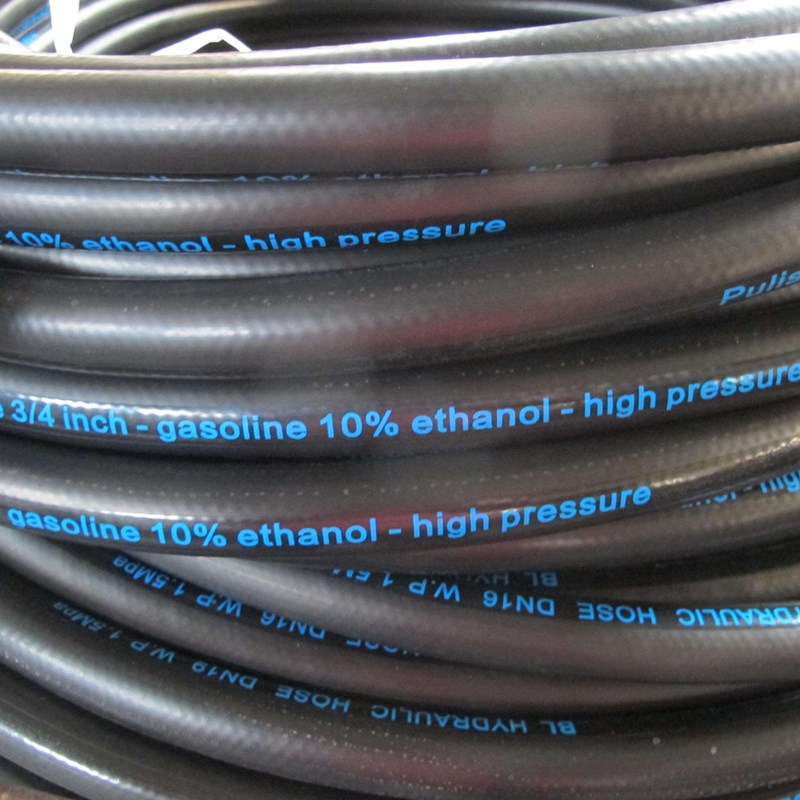
The core construction of an EN856 4SP hose involves multiple layers, each contributing to its overall performance. The inner tube is typically composed of oil-resistant synthetic rubber, commonly nitrile rubber (NBR) due to its excellent compatibility with petroleum-based hydraulic fluids. NBR’s resistance to swelling and degradation in the presence of oil is crucial for maintaining hose integrity. The reinforcement layer consists of multiple high-tensile steel wire spirals, providing the hose with its pressure-bearing capability. The wire used is typically carbon steel, often with specific surface treatments to enhance adhesion to the rubber layers and improve corrosion resistance. The outer cover is generally a synthetic rubber blend, often a combination of Chloroprene (CR) and EPDM, offering resistance to abrasion, ozone, weathering, and oil. The manufacturing process starts with extrusion of the inner tube and outer cover. The steel wire is then spirally wound around the inner tube under precise tension control. Maintaining consistent wire tension is critical; variations lead to uneven stress distribution and potential failure points. Subsequently, the outer cover is extruded over the reinforcement layer. Curing, or vulcanization, is a key process that chemically crosslinks the rubber compounds, imparting elasticity, strength, and resistance to temperature variations. Precise control of temperature and curing time is paramount to achieve optimal material properties. Post-curing, hoses undergo stringent testing, including burst pressure, impulse testing, and leakage checks.
Performance & Engineering
The performance of EN856 4SP hoses is dictated by several engineering considerations. Burst pressure, the maximum pressure the hose can withstand before rupture, is a primary specification, typically ranging from 400 to 630 bar (5800 to 9100 psi). Impulse testing assesses the hose’s ability to withstand repeated pressure surges, a common occurrence in hydraulic systems. The number of impulse cycles a hose can endure without failure is a critical metric. The bend radius is also crucial. Exceeding the minimum bend radius induces stress concentrations in the hose wall, leading to premature failure. Temperature range significantly impacts performance. Exposure to extreme temperatures (both high and low) can alter the rubber compound’s flexibility and strength. Furthermore, fluid compatibility is essential. Using a hose with a fluid it’s not designed for can lead to swelling, degradation, and eventual failure. Finite element analysis (FEA) is increasingly employed in the design and validation of these hoses to optimize reinforcement layer geometry, predict stress distribution under various loading conditions, and assess long-term durability. Compliance with EN 856 requires adherence to strict testing protocols, including hydrostatic testing, impulse testing, and dimensional checks. Proper hose assembly, using correctly sized fittings and crimping procedures, is essential for maintaining performance and preventing leaks.
Technical Specifications
| Specification | Unit | Typical Range (China Suppliers) | EN 856 Standard |
|---|---|---|---|
| Working Pressure | Bar | 250-420 | Up to 420 |
| Burst Pressure | Bar | 750-1260 | 4 x Working Pressure |
| Inner Tube Material | - | NBR (Nitrile Rubber) | NBR |
| Reinforcement | Layers | 4 Spiral Wire | 4 Spiral Wire |
| Outer Cover Material | - | CR/EPDM Blend | Synthetic Rubber |
| Temperature Range | °C | -40 to +100 | -40 to +100 |
Failure Mode & Maintenance
EN856 4SP hoses are susceptible to several failure modes. Fatigue cracking, originating from repeated flexing and pressure cycling, is common, particularly near fittings. Corrosion of the steel wire reinforcement, especially in environments with high humidity or exposure to corrosive fluids, can significantly reduce hose strength. Abrasion of the outer cover, caused by contact with abrasive surfaces, can expose the reinforcement layer, leading to corrosion and eventual failure. Pinholes in the inner tube, often caused by chemical degradation or manufacturing defects, result in leakage. Degradation of the rubber compounds due to prolonged exposure to UV radiation, ozone, or extreme temperatures reduces flexibility and strength. Improper installation, such as over-bending or incorrect crimping of fittings, can induce stress concentrations and lead to premature failure. Regular visual inspections are crucial for identifying signs of damage, such as cracks, abrasions, or swelling. Hoses should be replaced if any damage is detected. Proper storage, away from direct sunlight and extreme temperatures, can extend hose life. Hydraulic fluid should be regularly analyzed and replaced to prevent contamination and chemical degradation. Ensure compatibility of hose materials with the hydraulic fluid being used. Crimping procedures should be verified and maintained to correct specifications.
Industry FAQ
Q: What is the significance of the '4SP' designation in EN856 hoses?
A: The ‘4SP’ designation indicates that the hose features four spiral wire reinforcements. This configuration provides a significantly higher pressure-bearing capacity and impulse resistance compared to hoses with fewer reinforcement layers or different reinforcement types (e.g., braided). The 'SP' signifies spiral.
Q: How do Chinese suppliers compare to European suppliers in terms of EN856 4SP hose quality?
A: Traditionally, European suppliers were perceived as offering higher quality. However, many Chinese manufacturers have invested heavily in quality control systems and now produce EN856 4SP hoses that meet or exceed European standards. Price remains a significant differentiator, with Chinese suppliers typically offering more competitive pricing. Thorough supplier vetting and independent testing are crucial for ensuring consistent quality.
Q: What is the impact of hydraulic fluid type on the lifespan of an EN856 4SP hose?
A: Hydraulic fluid compatibility is critical. Using an incompatible fluid can cause the inner tube to swell, degrade, or crack, leading to leakage and failure. The inner tube material (NBR) has varying compatibility with different fluid types. Always verify that the hose is rated for the specific hydraulic fluid being used.
Q: What are the common causes of hose failure related to improper installation?
A: Improper installation is a major contributor to hose failure. Over-bending the hose beyond its minimum bend radius introduces stress concentrations. Incorrect crimping of fittings can lead to leaks or fitting detachment. Twisting the hose during installation can also damage the reinforcement layer. Always follow the manufacturer’s installation guidelines.
Q: What preventative maintenance steps should be taken to maximize the service life of EN856 4SP hoses?
A: Regular visual inspections for cracks, abrasions, and leaks are essential. Maintain proper hydraulic fluid cleanliness and ensure compatibility. Store hoses in a cool, dry, and dark environment. Avoid over-bending or twisting the hoses during operation. Implement a schedule for hose replacement based on operating conditions and manufacturer recommendations.
Conclusion
EN856 4SP hoses sourced from China represent a viable and cost-effective solution for high-pressure hydraulic applications. However, success hinges on a thorough understanding of the material science, manufacturing processes, and potential failure modes associated with these products. Careful supplier selection, rigorous quality control procedures, and adherence to proper installation and maintenance practices are paramount.
The ongoing evolution of manufacturing capabilities within China, coupled with increasing focus on international standards compliance, presents opportunities for sourcing high-performance hydraulic hoses. Future trends will likely involve the development of more advanced rubber compounds offering enhanced chemical resistance and temperature stability, as well as the incorporation of sensor technologies for real-time monitoring of hose condition and performance.

