
Apr . 01, 2024 17:55 Back to list
china en856 4sp supplier Performance Analysis

Introduction
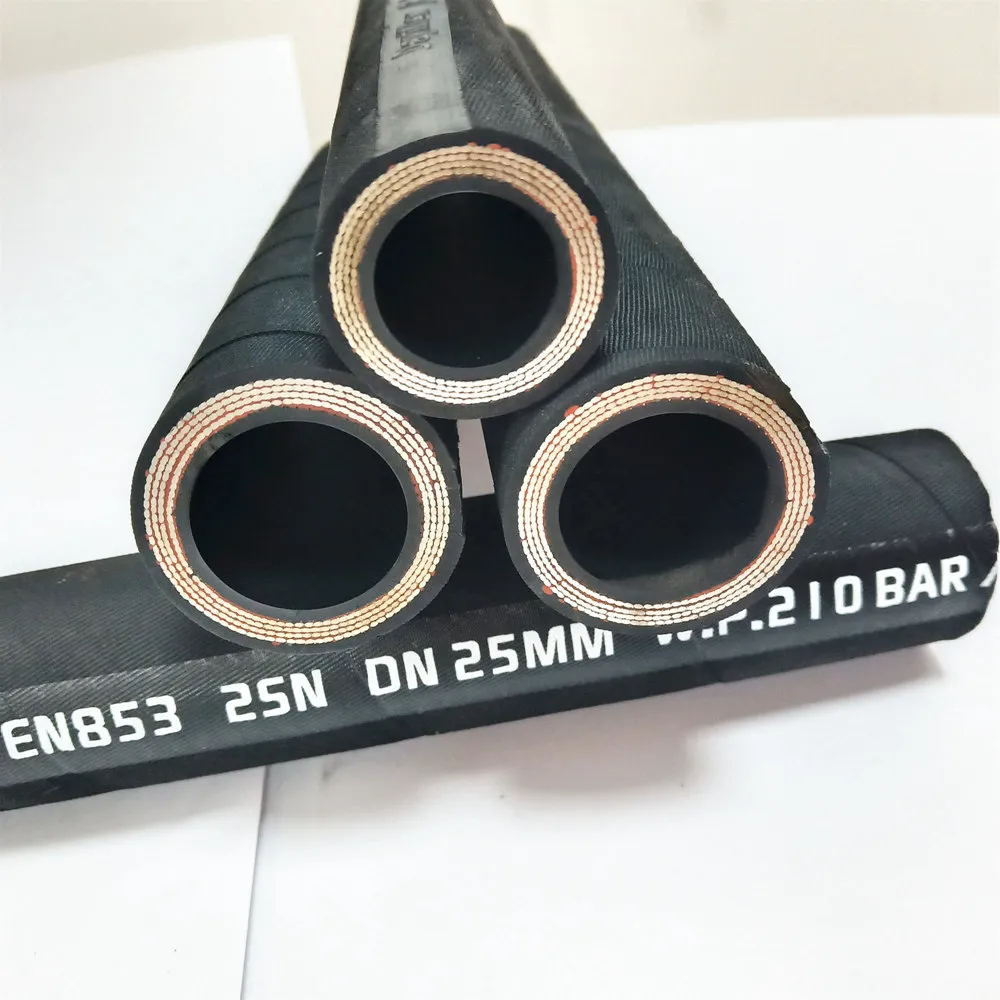
EN856 4SP hose, manufactured by suppliers in China, represents a critical component in high-pressure hydraulic systems. This hose standard, developed by the European Standardization Committee (CEN), specifies requirements for hydraulic hoses with a nominal bore ranging from 6mm to 50mm and a working pressure up to 35 MPa. These hoses are extensively used in construction machinery, agricultural equipment, mining operations, and industrial manufacturing. The '4SP' designation indicates four spiral layers of high-tensile steel wire reinforcement embedded within a synthetic rubber compound. A key pain point for industry procurement is ensuring consistent quality and adherence to the EN856 standard, particularly with the increasing prevalence of counterfeit or substandard products. Understanding the material composition, manufacturing processes, and performance characteristics is vital for mitigating risks associated with hose failure, which can result in costly downtime, environmental damage, and potential safety hazards. The role of China as a major supplier necessitates diligent quality control and verification of compliance with international standards.
Material Science & Manufacturing
The core material of EN856 4SP hose is a synthetic rubber blend, typically based on Nitrile Rubber (NBR) due to its excellent resistance to petroleum-based hydraulic fluids. NBR exhibits good abrasion resistance, tensile strength (typically 20-30 MPa), and a temperature operating range of -40°C to +100°C. However, NBR's resistance to ozone and weathering is limited; therefore, additives such as antioxidants and antiozonants are crucial. The four spiral layers of steel wire reinforcement are manufactured from high-tensile steel conforming to standards like SAE 1008 or equivalent. These wires contribute to the hose's pressure resistance and burst strength. Manufacturing involves several key processes: inner tube extrusion, steel wire spiraling, rubber cover extrusion, and final curing. Precise control of extrusion temperatures, steel wire tension, and curing time (typically 15-30 minutes at 140-160°C) are essential for achieving consistent hose performance. A common manufacturing defect stems from inconsistent wire tension during spiraling, leading to localized weak spots and potential premature failure. Quality control utilizes non-destructive testing, including eddy current testing for wire integrity and hydrostatic pressure testing to verify burst pressure.
Performance & Engineering
The performance of EN856 4SP hose is dictated by its ability to withstand high pressures, resist fluid permeation, and maintain flexibility over a wide temperature range. Burst pressure, defined as the pressure at which the hose fails, is a critical parameter, typically exceeding four times the working pressure. Fatigue resistance is also paramount, as hoses are subjected to cyclical pressure fluctuations during operation. Finite element analysis (FEA) is frequently used to optimize hose design and predict stress concentrations under varying load conditions. Environmental resistance includes resistance to ozone cracking, weathering, and chemical attack from hydraulic fluids. Compliance requirements necessitate adherence to EN856 standards, which specify detailed testing procedures for pressure resistance, impulse testing (simulating pressure surges), and dimensional accuracy. Impulse testing, using a hydraulic pulse generator, is particularly important for assessing the hose's ability to withstand sudden pressure spikes common in hydraulic systems. Proper hose assembly, including the selection of compatible fittings and correct crimping procedures, is crucial for maximizing performance and preventing leaks or failures. Incorrect crimping can lead to over-compression or under-compression, both compromising the hose’s integrity.
Technical Specifications
| Parameter | Unit | Specification (Typical) | Test Standard |
|---|---|---|---|
| Working Pressure | MPa | 25 | EN 856 |
| Burst Pressure | MPa | 100 | EN 856 |
| Temperature Range | °C | -40 to +100 | EN 856 |
| Reinforcement | Layers | 4 Spiral Steel Wire | EN 856 |
| Inner Tube Material | - | Nitrile Rubber (NBR) | ASTM D2000 |
| Cover Material | - | Synthetic Rubber (e.g., SBR) | ASTM D2000 |
Failure Mode & Maintenance
EN856 4SP hoses are susceptible to several failure modes. Fatigue cracking, initiated by repeated pressure cycles, often occurs at the wire reinforcement points. This is exacerbated by excessive bending or kinking of the hose. Pinholes and leaks can develop in the inner tube due to degradation from incompatible hydraulic fluids or abrasion from internal contaminants. Ozone cracking, resulting in surface fissures, is common in hoses exposed to outdoor environments. Another failure mode is end fitting separation, typically caused by improper crimping or corrosion of the fitting. Preventative maintenance includes regular visual inspections for signs of cracking, abrasion, or leaks. Hose assemblies should be replaced if any damage is detected. Hydraulic fluid should be regularly filtered to remove contaminants. Hoses should be routed to avoid sharp bends and contact with hot surfaces. When storing hoses, they should be coiled loosely and protected from direct sunlight and ozone. Proper selection of fittings compatible with the hose and hydraulic fluid is critical to prevent corrosion and leakage. Failure analysis should involve microscopic examination of the fracture surface to determine the root cause of failure.
Industry FAQ
Q: What is the significance of the '4SP' designation in EN856 hose specifications?
A: The '4SP' designation indicates that the hose utilizes four spiral layers of high-tensile steel wire reinforcement. This reinforcement provides the hose with its ability to withstand high pressures and maintain its structural integrity under demanding operating conditions. Increasing the number of spiral layers increases the burst pressure capability.
Q: How do I verify that a Chinese supplier is consistently meeting EN856 standards?
A: Verification requires a robust quality control program. Request documentation demonstrating the supplier’s compliance with EN856, including test reports from accredited laboratories. Conduct independent audits of their manufacturing facility to assess their quality control procedures. Perform incoming inspection of hose samples, including hydrostatic pressure testing and dimensional verification, upon receipt. Look for certifications like ISO 9001.
Q: What hydraulic fluids are compatible with NBR inner tubes in EN856 4SP hoses?
A: NBR exhibits good compatibility with most petroleum-based hydraulic fluids, including mineral oils and synthetic hydraulic fluids with a petroleum base. However, it is incompatible with phosphate ester-based fluids, which can cause swelling and degradation of the NBR. Always consult a chemical compatibility chart before using a hose with a specific hydraulic fluid.
Q: What is the typical service life of an EN856 4SP hose?
A: The service life depends heavily on operating conditions, including pressure, temperature, fluid compatibility, and exposure to environmental factors. Under ideal conditions, a properly maintained EN856 4SP hose can last 5-7 years. However, severe operating conditions can significantly reduce its lifespan. Regularly scheduled inspections are critical.
Q: What are the consequences of using a hose with an incorrect crimp on the fittings?
A: An incorrect crimp – whether over-crimped or under-crimped – severely compromises the hose assembly's integrity. An over-crimped fitting can damage the hose reinforcement, leading to premature failure. An under-crimped fitting can allow leakage or, even worse, a catastrophic separation of the hose from the fitting under pressure.
Conclusion
EN856 4SP hose represents a critical safety component in numerous hydraulic applications. Understanding its material science, manufacturing processes, and potential failure modes is essential for ensuring reliable operation and minimizing risks. The increasing reliance on Chinese suppliers underscores the need for rigorous quality control measures and thorough verification of compliance with international standards.
Effective maintenance practices, including regular inspections and proper fluid compatibility, are crucial for maximizing hose lifespan and preventing catastrophic failures. Continual advancements in materials and manufacturing techniques will undoubtedly lead to improvements in hose performance and durability. A proactive approach to hose management, focused on prevention rather than reaction, is the key to optimizing hydraulic system reliability and safety.

