
Apr . 01, 2024 17:55 Back to list
china en856 4sp manufacturers Performance Analysis

Introduction
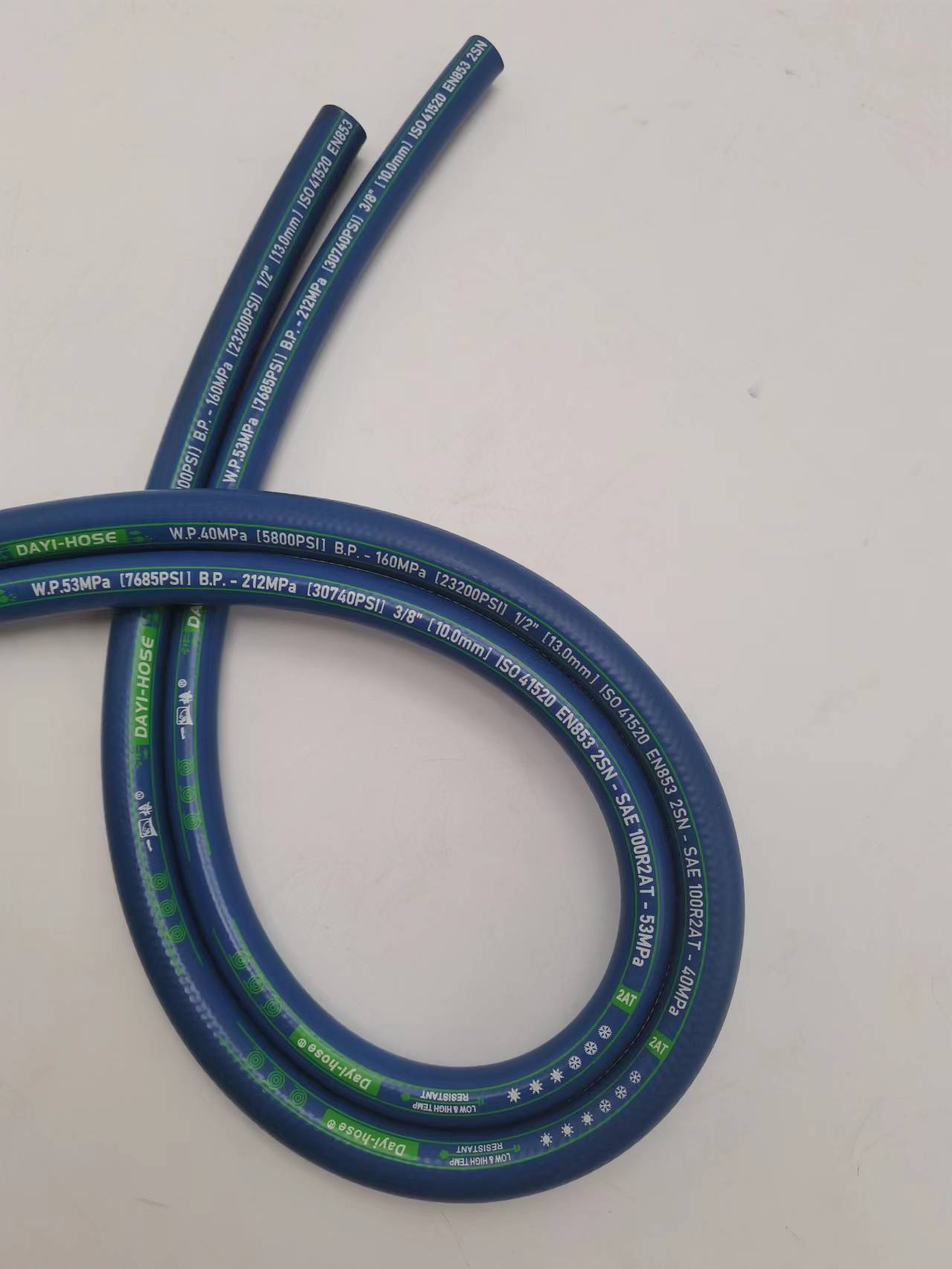
EN856 4SP hose represents a critical component in high-pressure hydraulic systems, particularly within the mobile machinery, agricultural, and industrial sectors. Manufactured extensively in China, these hoses are designed to conform to the European standard EN 856, specifically the 4SP classification, indicating a spiral reinforced construction with four high-tensile steel wire layers. This construction dictates superior pressure resistance, flexibility, and durability compared to non-reinforced or lower-spiral-count hoses. Chinese manufacturers have become a significant global source due to competitive pricing, increasing quality control measures, and capacity to meet large-scale demands. The core performance of EN856 4SP hoses centers on their ability to safely transmit hydraulic fluid under extreme pressures and challenging operational conditions, making them vital for applications like construction equipment, forklift trucks, agricultural machinery, and various industrial power units. The primary challenge for end-users lies in verifying consistent quality across various Chinese suppliers and ensuring adherence to the rigorous EN 856 standard, including burst pressure, impulse testing, and temperature range specifications.
Material Science & Manufacturing
The manufacturing of EN856 4SP hose begins with the selection of specific raw materials. The inner tube is typically constructed from a Nitrile Rubber (NBR) compound, chosen for its excellent resistance to petroleum-based hydraulic fluids, abrasion, and temperature fluctuations (generally -40°C to +100°C, though specific compounds can extend this range). NBR’s chemical structure—a copolymer of acrylonitrile and butadiene—provides the necessary flexibility and resilience. The reinforcing layers consist of high-tensile steel wire, typically conforming to standards like SAE J841. The steel wire undergoes a rigorous drawing and heat treatment process to achieve optimal tensile strength and flexibility. The outer cover is commonly made of Chloroprene Rubber (CR), also known as Neoprene, offering superior resistance to weathering, ozone, and abrasion. Manufacturing involves a spiral winding process where the steel wire is continuously wrapped around the inner tube. This is followed by the extrusion of the outer cover. Key parameter control during manufacturing includes precise control of rubber compound mixing ratios, steel wire tension during winding, and extrusion temperatures and pressures. Consistent wall thickness and proper adhesion between layers are crucial. Post-production, each hose undergoes hydrostatic testing to verify burst pressure and impulse testing to simulate dynamic pressure fluctuations, ensuring compliance with EN 856 requirements. Variations in raw material quality, particularly the steel wire grade and rubber compound formulation, directly impact the hose’s performance and lifespan.
Performance & Engineering
The performance of EN856 4SP hoses is dictated by several key engineering principles. Force analysis centers on the hoop stress within the hose wall when subjected to internal pressure. The four spiral steel wire layers provide the necessary tensile strength to resist this stress, preventing hose rupture. The spiral construction also imparts flexibility, allowing the hose to bend and maneuver without kinking or collapsing. Environmental resistance is crucial. While CR provides good weathering resistance, prolonged exposure to UV radiation, extreme temperatures, and aggressive chemicals can lead to degradation of the rubber compounds. Hydraulic fluid compatibility is paramount; incorrect fluid selection can cause swelling, softening, or cracking of the inner tube. Compliance requirements are stringent. EN 856 defines minimum burst pressure, working pressure (typically 4 times the working pressure), impulse testing cycles, and temperature range specifications. Finite Element Analysis (FEA) is often used by manufacturers to optimize hose designs and predict performance under various loading conditions. Furthermore, considerations like hose bend radius, fitting compatibility, and potential for abrasion in the application environment are critical to ensuring long-term reliability and preventing premature failure. Proper fitting installation, including correct crimping procedures, is essential to maintain the hose’s integrity.
Technical Specifications
| Parameter | Unit | EN 856 4SP Specification | Typical Chinese Manufacturer Range |
|---|---|---|---|
| Working Pressure | MPa | Minimum 31.5 | 31.5 – 40 |
| Burst Pressure | MPa | Minimum 126 | 126 – 160 |
| Temperature Range | °C | -40 to +100 | -40 to +120 (depending on compound) |
| Inner Tube Material | - | NBR | NBR (various grades) |
| Reinforcement | Layers | 4 Spiral Steel Wire | 4 Spiral Steel Wire (steel grade varies) |
| Outer Cover Material | - | CR | CR (various grades, some with added UV protection) |
Failure Mode & Maintenance
EN856 4SP hoses, despite their robust construction, are susceptible to several failure modes. Fatigue cracking, initiated by repeated pressure cycles and flexing, is a common issue, particularly near fittings. Delamination, the separation of layers, can occur due to poor adhesion during manufacturing or exposure to incompatible fluids. Rubber degradation, caused by UV exposure, ozone cracking, and extreme temperatures, reduces the hose’s flexibility and increases the risk of failure. Oxidation of the steel wire, particularly in humid environments, can compromise its tensile strength. Abrasion from external sources, such as rubbing against machinery, can wear through the outer cover, exposing the reinforcement layers. Improper fitting installation, including over-tightening or using incorrect fittings, can create stress concentrations and accelerate failure. Maintenance involves regular visual inspections for signs of cracking, abrasion, or swelling. Hose should be replaced immediately if any damage is detected. Hydraulic fluid should be regularly analyzed for contamination, which can accelerate wear. Hose assemblies should be routed to minimize bending and exposure to harsh environments. Proper storage, away from direct sunlight and extreme temperatures, is also crucial. Implementing a preventative maintenance schedule, including periodic hose replacement based on operating hours and conditions, can significantly extend service life and prevent catastrophic failures.
Industry FAQ
Q: What is the significance of the impulse testing specified in EN 856 for 4SP hoses?
A: Impulse testing simulates the pulsating pressure waves commonly found in hydraulic systems. These pressure fluctuations can cause fatigue failure over time. EN 856 requires hoses to withstand a specified number of impulse cycles at a defined pressure without leakage or rupture, demonstrating their ability to endure the dynamic stresses of real-world applications. It’s a critical indicator of long-term durability.
Q: How does the steel wire grade affect the performance of an EN856 4SP hose?
A: The steel wire's tensile strength and elongation properties directly impact the hose's burst pressure and flexibility. Higher-grade steel wire allows for a higher working pressure and improved resistance to fatigue cracking. Lower quality steel may be more prone to corrosion and have a lower tensile strength, reducing the hose’s overall lifespan and safety margin.
Q: What are the common issues with sourcing EN856 4SP hoses from Chinese manufacturers?
A: While many Chinese manufacturers produce high-quality hoses, inconsistencies in quality control can be a concern. Issues include variations in rubber compound formulations, inconsistent steel wire winding tension, and inadequate hydrostatic testing procedures. Thorough vendor qualification, including factory audits and independent testing, is essential.
Q: What considerations should be given to fitting selection when using EN856 4SP hose?
A: Fittings must be specifically designed for use with 4SP hose and should meet relevant industry standards (e.g., DIN 2488, SAE J514). Improperly sized or crimped fittings can create stress concentrations, leading to premature failure. The fitting material must be compatible with the hydraulic fluid.
Q: Can EN856 4SP hoses be used with biodegradable hydraulic fluids?
A: Compatibility with biodegradable hydraulic fluids depends on the specific rubber compound used in the hose’s inner tube. Many standard NBR compounds are not compatible with all biodegradable fluids, which can cause swelling and degradation. It’s crucial to consult the hose manufacturer and fluid supplier to verify compatibility before use.
Conclusion
EN856 4SP hydraulic hoses remain a cornerstone of fluid power systems, offering a robust and reliable solution for high-pressure applications. The combination of nitrile rubber inner tubes, high-tensile steel wire reinforcement, and chloroprene rubber outer covers provides a balance of flexibility, pressure resistance, and environmental durability. However, consistent quality control and adherence to the EN 856 standard are paramount, particularly when sourcing from Chinese manufacturers. Careful consideration of material selection, manufacturing processes, and proper installation practices is crucial to maximizing hose lifespan and preventing catastrophic failures.
Future developments in hose technology will likely focus on enhancing material properties to improve resistance to extreme temperatures, aggressive fluids, and abrasion. Smart hose technologies, incorporating sensors to monitor pressure, temperature, and leakage, may also emerge, enabling predictive maintenance and improved system safety. Continued adherence to international standards and rigorous quality assurance procedures will remain essential to ensure the continued reliability and performance of EN856 4SP hoses.