
Apr . 01, 2024 17:55 Back to list
china en856 4sh supplier Performance Analysis
Introduction
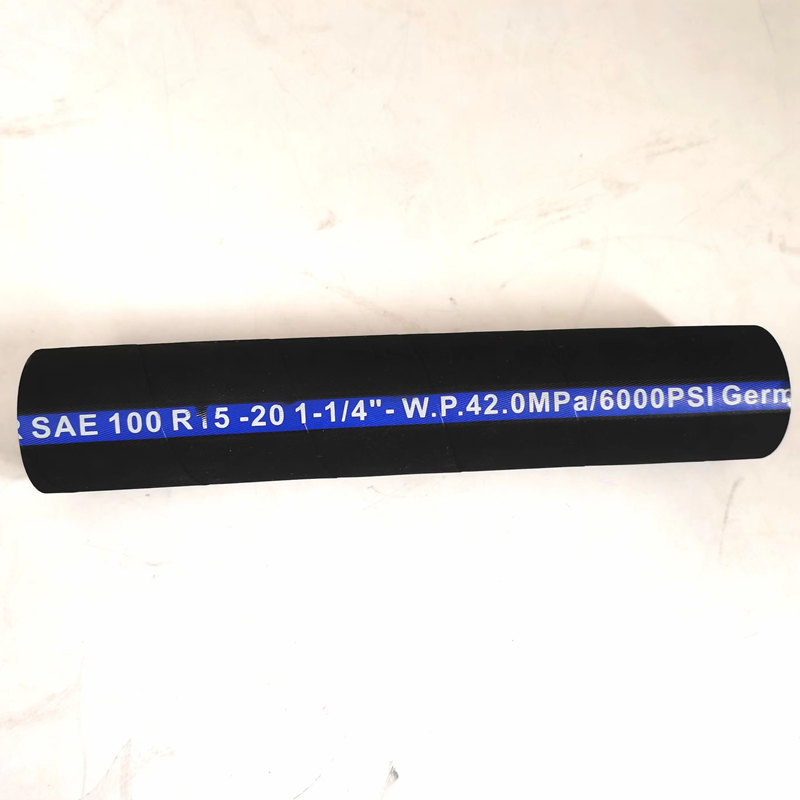
EN856 4SH rubber hose, manufactured by suppliers in China, represents a critical component in hydraulic systems across diverse industrial applications. Defined by the European standard EN 856, the 4SH designation specifies a spiral-reinforced hydraulic hose suitable for high-pressure fluid transfer. Its position in the industrial chain lies between the hydraulic pump/power unit and the actuators (cylinders, motors) delivering the hydraulic power. Core performance characteristics center around burst pressure, working pressure, temperature range, and fluid compatibility. The growing demand for reliable and cost-effective hydraulic solutions has led to a proliferation of Chinese manufacturers specializing in EN856 4SH hose production. A primary pain point within the industry is ensuring consistent quality and adherence to the EN 856 standard, given varying levels of manufacturing expertise and quality control among suppliers. Another significant concern revolves around material traceability and the avoidance of counterfeit or substandard materials, which can lead to catastrophic failures.
Material Science & Manufacturing
The construction of EN856 4SH hose relies on a specific combination of materials. The inner tube is typically composed of oil-resistant synthetic rubber, often a nitrile rubber (NBR) compound for compatibility with petroleum-based hydraulic fluids. NBR exhibits excellent resistance to abrasion, oil, and fuels but has limited resistance to ozone and weathering. Alternatively, hydrogenated nitrile butadiene rubber (HNBR) provides superior heat and ozone resistance, albeit at a higher cost. The reinforcement layer is crucial, consisting of multiple high-tensile steel wire spirals. The quality and treatment of this steel wire directly influence the hose’s burst pressure and fatigue life. The outer cover is typically made of chloroprene rubber (CR), also known as Neoprene, providing resistance to abrasion, weathering, and ozone. Manufacturing involves extrusion of the inner tube, precise winding of the steel wire spiral, and subsequent extrusion of the outer cover. Critical parameters during extrusion include temperature control to ensure uniform material distribution and adhesion, wire tension during winding to achieve the specified reinforcement density, and vulcanization (curing) temperature and time to achieve optimal rubber properties. Post-production testing includes hydrostatic testing to verify burst pressure and impulse testing to assess fatigue resistance. Batch traceability, ensuring the origin of each material component, is vital for quality control.
Performance & Engineering
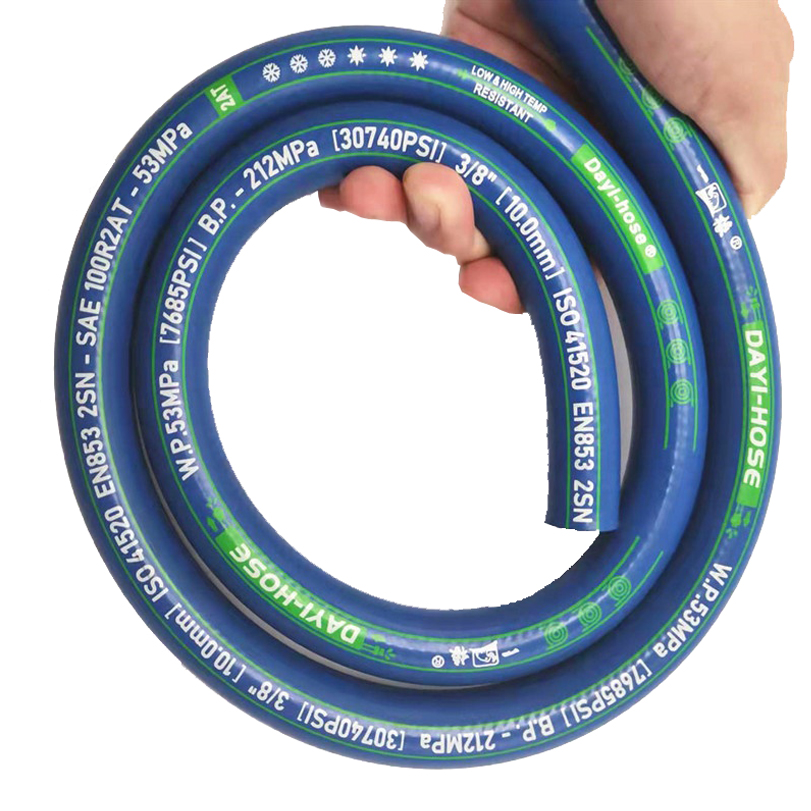
The performance of EN856 4SH hose is fundamentally governed by its ability to withstand internal pressure and external stresses. Force analysis involves calculating hoop stress within the hose wall based on internal pressure and hose diameter. The steel wire reinforcement resists this hoop stress, preventing expansion and failure. Impulse pressure, caused by pulsation in the hydraulic system, introduces fatigue stresses on the hose. Proper hose selection considers the operating pressure, temperature, and fluid type. Environmental resistance encompasses resistance to ozone, UV radiation, and temperature extremes. The hose must maintain its flexibility and integrity over a wide temperature range. Compliance requirements dictate adherence to EN 856 standards, including dimensional tolerances, pressure ratings, and material specifications. Functional implementation requires proper hose assembly, including the correct selection and crimping of fittings. Incorrect crimping can lead to premature failure. Furthermore, bend radius is a critical engineering consideration; exceeding the minimum bend radius induces stress concentrations and reduces hose life. Proper routing and support mechanisms are essential to prevent abrasion and kinking.
Technical Specifications
| Parameter | Unit | EN 856 4SH Specification | Typical Chinese Supplier Range |
|---|---|---|---|
| Working Pressure | MPa | Up to 40 | 25-40 |
| Burst Pressure | MPa | ≥ 120 | 100-130 |
| Temperature Range | °C | -40 to +100 | -40 to +100 |
| Inner Tube Material | - | NBR or HNBR | NBR (Common), HNBR (Available) |
| Reinforcement | - | Spiral Steel Wire | High Tensile Steel Wire |
| Outer Cover Material | - | CR (Neoprene) | CR (Neoprene) |
Failure Mode & Maintenance
Common failure modes in EN856 4SH hose include burst failure due to exceeding pressure limits, fatigue cracking from repeated impulse pressure, and degradation of the rubber materials due to exposure to heat, oil, or ozone. Pinholes can develop in the inner tube due to abrasion or chemical attack. Fitting failures can occur due to improper crimping or corrosion. Failure analysis often reveals root causes such as substandard materials, manufacturing defects, or improper installation/maintenance. Preventative maintenance includes regular visual inspection for cracks, abrasions, and leaks. Hose should be replaced if any damage is detected. Proper routing and support are crucial to minimize stress. Fluid compatibility must be verified to prevent degradation of the inner tube. Periodic pressure testing can help identify weaknesses before catastrophic failure. When replacing a hose, it's critical to use fittings specifically designed for EN856 4SH hose and to ensure proper crimping. Avoid sharp bends and kinking, as these create stress concentrations. Implement a hose management program with clear replacement schedules based on application severity.
Industry FAQ
Q: What is the significance of the "4SH" designation in EN 856?
A: The “4SH” designation indicates a spiral-reinforced hydraulic hose designed for high-pressure applications. The “4” specifies a working pressure capability up to 40 MPa, while “SH” denotes the spiral high-tensile steel wire reinforcement, offering superior strength and fatigue resistance compared to braided reinforcement.
Q: How can I verify that a Chinese supplier is truly adhering to the EN 856 standard?
A: Require a copy of the supplier’s EN 856 certification from a recognized testing laboratory (e.g., TÜV, SGS). Request detailed material test reports confirming the properties of the rubber compounds and steel wire. Conduct independent testing of sample hoses to verify compliance with the standard's specifications, focusing on burst pressure, impulse pressure, and dimensional accuracy.
Q: What are the key differences between NBR and HNBR inner tube materials?
A: NBR (Nitrile Butadiene Rubber) offers excellent resistance to petroleum-based hydraulic fluids, abrasion and fuels. However, HNBR (Hydrogenated Nitrile Butadiene Rubber) provides substantially improved heat resistance, ozone resistance, and weathering resistance. HNBR is preferred for demanding applications involving high temperatures or exposure to harsh environments, but it is typically more expensive than NBR.
Q: What impact does improper crimping of fittings have on hose life?
A: Improper crimping – either too loose or too tight – significantly reduces hose life. Loose crimping allows for fluid leakage and potential fitting blow-off. Over-crimping damages the hose reinforcement and can lead to premature failure. Correct crimping ensures a secure, leak-proof seal and distributes stress evenly across the hose and fitting.
Q: What is the recommended minimum bend radius for EN856 4SH hose?
A: The recommended minimum bend radius is typically specified by the hose manufacturer and is usually a multiple of the hose inner diameter (e.g., 4 times the inner diameter). Exceeding this bend radius creates stress concentrations and significantly reduces the hose’s fatigue life, potentially leading to cracking and failure.
Conclusion
EN856 4SH hydraulic hose represents a vital component in numerous industrial applications, demanding a nuanced understanding of its material science, manufacturing processes, and performance characteristics. The reliable operation of hydraulic systems is directly contingent upon the quality and adherence to standards of this hose. Selecting a reputable supplier, particularly from China, necessitates rigorous quality control checks, including certification verification, material testing, and independent assessment.
Future developments may focus on incorporating advanced materials like thermoplastic polymers to reduce weight and improve corrosion resistance. Implementing predictive maintenance strategies based on sensor data monitoring pressure, temperature, and vibration could further enhance hose life and reduce downtime. Ultimately, a comprehensive approach to hose selection, installation, and maintenance is crucial for ensuring the safe and efficient operation of hydraulic systems.

