
Apr . 01, 2024 17:55 Back to list
china en856 4sh manufacturers Performance Analysis
Introduction
EN856 4SH refers to a standardized rubber hose specification widely utilized in fluid transfer applications, particularly within the automotive and industrial machinery sectors. Chinese manufacturers specializing in EN856 4SH hoses constitute a significant portion of the global supply chain, driven by cost-competitiveness and increasing production capabilities. This guide provides an in-depth technical overview of EN856 4SH hoses, focusing on material science, manufacturing processes, performance characteristics, failure modes, and relevant industry standards, with particular emphasis on the capabilities and considerations when sourcing from Chinese manufacturers. The core performance of these hoses centers around their ability to withstand high pressures, temperature fluctuations, and exposure to various fluids without degradation or failure. A key industry pain point revolves around ensuring consistent quality control across different Chinese suppliers, verifying adherence to EN856 standards, and understanding the nuances of material composition impacting long-term durability and fluid compatibility.
Material Science & Manufacturing
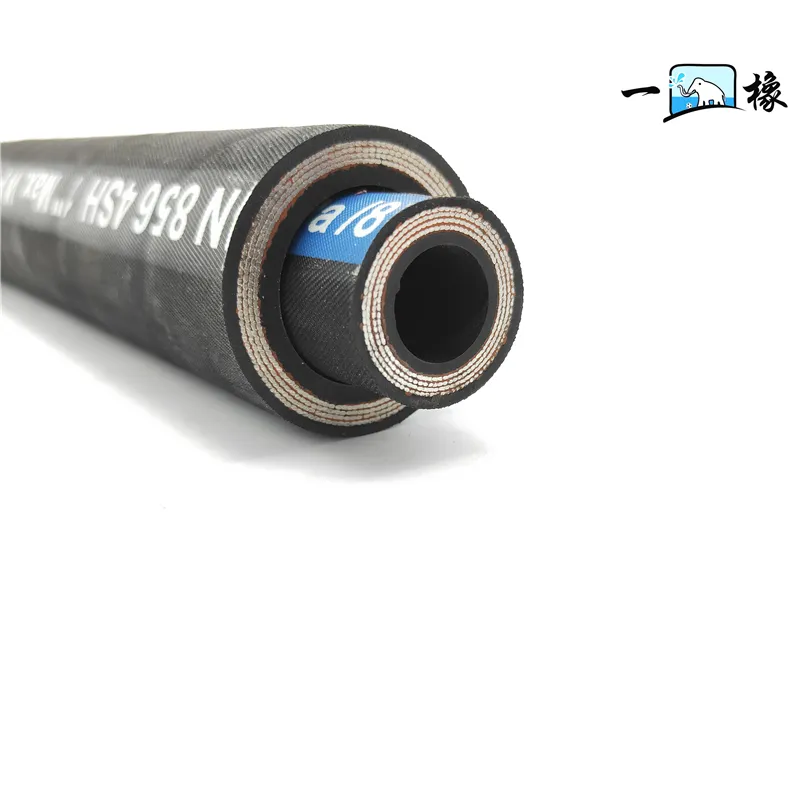
EN856 4SH hoses are typically constructed from a multi-layered structure. The inner tube is commonly made of synthetic rubber compounds such as nitrile rubber (NBR), ethylene propylene diene monomer (EPDM), or chloroprene rubber (CR), chosen based on fluid compatibility requirements. NBR offers excellent resistance to oils and fuels, EPDM excels in heat and weather resistance, and CR provides good all-around performance with moderate resistance to various chemicals. The reinforcement layer consists of multiple plies of high-tensile steel wire braid, providing the necessary pressure resistance. The outer cover is usually a synthetic rubber, often EPDM or a blend, designed for abrasion, weathering, and chemical resistance. Manufacturing processes include extrusion for the inner tube and outer cover, calendaring for reinforcement layers, and braiding for the steel wire reinforcement. Critical parameters during extrusion include temperature control (to maintain polymer properties), die design (to ensure dimensional accuracy), and curing time (to achieve optimal crosslinking). Braiding requires precise tension control of the steel wires to guarantee uniform reinforcement and prevent localized stress concentrations. Quality control involves rigorous testing of raw materials (rubber compounds and steel wire), dimensional checks throughout the process, and burst pressure testing of finished hoses. Chinese manufacturers are increasingly utilizing automated braiding and extrusion equipment to enhance consistency and efficiency. However, vigilance is needed to verify the quality of steel wire sourcing and the adherence to precise curing profiles, as these are frequently areas of variability.
Performance & Engineering
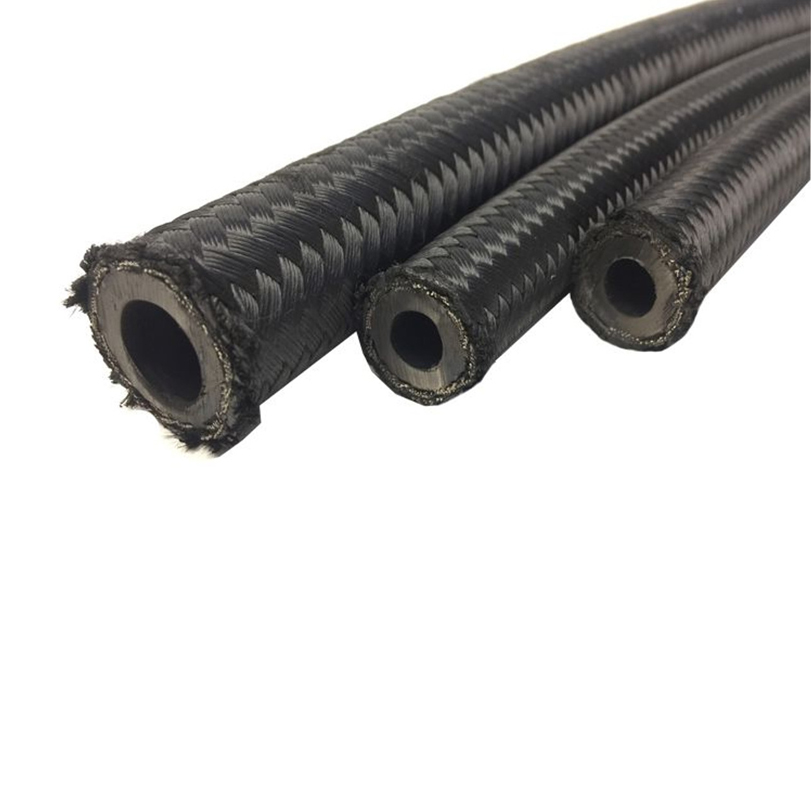
The performance of EN856 4SH hoses is primarily governed by their ability to withstand internal pressure without failure. This is dictated by the reinforcement layer (steel wire braid) and the tensile strength of the rubber compounds. Force analysis involves calculating hoop stress within the hose wall under pressure, accounting for the hose diameter, wall thickness, and the number of reinforcement plies. Environmental resistance is crucial, particularly resistance to ozone, UV radiation, and temperature extremes. EPDM compounds exhibit superior resistance to these factors compared to NBR or CR. Compliance requirements include adherence to EN856 specifications regarding dimensions, burst pressure, and fluid compatibility. Furthermore, automotive applications often require compliance with SAE J2044 standards for fuel injection hoses. Functional implementation involves selecting the appropriate hose diameter, length, and reinforcement level based on the specific application requirements. Proper fitting selection and installation are vital to prevent leakage and ensure optimal performance. Failure to correctly install fittings can create stress concentrations, leading to premature failure. Chinese manufacturers often offer customization options regarding hose length, end fitting types, and rubber compound formulations to meet specific customer needs, but thorough validation of these customizations is essential.
Technical Specifications
| Parameter | Unit | EN856 4SH Specification | Typical Range (Chinese Manufacturers) |
|---|---|---|---|
| Working Pressure | MPa | Up to 40 | 20-40 |
| Burst Pressure | MPa | ≥ 120 | 100-150 |
| Temperature Range | °C | -40 to +100 | -40 to +120 (depending on compound) |
| Inner Tube Material | - | NBR, EPDM, CR | NBR, EPDM, CR |
| Reinforcement | - | Steel Wire Braid (4 spiral) | Steel Wire Braid (4 spiral) |
| Outer Cover Material | - | EPDM | EPDM, or EPDM Blend |
Failure Mode & Maintenance
Common failure modes in EN856 4SH hoses include burst failure due to exceeding the working pressure, fatigue cracking due to repeated flexing and pressure cycles, delamination of the reinforcement layers, and degradation of the rubber compounds due to exposure to heat, chemicals, or ozone. Fatigue cracking often initiates at areas of high stress concentration, such as near fittings or where the hose is sharply bent. Delamination occurs when the bonding between the rubber layers and the reinforcement fails, compromising the hose’s structural integrity. Degradation manifests as hardening, cracking, or swelling of the rubber, reducing its flexibility and resistance to pressure. Maintenance involves regular visual inspections for signs of damage, such as cracks, bulges, or leaks. Hoses should be replaced immediately if any damage is detected. Proper storage is also important to prevent premature degradation. Hoses should be stored in a cool, dry place away from direct sunlight and sources of ozone. When sourcing from Chinese manufacturers, failure analysis often reveals inconsistencies in steel wire quality or inadequate curing of rubber compounds as contributing factors to premature failure. Implementing a robust quality control program and conducting thorough testing are essential to mitigate these risks.
Industry FAQ
Q: What is the typical lead time for a custom order of EN856 4SH hoses from a Chinese manufacturer?
A: Lead times can vary significantly based on order quantity, complexity, and the manufacturer's current production schedule. Generally, expect a lead time of 4-8 weeks for a standard custom order, and potentially longer (8-12 weeks) for highly customized specifications or large volumes. It is crucial to clearly define all requirements and confirm the manufacturer’s capacity before placing an order.
Q: How can I ensure that a Chinese manufacturer is consistently adhering to the EN856 standard?
A: Implementing a rigorous quality control program is essential. This includes pre-shipment inspections conducted by a third-party inspection agency, material testing to verify compound composition, burst pressure testing, and dimensional checks. Requesting documented proof of compliance, such as test reports and certifications, is also vital. A factory audit can assess the manufacturer’s quality management system and production processes.
Q: What are the common challenges related to fluid compatibility when sourcing EN856 4SH hoses from China?
A: Ensuring accurate identification of the fluid being conveyed is paramount. Different rubber compounds have varying levels of resistance to different fluids. Misidentification or the use of an inappropriate compound can lead to swelling, degradation, and ultimately, hose failure. Verify the manufacturer's understanding of the fluid's chemical composition and request compatibility data.
Q: How does the gauge of the steel wire braid affect the hose's performance and lifespan?
A: The gauge (diameter) and number of wires in the steel braid directly impact the hose’s pressure resistance and fatigue life. Thicker wires and a higher ply count increase pressure capacity but can reduce flexibility. Proper braiding tension is also critical; insufficient tension weakens the reinforcement, while excessive tension can induce stress concentrations. Confirm the wire gauge and braiding process parameters with the manufacturer.
Q: What is the impact of different rubber compound formulations on the hose’s operational temperature range?
A: The choice of rubber compound significantly influences the hose's operating temperature limits. NBR typically has a narrower temperature range compared to EPDM. Specialized compounds with additives can extend the temperature range, but these may come at a higher cost. Obtain detailed temperature performance data from the manufacturer and ensure it aligns with the application requirements.
Conclusion
EN856 4SH hoses represent a critical component in numerous industrial and automotive applications, demanding stringent performance and reliability. Sourcing these hoses from Chinese manufacturers offers cost advantages, but necessitates a proactive approach to quality control and compliance verification. Understanding the material science, manufacturing processes, and potential failure modes is paramount to ensuring long-term performance and minimizing the risk of costly failures.
Ultimately, successful procurement hinges on establishing strong relationships with reputable manufacturers, implementing robust testing protocols, and maintaining a clear understanding of the application-specific requirements. Continuous monitoring of industry standards and advancements in rubber technology is crucial for staying ahead of evolving demands and ensuring the integrity of fluid transfer systems.