
Apr . 01, 2024 17:55 Back to list
china en856 4sh manufacturer Performance Analysis
Introduction
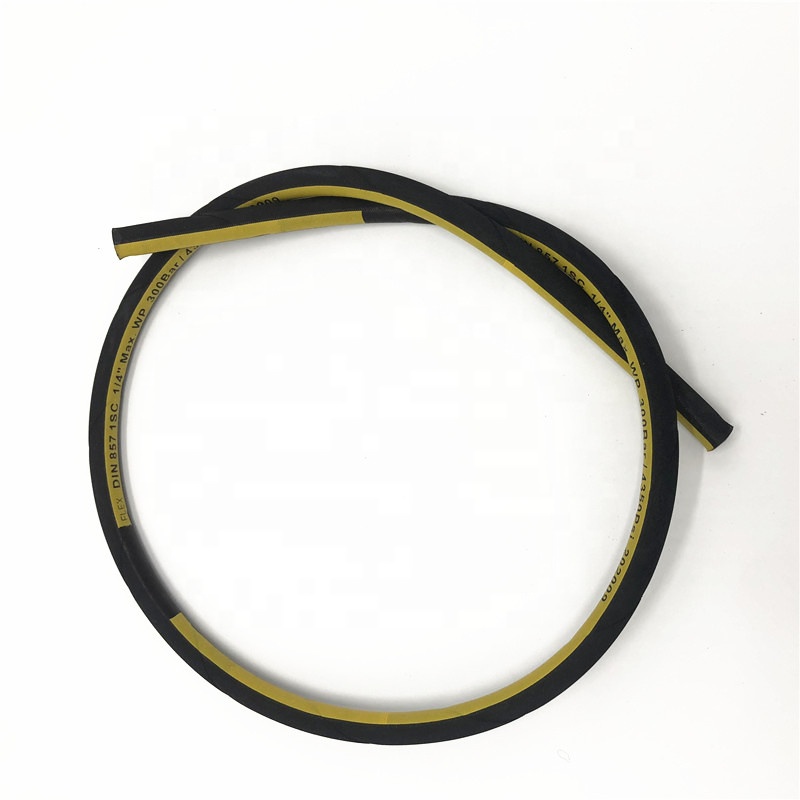
EN856 4SH hydraulic hoses, manufactured in China, represent a critical component in fluid power systems across diverse industrial applications. These hoses conform to the European standard EN856, specifically the 4SH designation denoting four spiral high-strength steel wire reinforcement embedded within a synthetic rubber matrix. Positioned within the hydraulic system supply chain, these hoses facilitate the transmission of pressurized fluids – typically hydraulic oil – to actuators, motors, and other hydraulic components. Their core performance characteristics encompass pressure capacity, flexibility, temperature resistance, and resistance to fluid degradation. The prevalence of Chinese manufacturers in this sector stems from competitive pricing and increasing adherence to international quality standards, however, understanding material consistency and process control is paramount for end-users. Key pain points in the industry include consistent batch-to-batch quality, particularly regarding reinforcement wire fatigue life, and accurately verifying compliance with EN856 specifications beyond basic burst pressure testing.
Material Science & Manufacturing
The core material composition of EN856 4SH hoses comprises several key components. The inner tube is typically constructed from synthetic rubber, most commonly nitrile rubber (NBR) owing to its excellent oil resistance. Alternative elastomers like Chloroprene rubber (CR) are used for specific fluid compatibility requirements. The reinforcement layer utilizes high-strength steel wire, typically drawn steel meeting specific tensile strength and elongation characteristics. The wire’s metallurgical composition, often a carbon steel alloy, is critical for determining fatigue resistance. The outer cover is generally a synthetic rubber blend, frequently employing a combination of NBR and ethylene propylene diene monomer (EPDM) to provide abrasion resistance, weathering protection, and compatibility with common hydraulic fluids. Manufacturing begins with extrusion of the inner tube. The 4 spiral layers of steel wire are then wound onto the inner tube using a helical winding machine. Precise tension control during wire winding is crucial for maintaining dimensional stability and ensuring uniform pressure distribution. Following wire reinforcement, the outer cover is extruded. A curing (vulcanization) process, involving heat and pressure, chemically crosslinks the rubber compounds, imparting elasticity and durability. Key parameters controlled during manufacturing include rubber compound viscosity, wire tension, curing temperature and time, and dimensional tolerances. Variations in these parameters directly affect hose performance and longevity. Post-curing, rigorous quality control measures, including dimensional inspection, burst pressure testing, and impulse testing, are essential.

Performance & Engineering
The performance of EN856 4SH hoses is governed by several engineering principles. The four-spiral wire reinforcement configuration dictates the hose’s pressure rating and flexibility. The steel wire effectively resists hoop stress generated by internal fluid pressure. Finite Element Analysis (FEA) is commonly employed to optimize wire helix angles and spacing to maximize pressure capacity and minimize stress concentrations. Hose flexibility is crucial for routing within confined spaces. Bend radius limits, specified in EN856, are based on hose diameter to prevent kinking and internal damage. Temperature resistance is another critical performance attribute. Hydraulic fluid temperature fluctuations can significantly impact rubber compound elasticity and permeability. Hose selection must consider the operating temperature range of the hydraulic system. Impulse pressure testing, simulating pressure surges and pulsations, assesses the hose’s ability to withstand dynamic loading. Fatigue life, determined through cyclic pressure testing, is a key indicator of long-term reliability. Compliance requirements dictate adherence to EN856 standards concerning dimensional accuracy, burst pressure, impulse performance, and material specifications. Ensuring compatibility with specific hydraulic fluids is paramount to prevent swelling, degradation, or cracking of the rubber compounds. Selection should involve verifying the chemical resistance charts provided by the rubber manufacturer.
Technical Specifications
| Parameter | Unit | EN856 4SH Specification | Typical Chinese Manufacturer Range |
|---|---|---|---|
| Working Pressure | MPa | Up to 31.5 | 10 - 35 |
| Burst Pressure | MPa | ≥ 4 x Working Pressure | 4 - 5 x Working Pressure |
| Impulse Cycles (R12) | Cycles | ≥ 100,000 | 50,000 - 150,000 |
| Temperature Range | °C | -40 to +100 | -40 to +120 |
| Inner Tube Material | - | NBR, CR | NBR, CR, EPDM |
| Reinforcement | Layers | 4 Spiral Steel Wire | 4 Spiral Steel Wire |
Failure Mode & Maintenance
EN856 4SH hoses are susceptible to several failure modes. Fatigue cracking, originating from stress concentrations around the wire reinforcement, is a common cause of failure, particularly under cyclic loading. Delamination, the separation of rubber layers, can occur due to inadequate bonding during manufacturing or prolonged exposure to high temperatures. External abrasion, caused by rubbing against other components, can compromise the outer cover and expose the reinforcement. Internal degradation of the rubber compounds, due to incompatible hydraulic fluids or oxidation, leads to loss of elasticity and eventual cracking. Pinholes in the inner tube, caused by corrosion or manufacturing defects, result in fluid leakage. Maintenance involves regular visual inspection for signs of damage, such as cracks, abrasions, and swelling. Checking hose connections for tightness and proper seating is essential. Periodic fluid analysis can detect contamination and identify potential compatibility issues. Preventative replacement based on a predetermined service interval, considering operating conditions and fluid type, is recommended. In the event of a failure, a thorough root cause analysis should be conducted to prevent recurrence. The proper storage of hoses is important. They should be stored in a cool, dry place, away from direct sunlight and ozone sources.
Industry FAQ
Q: What is the significance of the '4SH' designation in EN856, and how does it affect hose performance?
A: The '4SH' designation indicates four spiral layers of high-strength steel wire reinforcement. This configuration provides a high pressure capacity and good flexibility compared to hoses with fewer reinforcement layers. The spiral arrangement resists hoop stress effectively, allowing the hose to withstand significant internal pressures. The number of layers directly correlates to the maximum allowable working pressure, with higher numbers signifying greater pressure handling capability.
Q: How do Chinese manufacturers ensure compliance with the stringent requirements of EN856?
A: Reputable Chinese manufacturers employ rigorous quality control procedures throughout the manufacturing process, including raw material testing, in-process inspections, and final product testing. They often obtain certifications from third-party testing organizations to demonstrate compliance. However, verifying compliance requires reviewing test reports and conducting independent audits of manufacturing facilities.
Q: What is the impact of hydraulic fluid type on the longevity of an EN856 4SH hose?
A: Hydraulic fluid compatibility is crucial. Using an incompatible fluid can cause the rubber compounds to swell, degrade, or crack, leading to premature failure. It's essential to select a hose with an inner tube material specifically designed for the intended fluid type. Refer to the fluid resistance charts provided by the hose manufacturer.
Q: What are the primary causes of fatigue failure in EN856 4SH hoses, and how can they be mitigated?
A: Fatigue failure is primarily caused by repeated bending, flexing, and pressure pulsations. Mitigation strategies include minimizing hose bending, using appropriate bend radii, avoiding sharp angles, and selecting hoses with high fatigue resistance ratings. Implementing pulsation dampeners in the hydraulic system can also reduce stress on the hoses.
Q: Beyond burst pressure testing, what other tests are crucial for verifying the quality of an EN856 4SH hose?
A: Impulse testing (cyclic pressure testing) is critical to assess the hose’s ability to withstand dynamic loading. Fatigue life testing determines the hose’s long-term reliability. Tensile strength testing of the steel wire verifies its mechanical properties. Dimensional accuracy checks ensure adherence to EN856 specifications. Fluid resistance testing confirms compatibility with intended hydraulic fluids.
Conclusion
EN856 4SH hydraulic hoses are vital components in numerous industrial applications demanding reliable fluid power transmission. The performance characteristics of these hoses are intrinsically linked to material selection, manufacturing precision, and adherence to stringent industry standards. While Chinese manufacturers offer a cost-competitive source, thorough due diligence, including verification of compliance with EN856 through independent testing and audits, is paramount to ensure long-term reliability and prevent costly failures.
Ultimately, successful implementation requires a holistic approach considering operating conditions, fluid compatibility, and proactive maintenance practices. Understanding the potential failure modes and implementing preventative measures will maximize hose service life and minimize downtime. The ongoing evolution of materials science and manufacturing techniques continues to drive improvements in hose performance, paving the way for even more robust and durable hydraulic systems.