
Apr . 01, 2024 17:55 Back to list
china en856 4sh factories Performance Analysis
Introduction
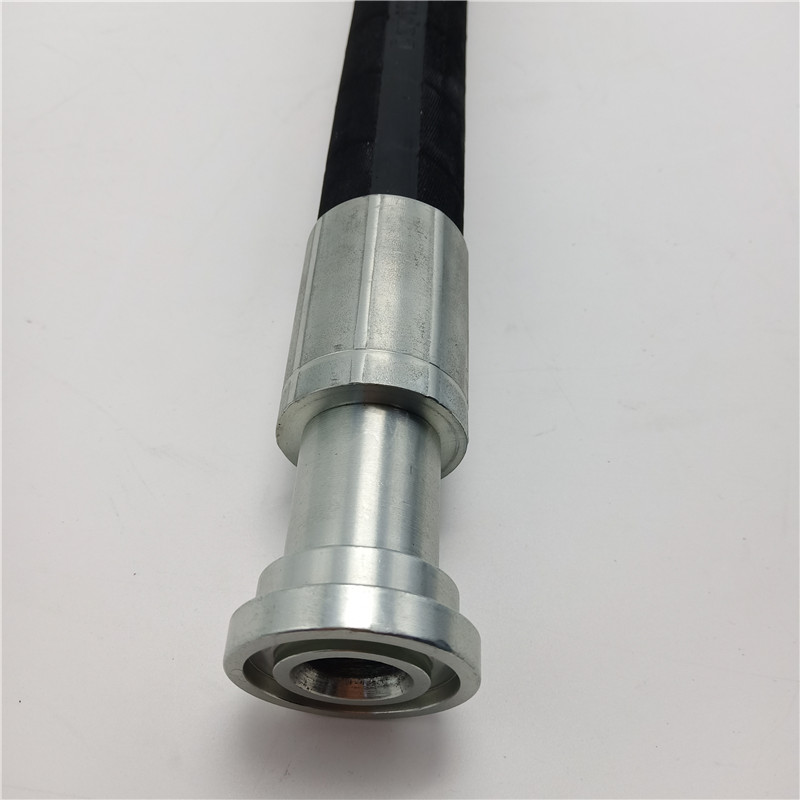
EN856 4SH hoses, manufactured extensively in China, represent a crucial component in hydraulic power transmission systems across diverse industrial applications. These hoses are categorized under the European standard EN 856, specifically the 4SH designation, denoting a four-spiral high-pressure hydraulic hose with steel reinforcement. Their primary function is the conveyance of hydraulic fluid under high pressure, typically ranging from 315 bar (4569 psi) to 420 bar (6091 psi), though operational limits vary based on hose construction and manufacturer specifications. The 4SH classification indicates a construction optimized for applications demanding high flexibility and resistance to fatigue, common in mobile machinery, construction equipment, and industrial machinery. Chinese manufacturers have become dominant suppliers due to competitive pricing and increasingly stringent quality control measures adhering to international standards. The key performance characteristics driving demand are burst pressure, impulse resistance, and operational temperature range. Understanding the nuances of materials, manufacturing processes, and potential failure modes is paramount for ensuring safe and reliable operation in demanding environments.
Material Science & Manufacturing
The core construction of an EN856 4SH hose involves several key materials. The inner tube is typically composed of oil-resistant synthetic rubber, most commonly nitrile rubber (NBR) due to its excellent compatibility with hydraulic fluids, including mineral oils, aliphatic hydrocarbons, and some synthetic fluids. However, for specialized applications involving phosphate ester fluids, fluoroelastomers (FKM) are employed. The reinforcement layer consists of four helically wound, high-tensile steel wires. The steel wire is typically carbon steel, heat treated to achieve a specific tensile strength and yield strength. The wire surface treatment (zinc plating or passivation) significantly impacts corrosion resistance. Finally, the outer cover is usually a synthetic rubber compound, often chloroprene rubber (CR) offering resistance to abrasion, weathering, ozone, and oil.
Manufacturing commences with the extrusion of the inner tube to precise dimensions. The steel wire is then wound onto a mandrel under controlled tension, ensuring consistent helix angle and spacing. This is followed by the application of the outer cover via extrusion. Crucial process parameters include extrusion temperature, cooling rate, wire tension, and vulcanization time. Vulcanization, a chemical process involving sulfur or peroxides, cross-links the rubber polymers, imparting elasticity, strength, and resistance to degradation. Post-vulcanization, the hose undergoes rigorous testing, including burst pressure testing, impulse testing, and dimensional inspection. Chinese factories increasingly employ automated winding and extrusion processes, coupled with statistical process control (SPC) to minimize variations and maintain consistent quality. A significant challenge lies in ensuring consistent steel wire quality and adherence to strict dimensional tolerances. Improper vulcanization can lead to under-cured or over-cured rubber, compromising performance.

Performance & Engineering
The performance of EN856 4SH hoses is governed by several critical engineering considerations. The primary design factor is maintaining adequate burst pressure margin of safety. Typically, hoses are tested to at least four times the working pressure. Impulse testing is crucial for evaluating fatigue life under cyclical pressure loads, common in hydraulic pumps and actuators. The impulse resistance is directly related to the steel wire construction, helix angle, and rubber compound properties. Another critical aspect is thermal performance. Hydraulic fluid temperature significantly affects viscosity and hose material properties. Hoses are generally rated for operating temperatures ranging from -40°C to +100°C, but exceeding these limits can lead to premature degradation.
Force analysis involves evaluating hoop stress in the hose wall due to internal pressure. The four-spiral steel wire construction provides the necessary tensile strength to withstand these stresses. Environmental resistance is also vital, particularly in outdoor applications. Exposure to ultraviolet radiation, ozone, and corrosive fluids can degrade the rubber compounds. Compliance with EN 856 requires adherence to specific test methods and acceptance criteria for burst pressure, impulse resistance, dimensional accuracy, and fluid compatibility. The end fittings (couplings) play a critical role in the overall system performance. Improperly crimped or incompatible fittings can lead to leaks and hose failure. Finite Element Analysis (FEA) is increasingly utilized by Chinese manufacturers to optimize hose design and predict stress distribution under various loading conditions. Proper hose routing and support are essential to prevent kinking, abrasion, and excessive bending stress.
Technical Specifications
| Parameter | Unit | Typical Value (EN 856 4SH) | Testing Standard |
|---|---|---|---|
| Working Pressure | Bar | 315 - 420 | EN 856 |
| Burst Pressure | Bar | 1260 - 1680 | EN 856 |
| Impulse Cycles (at 20°C) | Cycles | ≥ 300,000 | SAE J30R9 |
| Temperature Range | °C | -40 to +100 | EN 856 |
| Inner Tube Material | - | Nitrile Rubber (NBR) / Fluoroelastomer (FKM) | ASTM D2000 |
| Reinforcement | - | 4 Steel Spiral Wire | ASTM A228 |
| Outer Cover Material | - | Chloroprene Rubber (CR) | ASTM D2000 |
Failure Mode & Maintenance
EN856 4SH hoses are susceptible to several failure modes. Fatigue cracking, primarily in the steel wire reinforcement, is a common issue resulting from repeated pressure cycling and bending stresses. Delamination, or separation of the rubber layers from the steel wire, can occur due to improper bonding or exposure to corrosive fluids. Rubber degradation, caused by ozone, UV radiation, and high temperatures, leads to hardening and cracking of the inner tube and outer cover. Oxidation of the hydraulic fluid can also contribute to rubber degradation. Pinholes in the inner tube can result from abrasion or corrosion, leading to fluid leakage. Another failure mode is fitting failure, including crimp loosening and corrosion of the fitting material.
Preventative maintenance is crucial for extending hose life. Regular visual inspections should be conducted to identify signs of cracking, abrasion, or swelling. Hose routing should be optimized to minimize bending stress and exposure to harsh environments. Hydraulic fluid should be regularly analyzed to monitor for contamination and degradation. Hoses should be replaced at recommended intervals, even if no visible defects are present. When replacing hoses, it’s vital to use compatible fittings and ensure proper crimping. Incorrect installation is a leading cause of premature failure. Storage of spare hoses should be in a cool, dry, and dark environment to prevent degradation. In cases of suspected hose failure, the system should be immediately shut down and the hose replaced. Failure analysis, including microscopic examination of the fracture surface, can help identify the root cause of failure and prevent recurrence.
Industry FAQ
Q: What is the impact of hydraulic fluid type on the lifespan of an EN856 4SH hose?
A: The type of hydraulic fluid significantly impacts hose lifespan. NBR inner tubes are generally compatible with mineral oils, but exposure to certain synthetic fluids (e.g., some fire-resistant fluids) can cause swelling and degradation. FKM inner tubes offer broader fluid compatibility, but are more expensive. Using the wrong fluid will lead to premature failure.
Q: How does the helix angle of the steel wire reinforcement affect impulse performance?
A: A steeper helix angle generally provides greater flexibility but reduces impulse performance. A shallower angle increases impulse resistance but reduces flexibility. The optimal helix angle is a trade-off determined by the application requirements and is carefully controlled during manufacturing.
Q: What are the common causes of fitting failure in EN856 4SH hose assemblies?
A: Common causes include improper crimping (insufficient or excessive), corrosion of the fitting material, and incompatibility between the hose and fitting. Using non-certified fittings or neglecting proper torque specifications during assembly also contributes to failure.
Q: What are the acceptable bending radii for EN856 4SH hoses to avoid damage?
A: Exceeding the minimum bending radius can cause kinking and internal damage. The recommended minimum bending radius is typically 4 to 6 times the hose inside diameter. Sharp bends significantly reduce hose life.
Q: What quality control measures should I look for when sourcing EN856 4SH hoses from Chinese manufacturers?
A: Look for manufacturers with ISO 9001 certification, demonstrating a robust quality management system. Verify compliance with EN 856 standards through third-party testing reports. Inquire about their steel wire sourcing and vulcanization process control. Audit the factory for adherence to quality standards.
Conclusion
EN856 4SH hoses, vital components in hydraulic systems, demand a comprehensive understanding of material science, manufacturing processes, and performance characteristics. Chinese manufacturers have emerged as leading suppliers, but maintaining consistent quality requires rigorous adherence to international standards and robust quality control measures. Proper hose selection, installation, and maintenance are crucial for ensuring safe and reliable operation, maximizing service life, and preventing costly failures.
Future developments in hose technology may focus on advanced materials, such as thermoplastic composites, to reduce weight and improve corrosion resistance. Increased automation and data analytics in manufacturing will further enhance quality control and process optimization. The integration of smart sensors into hoses could enable real-time monitoring of pressure, temperature, and degradation, facilitating predictive maintenance and preventing catastrophic failures. Continued adherence to evolving industry standards and best practices remains paramount.