
Apr . 01, 2024 17:55 Back to list
china en 857 2sc hydraulic hose manufacturers Performance Analysis
Introduction
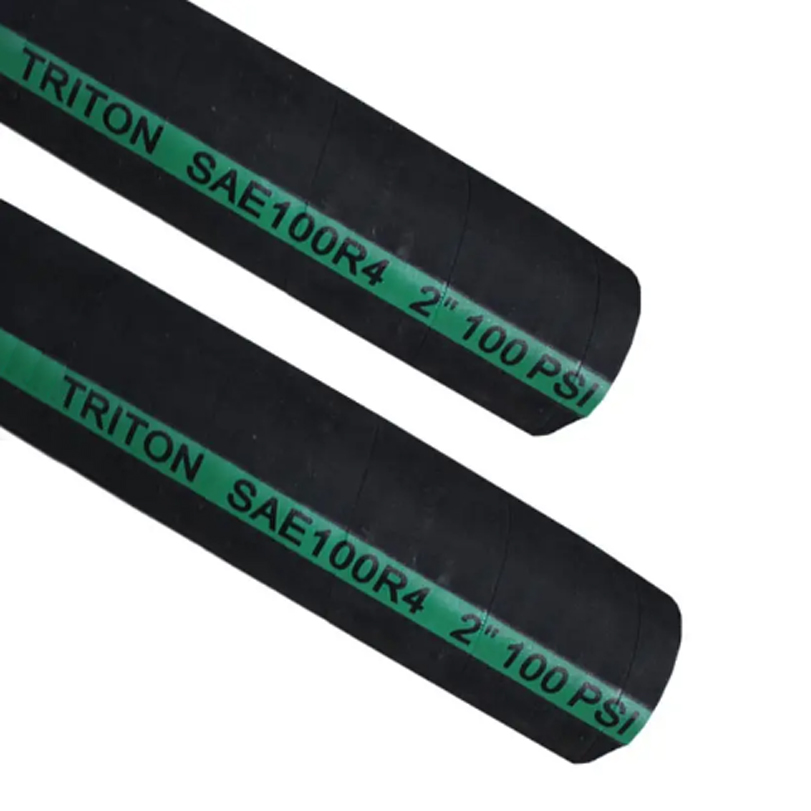
EN 857 2SC hydraulic hoses represent a critical component in fluid power systems across a multitude of industries, including construction, agriculture, manufacturing, and automotive. Manufactured by numerous companies in China, these hoses adhere to the stringent requirements of the European standard EN 857, specifically the 2SC construction denoting two steel wire spiral reinforcements embedded within a synthetic rubber matrix. These hoses are designed for high-pressure applications, typically ranging up to 350 bar (5076 psi), and are engineered to convey hydraulic fluid, oil, and certain chemicals. The Chinese manufacturing landscape offers a significant global supply, often prioritizing cost-effectiveness while striving to meet international quality benchmarks. A primary industry pain point revolves around inconsistent material quality, particularly in the rubber compound and steel wire, leading to premature failure and safety concerns. Another challenge is ensuring complete adherence to EN 857, as some manufacturers may deviate from specific testing protocols or material specifications. This guide provides an in-depth technical overview of EN 857 2SC hydraulic hoses manufactured in China, encompassing material science, manufacturing processes, performance characteristics, failure modes, and relevant industry standards.
Material Science & Manufacturing
The construction of an EN 857 2SC hose begins with the inner tube, typically formulated from a synthetic rubber compound such as nitrile butadiene rubber (NBR) or chloroprene rubber (CR). NBR offers excellent resistance to petroleum-based hydraulic fluids, while CR provides superior ozone and weathering resistance. The specific rubber compound selection depends on the intended application and fluid compatibility. Steel wire, with a high tensile strength (typically >1770 N/mm²), is then spirally wound around the inner tube. This provides the primary reinforcement, resisting burst pressure. A second layer of steel wire, identical to the first, is applied in a counter-spiral configuration, enhancing flexibility and providing additional pressure resistance. The outer cover is commonly made of a synthetic rubber like polyurethane (PU) or neoprene, offering abrasion, oil, and weather resistance.
Manufacturing processes involve several key stages. The inner tube is extruded, and the steel wire is simultaneously applied via a helical winding machine. Precise tension control during winding is critical to ensure uniform reinforcement and prevent wire breakage. Following the winding of the second steel layer, the outer cover is extruded over the assembly. Curing, a vulcanization process using heat and pressure, chemically crosslinks the rubber compounds, imparting elasticity and durability. Critical parameters during curing include temperature, pressure, and time, as deviations can affect the hose's physical properties. Post-curing, hoses undergo rigorous testing, including burst pressure tests, impulse tests, and dimensional checks, to verify compliance with EN 857. Quality control throughout the process is paramount; variations in rubber compound batch consistency, wire diameter, and winding tension can significantly impact performance and lifespan. Chinese manufacturers are increasingly adopting automated extrusion and winding technologies to improve consistency and reduce defects.
Performance & Engineering
The performance of an EN 857 2SC hose is fundamentally governed by its ability to withstand internal pressure, external loads, and environmental factors. Burst pressure, the maximum pressure the hose can sustain before rupture, is a key performance indicator, dictated by the steel wire reinforcement and rubber compound strength. Impulse tests, simulating pressure pulsations common in hydraulic systems, assess the hose’s resistance to fatigue failure. Flex impulse tests evaluate the hose’s endurance under repeated bending and pressure cycling. Tensile strength and elongation at break of the rubber compounds determine their ability to resist tearing and deformation.
Environmental resistance is crucial. Hydraulic hoses are often exposed to extreme temperatures, UV radiation, and corrosive fluids. The rubber compound must maintain its elasticity and integrity across a specified temperature range (typically -40°C to +100°C). Oil resistance is paramount, preventing swelling and degradation of the rubber upon contact with hydraulic fluids. The hose’s bend radius also impacts performance; exceeding the minimum bend radius can cause kinking and premature failure. Furthermore, the hose must conform to static electricity dissipation requirements, preventing the build-up of static charge, particularly when handling flammable fluids. Engineering calculations involving hoop stress and longitudinal stress are utilized to optimize the hose's construction for specific pressure and temperature conditions. Finite element analysis (FEA) is increasingly employed to model hose behavior under complex loading scenarios.
Technical Specifications
| Parameter | Unit | EN 857 2SC Specification | Typical Chinese Manufacturer Range |
|---|---|---|---|
| Working Pressure | MPa | Up to 35 | 25-35 |
| Burst Pressure | MPa | ≥ 4 x Working Pressure | 4.2-4.5 x Working Pressure |
| Inner Tube Material | - | NBR or CR | NBR, CR, EPDM |
| Reinforcement | - | Two Steel Wire Spirals | Two Steel Wire Spirals |
| Outer Cover Material | - | Polyurethane (PU) or Neoprene | PU, Neoprene, SBR |
| Temperature Range | °C | -40 to +100 | -40 to +100 (Some variations -30 to +80) |
Failure Mode & Maintenance
EN 857 2SC hydraulic hoses are susceptible to several failure modes. Fatigue cracking, initiated by repeated pressure pulsations and bending, is a common cause of failure, often originating at the wire-rubber interface. Wire breakage, resulting from corrosion or excessive bending, can lead to sudden catastrophic failure. Rubber degradation, caused by exposure to heat, ozone, or incompatible fluids, reduces the hose’s flexibility and strength. Pinholes and leaks can develop due to abrasion or damage to the inner tube. Delamination, the separation of rubber layers, compromises the hose’s integrity. Oxidation of the steel wire, particularly in humid environments, weakens the reinforcement.
Preventive maintenance is crucial. Regular visual inspections should be conducted to identify signs of damage, such as cracks, abrasions, and swelling. Hose routing should be optimized to minimize bending and abrasion. Proper fluid compatibility should be verified before use. Pressure ratings should never be exceeded. Hoses should be replaced at recommended intervals, even if no visible damage is present, typically every 5-7 years depending on application severity. When replacing hoses, ensure that fittings are compatible and properly crimped. Storage conditions should be cool, dry, and away from direct sunlight. In the event of a failure, a thorough failure analysis should be conducted to determine the root cause and prevent recurrence. This includes examining the fractured surfaces for evidence of fatigue, corrosion, or material defects.
Industry FAQ
Q: What are the key differences between EN 857 1SN and 2SC hoses, and when would I choose one over the other?
A: EN 857 1SN hoses utilize a single steel wire spiral reinforcement, making them more flexible but with a lower pressure rating (typically up to 250 bar). 2SC hoses, with two steel wire spirals, offer significantly higher pressure capacity (up to 350 bar) but are less flexible. Choose 1SN for low-to-medium pressure applications requiring tight bend radii. Select 2SC for high-pressure systems where flexibility is less critical.
Q: How do Chinese manufacturers ensure compliance with the EN 857 standard?
A: Reputable Chinese manufacturers employ rigorous quality control procedures, including material testing, dimensional inspections, burst pressure testing, and impulse testing, performed in accredited laboratories. They often seek certifications from independent testing agencies to demonstrate compliance. However, variability exists; verifying the manufacturer's certifications and requesting test reports is crucial.
Q: What is the impact of fluid compatibility on the lifespan of an EN 857 2SC hose?
A: Incompatible fluids can cause swelling, softening, or degradation of the rubber compounds, significantly reducing the hose’s lifespan. Always verify that the inner tube material (NBR, CR, EPDM) is compatible with the hydraulic fluid being used. Using an incompatible fluid will void warranties and increase the risk of failure.
Q: What are the common causes of hose fitting failure, and how can they be prevented?
A: Common causes include improper crimping, corrosion, and material incompatibility. Ensure fittings are specifically designed for EN 857 2SC hoses and are correctly crimped using calibrated tooling. Protect fittings from corrosion using appropriate coatings or materials. Verify that the fitting material is compatible with the hose and fluid.
Q: What is the role of the outer cover in hose performance and longevity?
A: The outer cover provides critical protection against abrasion, ozone, UV radiation, and chemical exposure. A durable outer cover prevents premature degradation of the reinforcement layers and extends the hose’s lifespan. PU covers generally offer superior abrasion resistance compared to neoprene or SBR covers.
Conclusion
EN 857 2SC hydraulic hoses manufactured in China represent a cost-effective solution for high-pressure fluid power applications. However, consistent quality and strict adherence to the EN 857 standard are paramount. Understanding the material science, manufacturing processes, and potential failure modes is crucial for selecting the appropriate hose for a given application and implementing a robust maintenance program. The Chinese manufacturing landscape is evolving, with increasing emphasis on automation and quality control, but thorough due diligence remains essential.
Future advancements in hose technology will likely focus on developing more durable rubber compounds, incorporating smart sensors for real-time condition monitoring, and exploring alternative reinforcement materials to reduce weight and enhance performance. Proactive engagement with reputable Chinese manufacturers, coupled with a comprehensive understanding of industry standards, will ensure the reliable and safe operation of hydraulic systems relying on EN 857 2SC hoses.