
Apr . 01, 2024 17:55 Back to list
china double fiber braid hydraulic hose suppliers Performance Analysis

Introduction
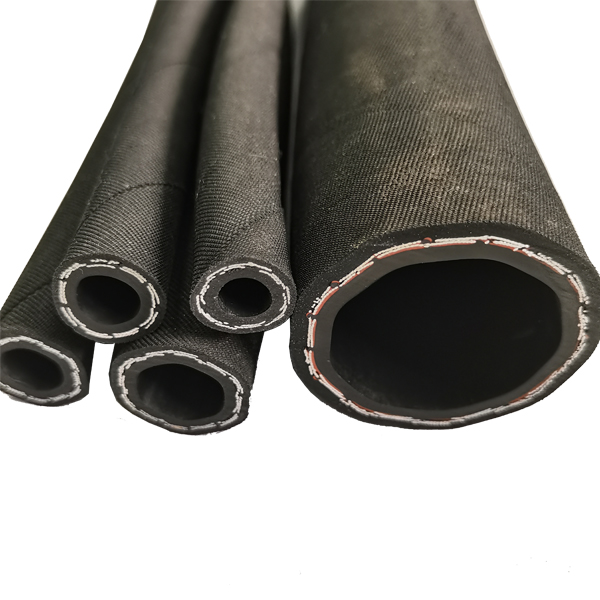
Double fiber braid hydraulic hose represents a critical component in fluid power systems across diverse industrial applications. These hoses, frequently sourced from china double fiber braid hydraulic hose suppliers, are engineered for the transmission of hydraulic fluid under significant pressure, serving industries such as construction, agriculture, mining, and manufacturing. Unlike single-wire or spiral-wound alternatives, the double braid construction significantly enhances pressure resistance and durability. The core of the hose typically comprises a synthetic rubber inner tube formulated for compatibility with specific hydraulic fluids. Reinforcement layers, consisting of two interwoven braids of high-tensile steel wire, provide the structural integrity to withstand high pressures and cyclical fatigue. An outer cover, often composed of abrasion-resistant synthetic rubber, protects the reinforcement and provides environmental resistance. This guide offers a comprehensive technical overview of these hoses, detailing material science, manufacturing processes, performance characteristics, potential failure modes, and relevant industry standards. Understanding these aspects is crucial for effective procurement, operation, and maintenance within demanding industrial environments.
Material Science & Manufacturing
The performance of a double fiber braid hydraulic hose is inextricably linked to the properties of its constituent materials and the precision of its manufacturing process. The inner tube is commonly composed of nitrile rubber (NBR) for oil-based hydraulic fluids, offering excellent resistance to abrasion, oil swelling, and degradation. For phosphate ester fluids, a specialized formulation of ethylene propylene diene monomer (EPDM) is preferred due to its superior compatibility. The steel wire used in the braiding process is typically high-carbon steel, heat-treated to achieve optimal tensile strength and fatigue resistance. Wire diameter and braid angle are critical parameters, influencing the hose’s burst pressure and flexibility. The outer cover generally employs a chloroprene rubber (CR) compound, selected for its abrasion resistance, weather resistance, and ozone resistance. Manufacturing begins with extrusion of the inner tube to precise dimensions, followed by the application of adhesive layers to promote bonding between the tube and the reinforcement braids. The braiding process itself is a highly controlled operation, utilizing specialized machinery to precisely interweave the steel wires at a specified angle. Two separate braids are applied, typically in opposing directions, to maximize pressure containment and rotational stability. Post-braiding, the outer cover is extruded over the reinforcement, followed by vulcanization – a curing process employing heat and pressure to crosslink the rubber compounds and achieve desired physical properties. Quality control throughout the process, including dimensional checks, pressure testing, and material analysis, is paramount to ensure product reliability. Parameter control, including extrusion temperatures, braiding tensions, and vulcanization cycles, directly impacts the hose’s final performance characteristics. Improper vulcanization can lead to under-cured or over-cured rubber, compromising the hose's resilience and lifespan.
Performance & Engineering
The performance of double fiber braid hydraulic hoses is governed by a complex interplay of forces and environmental factors. The primary performance characteristic is burst pressure, which refers to the maximum pressure the hose can withstand before catastrophic failure. This is directly related to the steel wire’s tensile strength, braid angle, and the number of reinforcement layers. Working pressure, typically a fraction of the burst pressure (determined by a safety factor specified in industry standards), represents the maximum pressure for continuous operation. Fatigue resistance is another critical parameter, quantifying the hose's ability to withstand repeated pressure cycles without failure. This is influenced by the hose's flexibility, the amplitude of pressure fluctuations, and the presence of any defects in the reinforcement. Hose flexibility, defined by its bend radius, is crucial for installation in confined spaces and minimizing stress concentrations. Environmental resistance encompasses the hose’s ability to withstand exposure to temperature extremes, ozone, ultraviolet radiation, and chemical contaminants. The outer cover material plays a key role in providing this protection. Force analysis during hydraulic system operation reveals that the hose experiences both internal pressure forces and external bending stresses. These stresses are highest at the hose ends and fittings. Proper fitting selection and installation are essential to prevent premature failure. Compliance requirements, such as those stipulated by SAE (Society of Automotive Engineers) and EN (European Norms) standards, dictate minimum performance criteria and testing procedures. Furthermore, electrostatic discharge (ESD) considerations may be relevant in certain applications, requiring the use of conductive rubber compounds to prevent static buildup and potential ignition hazards. Finite Element Analysis (FEA) is often employed during the design phase to optimize hose geometry and reinforcement configuration for specific application requirements.
Technical Specifications
| Parameter | Unit | Typical Value (DN19 - 1/2" ID) | Typical Value (DN25 - 3/4" ID) |
|---|---|---|---|
| Inner Diameter | mm | 12.7 | 19.1 |
| Outer Diameter | mm | 22.2 | 28.6 |
| Working Pressure | MPa | 20 | 17.2 |
| Burst Pressure | MPa | 80 | 69 |
| Minimum Bend Radius | mm | 150 | 200 |
| Temperature Range | °C | -40 to +100 | -40 to +100 |
Failure Mode & Maintenance
Double fiber braid hydraulic hoses are susceptible to several failure modes in practical applications. Fatigue cracking, initiated by cyclical pressure fluctuations and bending stresses, is a common failure mechanism, particularly near fittings. This often manifests as small cracks in the wire braids that propagate over time, eventually leading to complete hose rupture. Another frequent failure mode is abrasion damage to the outer cover, caused by contact with abrasive surfaces or foreign objects. This can expose the reinforcement braids to corrosion and accelerate fatigue cracking. Internal degradation of the rubber compounds, due to chemical attack or thermal aging, can also compromise hose integrity, resulting in swelling, cracking, and loss of flexibility. Improper installation, such as excessive bending or twisting, can induce localized stress concentrations and premature failure. Oxidation of the steel wire, particularly in humid environments, can reduce its tensile strength and increase susceptibility to fatigue cracking. Failure analysis often involves visual inspection, microscopic examination of fracture surfaces, and chemical analysis of the rubber compounds. Preventive maintenance is crucial for extending hose lifespan and ensuring safe operation. Regular visual inspections should be conducted to identify any signs of damage, such as cracks, abrasions, or swelling. Hoses should be replaced immediately if any defects are detected. Proper routing and support are essential to minimize bending stresses and abrasion. Hydraulic fluid should be regularly analyzed to ensure compatibility with the hose materials and prevent contamination. Furthermore, it is critical to use properly sized and installed fittings, and to avoid exceeding the hose’s working pressure. Regular cleaning of the hose exterior can prevent the buildup of contaminants that accelerate degradation.
Industry FAQ
Q: What is the impact of hydraulic fluid type on hose selection?
A: Hydraulic fluid compatibility is paramount. Using an incompatible fluid can cause the inner tube to swell, degrade, or lose its flexibility, leading to premature failure. Nitrile rubber (NBR) is typically suitable for mineral oil-based fluids, while EPDM is preferred for phosphate ester fluids. Always consult the hose manufacturer's compatibility chart.
Q: How does braid angle affect hose performance?
A: A steeper braid angle generally results in higher pressure resistance, but it also reduces hose flexibility. A shallower angle provides greater flexibility but compromises pressure capacity. The optimal braid angle is a trade-off between these two factors, determined by the specific application requirements.
Q: What is the significance of the safety factor in hydraulic hose application?
A: The safety factor, typically 4:1, is the ratio of burst pressure to working pressure. It provides a margin of safety to account for pressure surges, temperature fluctuations, and material degradation. Operating a hose consistently near its burst pressure will significantly reduce its lifespan and increase the risk of catastrophic failure.
Q: What are the common causes of hose fitting failure?
A: Improper installation (over-tightening or under-tightening), corrosion, and damage to the fitting threads are common causes. Using incompatible fittings or fittings of substandard quality can also lead to failure. Regular inspection of fittings for signs of leakage or corrosion is crucial.
Q: How often should hydraulic hoses be replaced as preventative maintenance?
A: Replacement frequency depends on operating conditions and hose usage. A general guideline is to replace hoses every 3-5 years, regardless of visual condition. More frequent replacement may be necessary in harsh environments or applications with high pressure cycles.
Conclusion
Double fiber braid hydraulic hoses represent a robust and reliable solution for fluid power transmission in demanding industrial applications. Their superior pressure resistance and durability, stemming from the dual braided reinforcement and carefully selected materials, make them a preferred choice over alternative hose constructions. A thorough understanding of the material science, manufacturing processes, performance characteristics, and potential failure modes is critical for ensuring safe and efficient operation.
Selecting the appropriate hose for a specific application requires careful consideration of factors such as fluid compatibility, operating pressure, temperature range, and environmental conditions. Regular inspection, preventive maintenance, and adherence to industry standards are essential for maximizing hose lifespan and minimizing the risk of catastrophic failure. As hydraulic systems become increasingly complex and operate under more extreme conditions, ongoing advancements in hose materials and manufacturing techniques will continue to enhance their performance and reliability.