
Apr . 01, 2024 17:55 Back to list
China Double Fiber Braid Hydraulic Hose Manufacturers Manufacturing Specification and Performance An

Introduction
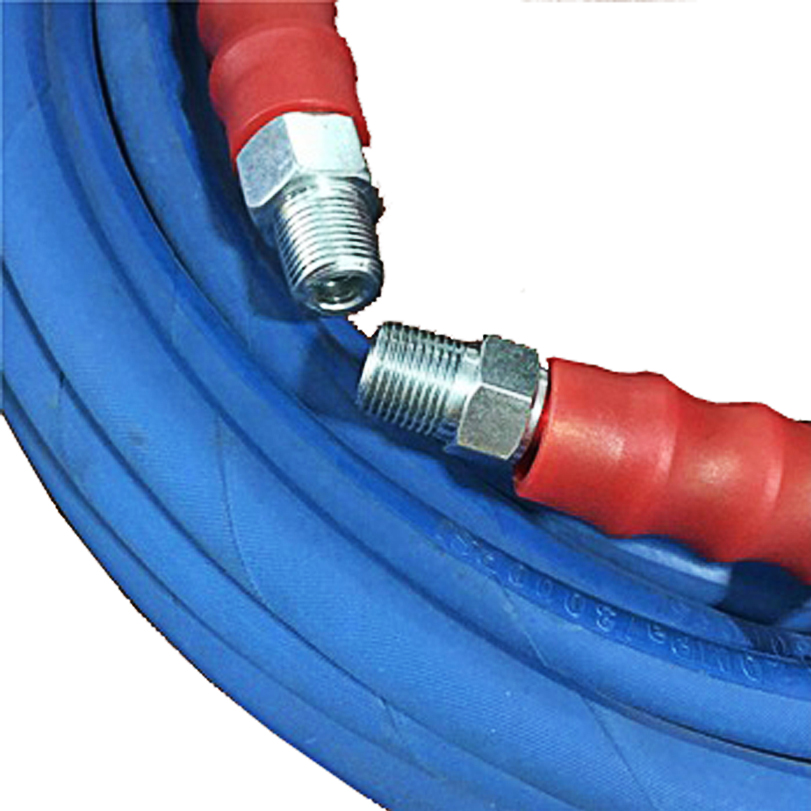
Double fiber braid hydraulic hose, manufactured extensively in China, represents a critical component within fluid power systems. These hoses are engineered to transmit hydraulic fluid under high pressure to actuate machinery across diverse industries including construction, agriculture, manufacturing, and material handling. Positioned between rigid piping and machine actuators, the hose provides flexibility and absorbs vibration. The core performance characteristics are defined by working pressure, burst pressure, temperature range, and fluid compatibility. Chinese manufacturers have become dominant players due to their competitive pricing and increasing emphasis on quality control to meet international standards. A key industry challenge lies in maintaining consistent performance in the face of varying fluid types, operating temperatures, and demanding application environments, along with stringent regulatory compliance.
Material Science & Manufacturing
The construction of a double fiber braid hydraulic hose relies on several key materials. The inner tube is typically composed of a synthetic rubber compound, most commonly nitrile rubber (NBR) for oil-based hydraulic fluids, or ethylene propylene diene monomer (EPDM) for phosphate ester fluids. NBR exhibits excellent resistance to abrasion, oil, and fuels, while EPDM offers superior resistance to heat, ozone, and weathering. The reinforcement layer consists of two braids of high-tensile steel wire, spirally wound to provide structural integrity and resistance to internal pressure. The outer cover is generally a synthetic rubber blend, often chloroprene (CR) offering resistance to abrasion, weathering, and ozone. Manufacturing begins with extrusion of the inner tube to precise dimensions. Following extrusion, the steel wire braids are applied using a specialized braiding machine, ensuring consistent pitch and coverage. Precise control of braiding tension is crucial to prevent wire breakage and maintain burst strength. The outer cover is then extruded over the braid. Key parameters monitored throughout the process include rubber compound viscosity, extrusion temperature, braiding pressure, and vulcanization time (curing). Vulcanization, typically achieved through heat and pressure, crosslinks the rubber polymers, enhancing strength, elasticity, and resistance to degradation. Post-production testing includes pressure testing to 1.5 times the working pressure, impulse testing to simulate dynamic loading, and dimensional checks to confirm adherence to specifications.
Performance & Engineering
The performance of double fiber braid hydraulic hose is fundamentally governed by its ability to withstand internal pressure without failure. Force analysis considers the hoop stress generated within the hose wall due to internal pressure, which is directly proportional to the pressure and radius, and inversely proportional to the wall thickness. The steel wire braids contribute significantly to resisting this hoop stress. The number of braids and wire diameter are critical design parameters. Environmental resistance is a major concern. Exposure to extreme temperatures can cause the rubber components to lose elasticity or become brittle, leading to cracking and leakage. Ultraviolet (UV) radiation degrades the outer cover, reducing its protective function. Fluid compatibility is equally important; incompatible fluids can cause swelling, softening, or chemical attack of the rubber materials. Compliance requirements vary by region and application. SAE J517 specifies performance standards for hydraulic hose in North America, while EN 853 and EN 857 are prevalent in Europe. These standards dictate minimum burst pressure, minimum operating pressure, impulse cycle testing, and temperature range requirements. Functional implementation involves careful selection of hose size, length, and end fitting configuration to ensure proper flow rates and secure connections. Incorrect fitting installation can lead to leaks or premature failure. Consideration must also be given to hose routing, avoiding sharp bends and potential abrasion points.
Technical Specifications
| Parameter | Unit | SAE J517 – Type R12 (Typical) | EN 853 – 2SN (Typical) |
|---|---|---|---|
| Working Pressure | MPa | 31.5 | 25 |
| Burst Pressure | MPa | 105 | 75 |
| Temperature Range | °C | -40 to +100 | -40 to +100 |
| Inner Tube Material | - | NBR | NBR |
| Reinforcement | - | Two Steel Wire Braids | Two Steel Wire Braids |
| Outer Cover Material | - | CR | CR |
Failure Mode & Maintenance
Failure modes in double fiber braid hydraulic hoses are diverse. Fatigue cracking, resulting from repeated pressure cycling, is common in the steel wire braids. This often initiates at points of stress concentration, such as around end fittings. Delamination, the separation of layers (inner tube, reinforcement, outer cover), can occur due to poor adhesion during manufacturing or exposure to incompatible fluids. Rubber degradation, caused by heat, ozone, or UV radiation, leads to loss of flexibility and cracking of the inner tube or outer cover. Oxidation of the rubber compounds reduces their elasticity and strength. Abrasion from external sources can damage the outer cover, exposing the reinforcement braids to corrosion. Internal corrosion can occur if moisture penetrates the hose and reacts with the steel wire. Proper maintenance is critical to extend hose life. Regular visual inspection for cracks, abrasions, and leaks is essential. Hose should be replaced if any damage is observed. Fluid contamination should be minimized through proper filtration. Hose routing should be optimized to avoid sharp bends and abrasion. Connections should be tightened to the manufacturer’s specified torque. Avoid exceeding the hose’s working pressure and temperature limits. Periodic pressure testing can help identify potential weaknesses before a catastrophic failure occurs. Storage of hoses should be in a cool, dry, and dark environment to prevent degradation.
Industry FAQ
Q: What is the impact of steel wire quality on hose burst pressure?
A: Steel wire quality is paramount. Higher tensile strength steel, with tighter tolerances on diameter and surface finish, directly translates to higher burst pressure. The steel wire must also be resistant to corrosion, as internal corrosion weakens the braid over time. Manufacturers should provide certification of steel wire composition and mechanical properties.
Q: How does the choice of inner tube material affect fluid compatibility?
A: The inner tube material must be chemically compatible with the hydraulic fluid being used. NBR is suitable for most mineral oils, but EPDM is preferred for phosphate ester fluids. Incompatibility can cause swelling, softening, or cracking of the inner tube, leading to leakage and hose failure.
Q: What are the common causes of impulse failure in hydraulic hoses?
A: Impulse failure, caused by pressure pulsations, is often initiated by fatigue in the steel wire braids. Contributing factors include excessive pressure spikes, improper hose routing (causing whipping), and insufficient damping of pressure pulsations. Hoses designed for high-impulse applications typically have a more robust braid structure.
Q: What are the implications of exceeding the minimum bend radius specification?
A: Exceeding the minimum bend radius induces stress concentration in the hose wall, particularly in the steel wire braids. This can lead to premature fatigue failure, cracking, and leakage. Proper hose routing and support are essential to maintain the specified bend radius.
Q: How do I interpret the markings on a hydraulic hose?
A: Hose markings typically include the manufacturer’s name, hose type (e.g., R12, 2SN), working pressure, burst pressure, size (inner diameter), and manufacturing date. These markings provide essential information for ensuring proper hose selection and traceability. Refer to the manufacturer’s datasheet for a complete explanation of the markings.
Conclusion
Double fiber braid hydraulic hose remains a vital component in countless industrial applications. The performance and longevity of these hoses are critically dependent on material selection, manufacturing precision, adherence to industry standards, and diligent maintenance practices. Chinese manufacturers are increasingly focused on meeting these demands through rigorous quality control and technological advancements, solidifying their position as leading global suppliers.
Looking forward, advancements in hose technology will likely focus on developing more durable materials, improving resistance to extreme environments, and integrating smart sensing capabilities for predictive maintenance. Understanding the fundamental engineering principles governing hose performance, as outlined in this guide, is essential for procurement professionals, engineers, and maintenance personnel to ensure safe and reliable operation of hydraulic systems.