
Apr . 01, 2024 17:55 Back to list
china double fiber braid hydraulic hose factories Performance Engineering
Introduction
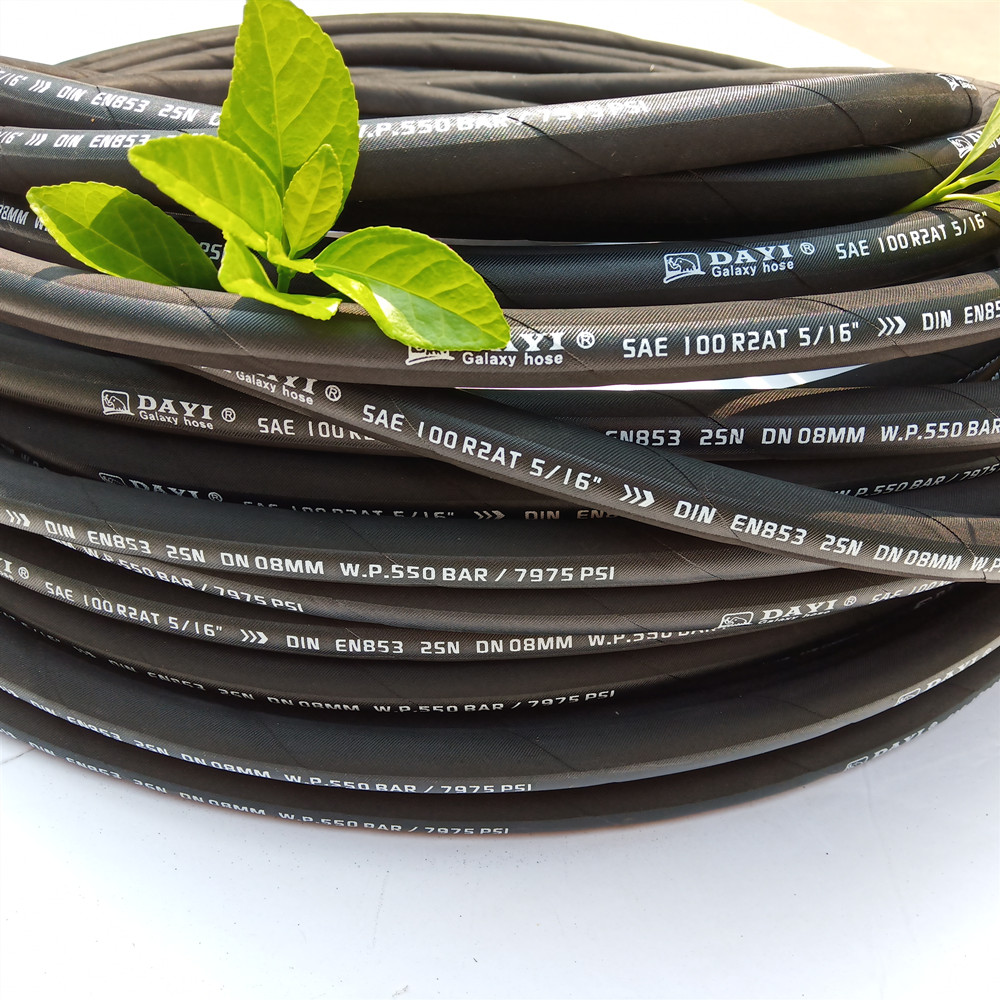
Double fiber braid hydraulic hose represents a critical component in fluid power systems across diverse industrial applications. Manufactured extensively in China, these hoses are integral to transmitting hydraulic fluid to actuators and machinery, facilitating power transmission in sectors such as construction, agriculture, manufacturing, and material handling. The technical position within the industry chain places it as a key intermediary between hydraulic pump/reservoir systems and the operational equipment itself. Core performance characteristics center on pressure rating, burst pressure, temperature resistance, and fluid compatibility, dictated by the materials used and the braid construction. Understanding these characteristics is paramount for ensuring system safety and longevity, as hose failure can lead to catastrophic equipment damage, operational downtime, and potential safety hazards. The Chinese manufacturing sector has become a dominant force in this industry due to competitive pricing and increasing quality control measures, necessitating a thorough technical understanding of their products for global procurement.
Material Science & Manufacturing
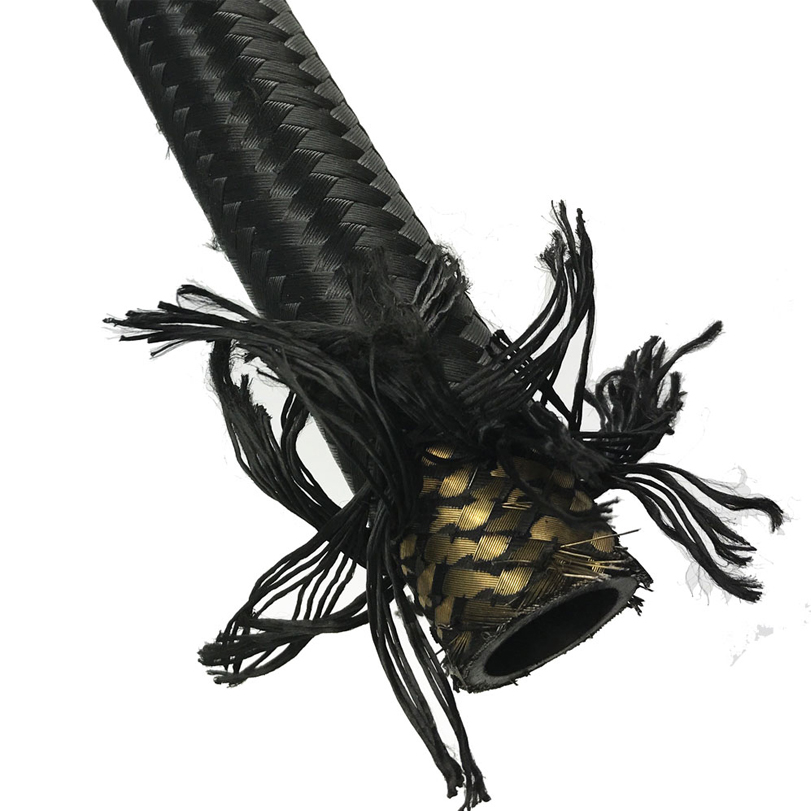
The construction of double fiber braid hydraulic hose relies on a carefully orchestrated combination of materials and manufacturing processes. The inner tube is typically composed of oil-resistant synthetic rubber, most commonly Nitrile (NBR), Chloroprene (CR), or Ethylene Propylene Diene Monomer (EPDM). NBR offers excellent resistance to petroleum-based fluids, CR provides superior heat and weather resistance, and EPDM excels in phosphate ester-based fluid compatibility. The reinforcement layer is the defining feature, consisting of two braids of high-tensile steel wire. The wire's tensile strength is a critical parameter, directly impacting the hose's pressure capability. Manufacturing begins with extrusion of the inner tube, followed by the application of the first fiber braid layer. An adhesive layer is then applied to promote bonding between the braid and the subsequent layers. The second fiber braid is wound helically over the first, increasing the hose’s strength and flexibility. Finally, an outer cover, usually made of a synthetic rubber compound like CR or polyurethane, provides abrasion, ozone, and weathering resistance. Key parameter control during manufacturing involves precise control of rubber compound mixing ratios, braid angle and tension, and curing temperature and time. Improper curing can lead to reduced rubber elasticity and compromised strength. Wire surface treatment (zinc coating) is vital to prevent corrosion and ensure proper adhesion to the rubber matrix. The quality of the steel wire itself, specified by standards like SAE J517, is fundamental. Furthermore, stringent quality control, utilizing non-destructive testing methods like ultrasonic flaw detection and burst pressure testing, is essential to identify defects before shipment.
Performance & Engineering
The performance of double fiber braid hydraulic hose is governed by complex engineering principles, primarily centered on stress analysis and fluid dynamics. Force analysis under pressure dictates the hoop stress within the inner tube and the axial stress within the reinforcement braids. The braid’s helical angle plays a significant role; a steeper angle provides greater axial strength but reduced flexibility. Burst pressure is determined by the tensile strength of the wire, the number of braids, and the adhesion between layers. Environmental resistance is critical. Exposure to extreme temperatures can alter the rubber’s elasticity and potentially lead to cracking or hardening. Ozone degradation is a concern for outer cover materials, necessitating the use of protective additives. Fluid compatibility is paramount; incompatible fluids can cause swelling, softening, or chemical attack of the inner tube, leading to failure. Compliance requirements vary by region and application. For example, SAE J517 specifies performance characteristics for hydraulic hose, while ISO 6897 details test methods for determining hose performance. In critical applications, finite element analysis (FEA) is often employed to model hose behavior under various loading conditions, optimizing braid configuration and material selection. Flex fatigue is a common failure mode, especially in applications with frequent bending and pulsation. This is mitigated by selecting hoses with appropriate bend radii and using anti-kink sleeves where necessary. Proper hose assembly, including correct crimping of fittings, is also crucial; under-crimping can lead to leakage, while over-crimping can damage the hose.
Technical Specifications
| Parameter | SAE J517 R1AT | EN 853 2SN | DIN EN 857 2SC |
|---|---|---|---|
| Working Pressure (PSI) | Up to 2,220 | Up to 3,480 | Up to 4,350 |
| Burst Pressure (PSI) | Up to 8,880 | Up to 13,920 | Up to 17,400 |
| Temperature Range (°F) | -40 to +212 | -40 to +212 | -40 to +248 |
| Inner Tube Material | NBR | NBR | NBR |
| Reinforcement | Two Steel Wire Braids | Two Steel Wire Braids | Two Steel Wire Braids |
| Outer Cover Material | CR | CR | CR |
Failure Mode & Maintenance
Double fiber braid hydraulic hose is susceptible to several failure modes in practical applications. Fatigue cracking, initiated by repeated flexing and pressure cycles, is a common issue, particularly near fittings. Delamination, the separation of the hose layers, can occur due to inadequate adhesion during manufacturing or prolonged exposure to harsh environments. Degradation of the rubber compounds, caused by ozone, UV radiation, and chemical exposure, leads to hardening, cracking, and loss of elasticity. Oxidation of the steel wire reinforcement can compromise its strength, particularly in humid environments. Internal abrasion can occur if fluid contaminants are present, eroding the inner tube. Externally caused damage includes abrasion from contact with surrounding surfaces, kinking due to excessive bending, and impact damage. Maintenance strategies focus on preventative measures. Regular visual inspections are critical to identify signs of wear, cracking, or swelling. Hoses should be replaced proactively based on manufacturer's recommendations or if damage is detected. Maintaining proper fluid cleanliness through filtration is crucial to prevent internal abrasion. Avoiding excessive bending and kinking during installation and operation is essential. Protecting hoses from exposure to extreme temperatures, ozone, and UV radiation extends their service life. Proper storage conditions, avoiding direct sunlight and extreme temperatures, are also important. Record keeping of hose installation dates and replacement history facilitates preventative maintenance scheduling.
Industry FAQ
Q: What is the impact of varying steel wire tensile strength on hose burst pressure?
A: Steel wire tensile strength is directly proportional to burst pressure. Higher tensile strength wire allows the hose to withstand greater internal pressure before failure. However, it’s not a simple linear relationship; factors like braid angle, wire diameter, and adhesion also play significant roles. Manufacturers carefully select wire grades to meet specific pressure rating requirements, often specifying minimum tensile strength values in product datasheets.
Q: How does the choice of inner tube material affect fluid compatibility and hose lifespan?
A: The inner tube material is critical for fluid compatibility. NBR is generally suitable for petroleum-based hydraulic fluids, while EPDM is preferred for phosphate ester fluids. Using an incompatible fluid can cause swelling, softening, or degradation of the inner tube, leading to premature failure. Selecting the correct material based on the fluid being conveyed is paramount for maximizing hose lifespan.
Q: What are the key differences between SAE J517 R1AT and EN 853 2SN hose constructions?
A: SAE J517 R1AT typically uses a single steel wire braid, offering moderate pressure capability and flexibility. EN 853 2SN employs two steel wire braids, providing significantly higher pressure ratings but slightly reduced flexibility. The EN standard generally allows for higher working pressures compared to the SAE standard for similar hose sizes.
Q: What is the role of the adhesive layer between the braid and the inner/outer tube?
A: The adhesive layer is crucial for ensuring proper bonding between the reinforcement braids and the inner/outer tube. Without adequate adhesion, the layers can separate under pressure or flexing, leading to delamination and potential hose failure. Adhesive formulation and application are critical manufacturing parameters.
Q: How does hose crimping affect performance and what are the common crimping errors?
A: Proper hose crimping is essential for a secure and leak-free connection. Under-crimping can lead to leakage and blow-off, while over-crimping can damage the hose reinforcement and reduce its burst pressure. Common errors include using incorrect die sizes, insufficient crimping force, and improper crimp angle. Regular calibration of crimping equipment is essential.
Conclusion
Double fiber braid hydraulic hose, as manufactured by China-based factories, represents a technically complex product requiring careful consideration of material science, manufacturing processes, and performance parameters. Achieving optimal performance and longevity necessitates a deep understanding of the interplay between pressure rating, temperature resistance, fluid compatibility, and environmental factors. Maintaining rigorous quality control throughout the manufacturing process, from raw material selection to final testing, is paramount for ensuring product reliability.
Looking ahead, advancements in materials science, such as the development of new synthetic rubber compounds with enhanced chemical resistance and improved abrasion resistance, will continue to drive improvements in hydraulic hose performance. Furthermore, the adoption of more sophisticated modeling techniques, such as FEA, will enable engineers to optimize hose designs for specific applications, maximizing efficiency and minimizing the risk of failure. Strategic sourcing from reputable Chinese manufacturers, coupled with thorough technical due diligence, will remain critical for industrial buyers seeking high-quality and cost-effective hydraulic hose solutions.