
Apr . 01, 2024 17:55 Back to list
china dayco hydraulic hose suppliers Performance Analysis
Introduction
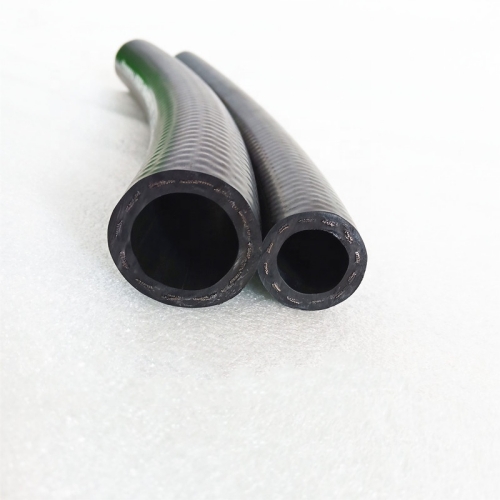
Hydraulic hoses manufactured by China Dayco suppliers represent a critical component in fluid power systems across a wide range of industries including construction, agriculture, automotive, and industrial manufacturing. These hoses are engineered to transmit hydraulic fluid under high pressure, facilitating the operation of heavy machinery and automated systems. The market for these hoses is driven by the increasing demand for efficient and reliable hydraulic systems, coupled with the growth of end-user industries. Key performance characteristics include pressure rating, temperature resistance, fluid compatibility, and burst strength. The core challenge for OEMs and maintenance professionals lies in selecting hoses that can consistently meet stringent performance requirements and withstand harsh operating environments, whilst balancing cost-effectiveness and supplier reliability. This guide provides an in-depth technical overview of these hoses, encompassing material science, manufacturing processes, performance parameters, failure modes, and relevant industry standards.
Material Science & Manufacturing
The construction of a typical hydraulic hose supplied by China Dayco manufacturers involves several key materials and manufacturing stages. The inner tube, crucial for fluid compatibility, is commonly composed of nitrile rubber (NBR) for oil-based hydraulic fluids, or fluorocarbon (FKM) – Viton – for compatibility with aggressive fluids like synthetic hydraulic oils and fuels. Reinforcement layers provide the hose’s pressure resistance. These layers typically consist of multiple braids of high-strength steel wire, or synthetic fiber such as polyester or aramid. The outer cover, designed for abrasion and environmental protection, usually employs a synthetic rubber compound such as chloroprene (CR) or polyurethane (PU). Manufacturing commences with the extrusion of the inner tube. Precise temperature and pressure control during extrusion are vital to ensure uniform wall thickness and consistent material properties. The reinforcement layers are then helically wound or braided onto the inner tube using specialized machinery. Proper tension control during braiding is critical, as it directly impacts the hose's pressure rating. Finally, the outer cover is extruded, and the hose undergoes a curing process (vulcanization) to cross-link the rubber polymers, enhancing strength, elasticity, and chemical resistance. Quality control checks throughout the process – including dimensional inspections, pressure testing, and material analysis – are essential to maintain product integrity. The selection of raw materials directly impacts the hose’s performance, and deviations from specified material properties can lead to premature failure.
Performance & Engineering
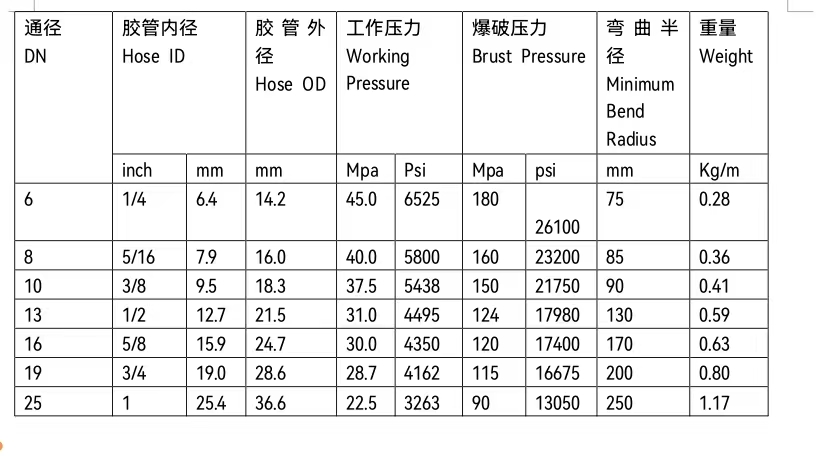
Hydraulic hose performance is governed by several key engineering principles. Burst pressure, defined as the pressure at which the hose fails, is a critical parameter and is dictated by the reinforcement layer configuration and material strength. Working pressure, generally specified as a fraction (e.g., 1/4) of the burst pressure, represents the maximum recommended operating pressure. Hose flexibility, or bend radius, is crucial for installation and operation in confined spaces. Insufficient bend radius can lead to kinking and hose failure. Temperature resistance is another vital consideration. Extreme temperatures can degrade the rubber compounds, reducing their elasticity and pressure-holding capacity. Chemical compatibility must also be carefully evaluated. Incompatible fluids can cause swelling, softening, or cracking of the inner tube, leading to leaks and system failure. Finite Element Analysis (FEA) is commonly used by manufacturers to simulate stress distribution within the hose under various loading conditions, optimizing the reinforcement design and predicting service life. Compliance with industry standards, such as SAE J517 and EN 853, ensures that hoses meet minimum performance requirements. Proper hose assembly, including the selection of compatible fittings and correct crimping procedures, is essential to prevent leaks and ensure safe operation. Dynamic stress, resulting from pulsations and vibrations in the hydraulic system, can contribute to fatigue failure and requires careful consideration in hose selection and routing.
Technical Specifications
| Parameter | Unit | SAE 100R1AT | SAE 100R2AT |
|---|---|---|---|
| Working Pressure | MPa | 20.7 | 34.5 |
| Burst Pressure | MPa | 82.7 | 138 |
| Temperature Range | °C | -40 to +100 | -40 to +121 |
| Inner Tube | Material | NBR | NBR |
| Reinforcement | Material | Single Steel Wire Braid | Two Steel Wire Braids |
| Outer Cover | Material | CR | CR |
Failure Mode & Maintenance
Hydraulic hose failures are often attributed to a combination of factors. Fatigue cracking, initiated by repeated bending and flexing, is a common failure mode, particularly in applications with high dynamic stress. Abrasion, caused by rubbing against other components or exposure to abrasive environments, can damage the outer cover, exposing the reinforcement layers to corrosion. Chemical attack, resulting from incompatible fluids, can lead to swelling, softening, or cracking of the inner tube. Improper installation, such as over-tightening or incorrect fitting selection, can induce stress concentrations and premature failure. Kinking, caused by exceeding the minimum bend radius, can restrict fluid flow and damage the inner tube. Corrosion of the steel wire reinforcement, resulting from moisture ingress, can significantly reduce the hose’s strength and burst pressure. Regular inspection is crucial for identifying potential failure modes. Inspections should focus on identifying cuts, abrasions, kinks, leaks, and signs of chemical attack. Preventive maintenance measures include proper hose routing to minimize bending and abrasion, regular fluid analysis to ensure compatibility, and periodic replacement of hoses based on their service life and operating conditions. Correct hose assembly practices, including the use of properly crimped fittings, are essential for preventing leaks and ensuring safe operation. When replacing a hose, it's critical to match or exceed the original specifications, including pressure rating, temperature range, and fluid compatibility.
Industry FAQ
Q: What is the difference between a 1-wire and 2-wire hydraulic hose, and when should each be used?
A: A 1-wire hose utilizes a single steel wire braid for reinforcement, offering lower pressure ratings and flexibility. It's suitable for lower-pressure applications like garden equipment and light machinery. A 2-wire hose incorporates two steel wire braids, providing significantly higher pressure ratings and increased durability. It's ideal for heavy-duty applications like construction equipment, agricultural machinery, and industrial hydraulics where higher pressures and more demanding operating conditions are present. Selecting the appropriate hose depends on the system’s maximum operating pressure and the severity of the service environment.
Q: How does temperature affect the performance and lifespan of a hydraulic hose?
A: Extreme temperatures can significantly degrade the rubber compounds used in hydraulic hoses. High temperatures accelerate the oxidation and hardening of the rubber, reducing its elasticity and pressure-holding capacity. Low temperatures can cause the rubber to become brittle and prone to cracking. Exceeding the specified temperature range can dramatically shorten the hose’s lifespan and increase the risk of failure. Choosing a hose with a temperature rating appropriate for the operating environment is crucial.
Q: What are the common causes of hydraulic hose leaks, and how can they be prevented?
A: Common causes of leaks include improper fitting assembly, damage to the hose during installation, deterioration of the rubber compounds, and incompatible fluids. Prevention involves ensuring proper fitting crimping, careful hose routing to avoid abrasion, regular inspection for damage, and selecting hoses compatible with the hydraulic fluid being used. Using anti-abrasion sleeves can help to protect the hose.
Q: What is the importance of proper hose routing and bend radius?
A: Proper hose routing minimizes stress and abrasion. Avoiding sharp bends and kinks is crucial, as exceeding the minimum bend radius can damage the inner tube and reinforcement layers. Hoses should be routed away from hot surfaces, moving parts, and potential sources of abrasion. Securely supporting the hose at regular intervals prevents sagging and excessive flexing.
Q: How often should hydraulic hoses be replaced as preventative maintenance?
A: The replacement frequency depends on the application, operating conditions, and hose type. A general guideline is to replace hoses every 3-5 years, or sooner if signs of wear, damage, or leaks are observed. Critical applications, such as those involving heavy machinery or high-pressure systems, may require more frequent replacement. Regular inspections and fluid analysis can help to determine the appropriate replacement schedule.
Conclusion
China Dayco hydraulic hose suppliers provide a critical link in the global hydraulic systems supply chain. Understanding the complex interplay between material science, manufacturing processes, and performance engineering is essential for selecting the correct hose for a given application. The stringent demands of modern hydraulic systems necessitate a thorough understanding of potential failure modes and the implementation of proactive maintenance strategies. Selecting the appropriate hose based on pressure rating, temperature range, fluid compatibility, and operating environment is paramount to ensuring system reliability and longevity.
Looking forward, advancements in hose technology will likely focus on developing more durable materials, improving chemical resistance, and incorporating smart sensing capabilities for real-time performance monitoring. The increasing demand for sustainable solutions may also drive the development of bio-based rubber compounds and environmentally friendly manufacturing processes. A continued emphasis on quality control, rigorous testing, and adherence to international standards will remain crucial for maintaining the integrity and safety of hydraulic hose systems.