
Apr . 01, 2024 17:55 Back to list
china convoluted ptfe hose supplier Performance Analysis
Introduction
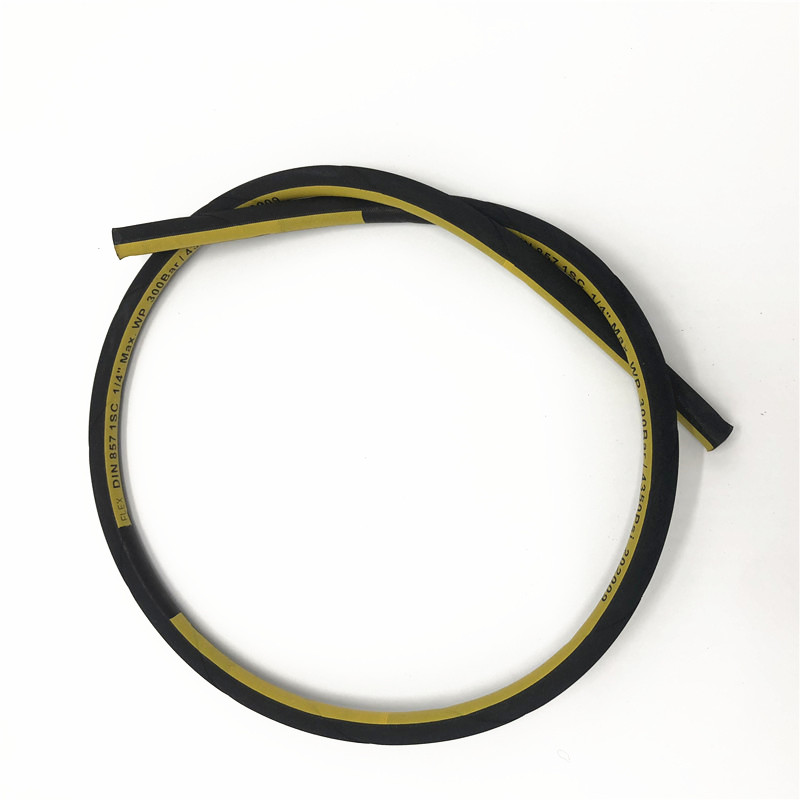
Convoluted PTFE hose, supplied by manufacturers in China, represents a critical component in a diverse array of industrial applications requiring fluid transfer in challenging environments. This guide provides an in-depth technical analysis of convoluted PTFE hose, encompassing material science, manufacturing processes, performance characteristics, failure modes, and relevant industry standards. Its position within the fluid handling chain is as a flexible, chemically inert conduit for aggressive media where traditional rubber or metal hoses are unsuitable. Core performance attributes include high temperature resistance, chemical compatibility, flexibility, and resistance to permeation. The increasing demand is driven by industries such as automotive, aerospace, chemical processing, pharmaceutical manufacturing, and food & beverage processing, where purity and reliability are paramount. A key pain point in the industry is ensuring consistent PTFE quality and dimensional accuracy, particularly regarding convolution geometry and pressure ratings, due to variations in manufacturing practices and raw material sourcing.
Material Science & Manufacturing
The primary material used in convoluted PTFE hose is Polytetrafluoroethylene (PTFE), a synthetic fluoropolymer known for its exceptional chemical inertness, high temperature stability (up to 260°C), and low coefficient of friction. PTFE resin, typically granular, is sourced from suppliers specializing in fluoropolymer production. Raw material quality significantly impacts final hose performance; critical specifications include molecular weight, particle size distribution, and fluorine content. The manufacturing process generally involves several key steps: extrusion, convolution forming, sintering, and often, end fitting attachment. Extrusion forms a seamless PTFE tube. Convolution forming imparts flexibility, typically utilizing a specialized mandrel and controlled heating. Sintering, conducted at high temperatures (360-380°C), fuses the PTFE particles, providing structural integrity. Precise temperature control during sintering is crucial to prevent degradation. Parameter control during extrusion—specifically temperature, screw speed, and die design—directly influences wall thickness uniformity and surface finish. Convolution geometry (pitch and amplitude) is dictated by the mandrel design and forming process. Subsequent processes can include etching the inner surface to enhance bonding with fittings. The stainless steel core, often used to provide structural support, requires careful passivation to prevent corrosion and contamination of the fluid conveyed. Chemical compatibility must be verified between the PTFE, the core material, and the target fluid.
Performance & Engineering
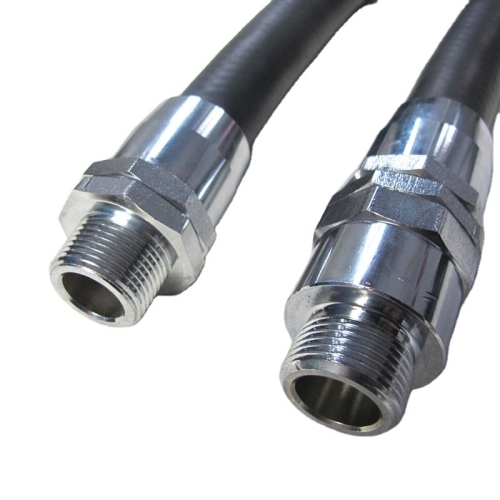
Performance of convoluted PTFE hose is largely dictated by its ability to withstand internal pressure, external loads, and environmental stresses while maintaining fluid integrity. Force analysis centers around hoop stress calculations based on Barlow’s formula, modified for PTFE’s unique viscoelastic properties. Burst pressure is a critical specification, typically tested per ASTM D1418. Flexibility is engineered through the convolution geometry; smaller convolution pitches provide greater flexibility but reduce burst pressure. Environmental resistance encompasses UV exposure, ozone degradation, and fluid permeation. PTFE exhibits excellent UV and ozone resistance. Permeation rates, however, are influenced by temperature and the permeant’s molecular weight; permeation testing is often conducted according to ASTM F2338. Compliance requirements vary by application. For food & beverage applications, the hose must comply with FDA 21 CFR 177.1550. For pharmaceutical use, USP Class VI certification is often required. Aerospace applications demand adherence to AMS standards. Proper end fitting selection and attachment are crucial; fitting materials must be compatible with both the PTFE and the conveyed fluid. Crimping procedures must ensure a leak-proof seal without damaging the PTFE structure. Failure to consider these factors can lead to premature failure and contamination risks.
Technical Specifications
| Parameter | Unit | Typical Value (1/2" ID Hose) | Test Standard |
|---|---|---|---|
| Inner Diameter | mm | 12.7 | ISO 1307 |
| Outer Diameter | mm | 18.3 | ISO 1307 |
| Working Pressure | MPa | 2.0 | ASTM D1418 |
| Burst Pressure | MPa | 6.0 | ASTM D1418 |
| Temperature Range | °C | -100 to +260 | ASTM D3418 |
| Minimum Bend Radius | mm | 76.2 | Manufacturer Specification |
| Permeation Rate (Helium) | cm³/min·m² | <1 x 10⁻⁸ | ASTM F2338 |
Failure Mode & Maintenance
Convoluted PTFE hose, while robust, is susceptible to several failure modes. Fatigue cracking can occur under cyclical pressure or bending stresses, particularly at the convolution roots. Delamination, a separation of PTFE layers, may result from improper sintering or contamination during manufacturing. Chemical attack, while rare, can occur with highly reactive media or at elevated temperatures. Abrasion, especially with abrasive particles in the fluid stream, can erode the PTFE inner surface. Oxidation can occur at very high temperatures in the presence of oxygen. Failure analysis typically involves visual inspection (detecting cracks or delamination), pressure testing, and microscopic examination of fractured surfaces. Maintenance primarily focuses on preventative measures. Regular visual inspections should be conducted to identify signs of wear or damage. Pressure should be maintained within specified operating limits. Avoid sharp bends or excessive flexing, which can accelerate fatigue. Ensure compatibility between the hose, fittings, and conveyed fluid. Cleaning should be performed with compatible solvents; avoid abrasive cleaners. Proper storage is also critical; hoses should be stored in a cool, dry place away from direct sunlight and ozone sources. In the event of a leak, the hose should be immediately replaced.
Industry FAQ
Q: What is the effect of convolution pitch on hose flexibility and pressure rating?
A: A smaller convolution pitch generally increases flexibility, allowing for tighter bends. However, this comes at the expense of reduced burst and working pressure ratings. The tighter pitch concentrates stress, lowering the hose's ability to withstand internal pressure. Engineers must balance flexibility requirements with the necessary pressure capacity for the specific application.
Q: How does PTFE hose compare to stainless steel braided hose in terms of permeation resistance?
A: PTFE inherently exhibits significantly lower permeation rates than stainless steel braided hose, particularly for small gas molecules. While stainless steel provides a barrier, it is not completely impermeable. PTFE's dense molecular structure and chemical inertness minimize the diffusion of fluids through the hose wall.
Q: What are the critical considerations for selecting end fittings for convoluted PTFE hose?
A: Compatibility is paramount. Fittings must be constructed from materials that are chemically compatible with both the PTFE hose and the conveyed fluid. Crimping pressure must be optimized to create a leak-proof seal without damaging the PTFE. Fitting design should minimize turbulence and stress concentrations. Consider the fitting’s temperature rating to ensure it matches the hose’s operating range.
Q: What are the potential consequences of exceeding the maximum working pressure of a PTFE hose?
A: Exceeding the maximum working pressure can lead to catastrophic failure, including hose rupture, potentially causing injury and process downtime. Even short-term overpressure events can cause micro-cracking and weaken the hose, leading to premature failure. It’s crucial to incorporate pressure relief mechanisms into the system and adhere to the manufacturer’s pressure ratings.
Q: How does the manufacturing process affect the long-term durability of convoluted PTFE hose?
A: The sintering process is arguably the most critical aspect. Insufficient sintering results in poor particle fusion and reduced mechanical strength. Over-sintering can degrade the PTFE, compromising its chemical resistance. Precise control of temperature, time, and atmosphere during sintering is essential. Extrusion quality, particularly wall thickness uniformity, also significantly impacts durability.
Conclusion
Convoluted PTFE hose, sourced from China, provides a robust and reliable solution for demanding fluid transfer applications. Its exceptional chemical resistance, high temperature capability, and flexibility make it indispensable across various industries. However, successful implementation requires a thorough understanding of material properties, manufacturing processes, and potential failure modes. Careful consideration must be given to pressure ratings, temperature limits, and fluid compatibility to ensure long-term performance and safety.
Moving forward, advancements in PTFE resin technology and manufacturing techniques will likely lead to improved hose performance and reduced costs. Increased emphasis on quality control and standardization within the Chinese supply chain will further enhance the reliability of these products. Continued research into permeation resistance and the development of specialized coatings will broaden the applicability of convoluted PTFE hose to even more challenging environments.