
Apr . 01, 2024 17:55 Back to list
china convoluted ptfe hose manufacturer Performance Analysis
Introduction
Convoluted PTFE hose represents a critical component in numerous industrial fluid transfer applications, characterized by its exceptional chemical inertness, high temperature resistance, and flexibility. These hoses, manufactured in China to meet global demand, are utilized extensively across industries including chemical processing, automotive, aerospace, pharmaceuticals, and food & beverage. The core performance characteristics center around maintaining fluid integrity, preventing contamination, and withstanding harsh operating conditions. Unlike conventional rubber or plastic hoses, PTFE offers broad compatibility with aggressive chemicals, solvents, and high-purity media. The 'convoluted' construction, created through specialized braiding and shaping processes, facilitates bending and routing in constrained spaces without kinking or compromising flow. This guide will provide a detailed exploration of the material science, manufacturing processes, performance parameters, failure modes, and relevant industry standards for convoluted PTFE hose produced by China-based manufacturers.
Material Science & Manufacturing
The primary material for convoluted PTFE hose is Polytetrafluoroethylene (PTFE), a synthetic fluoropolymer known for its exceptional properties. PTFE boasts a remarkably low coefficient of friction, excellent dielectric strength, and a wide operating temperature range (-200°C to +260°C). Raw material selection is crucial, focusing on virgin PTFE resin with low levels of contaminants to ensure product purity and longevity. The manufacturing process typically begins with PTFE extrusion. The PTFE resin is carefully processed into a seamless tube using ram extrusion or spiral wrapping techniques. Critical parameters during extrusion include melt temperature, extrusion rate, and die geometry, all impacting the final tube dimensions and crystallinity. Following extrusion, the tube undergoes a sintering process, typically involving heating to around 380°C, to fuse the PTFE particles and create a dense, cohesive structure. The 'convoluted' shape is achieved through specialized braiding with materials like stainless steel or fiberglass. This braid provides mechanical strength and allows for bending without collapse. Subsequent processes involve fitting end connections (typically stainless steel or other corrosion-resistant alloys) via crimping, flaring, or welding. Quality control throughout the process includes dimensional checks, pressure testing, and chemical resistance verification. The steel braid material undergoes rigorous passivation treatment to prevent corrosion and ensure compatibility with the PTFE matrix. Variations in PTFE resin molecular weight and sintering conditions directly influence the hose’s mechanical properties and chemical resistance. Lower molecular weight PTFE generally exhibits improved processability but may have reduced long-term creep resistance.
Performance & Engineering
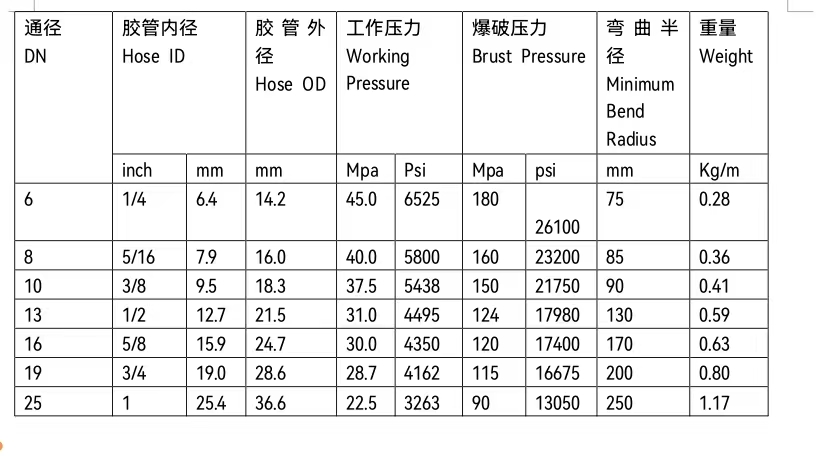
The performance of convoluted PTFE hose is dictated by several critical engineering parameters. Burst pressure, derived from hydrostatic testing, is a key specification, indicating the maximum pressure the hose can withstand without rupture. Working pressure is significantly lower, typically specified as 1/4 of the burst pressure, providing a safety margin for continuous operation. Tensile strength and elongation at break, determined through standardized testing (ASTM D638), quantify the hose's ability to resist tearing and stretching. The convoluted structure introduces stress concentrations at the braid-PTFE interface, making fatigue resistance a critical consideration. Cyclic pressure testing is essential to evaluate the hose’s lifespan under repeated loading. Chemical compatibility is paramount. PTFE exhibits near-universal resistance, but prolonged exposure to strong bases or certain molten alkali metals can cause degradation. Temperature resistance is another key performance indicator. PTFE’s properties remain stable across a wide temperature range, but prolonged exposure to high temperatures can lead to creep and dimensional changes. Environmental resistance involves evaluating the hose’s performance in the presence of UV radiation, ozone, and humidity. The stainless steel braid requires corrosion protection, particularly in marine or chemically aggressive environments. Force analysis during bending reveals the stresses imposed on the PTFE and braid materials. Minimizing the bend radius is crucial to prevent kinking and premature failure. Compliance requirements are significant, often dictated by industry-specific regulations concerning fluid purity (e.g., FDA for food & beverage applications, USP Class VI for pharmaceutical applications).
Technical Specifications
| Parameter | Unit | Typical Value (1/4" ID Hose) | Testing Standard |
|---|---|---|---|
| Inner Diameter (ID) | mm | 6.35 | Dimensional Measurement |
| Outer Diameter (OD) | mm | 12.7 | Dimensional Measurement |
| Working Pressure | MPa | 2.0 | ASTM D1505 |
| Burst Pressure | MPa | 8.0 | ASTM D1505 |
| Tensile Strength | MPa | 20 | ASTM D638 |
| Elongation at Break | % | 200 | ASTM D638 |
| Temperature Range | °C | -200 to +260 | ASTM D3418 |
Failure Mode & Maintenance
Convoluted PTFE hose, while robust, is susceptible to various failure modes. Fatigue cracking, particularly at the braid-PTFE interface, occurs under cyclical pressure and bending, leading to leakage. Creep, the gradual deformation under sustained load, is more pronounced at higher temperatures and can result in dimensional changes and reduced performance. Chemical attack, though rare, can occur with certain aggressive media, causing swelling, embrittlement, or permeation. Abrasion from internal fluid particulates can erode the PTFE liner, leading to contamination and reduced flow. Delamination of the PTFE liner from the braid can occur due to inadequate bonding during manufacturing or exposure to extreme conditions. Oxidation, although PTFE is inherently oxidation resistant, can occur at very high temperatures in the presence of oxygen. Maintenance strategies involve regular visual inspections for signs of cracking, abrasion, or swelling. Pressure testing should be conducted periodically to verify the hose’s integrity. Avoid exceeding the specified working pressure and temperature limits. Implement proper routing and support to minimize bending stress and prevent kinking. When handling corrosive fluids, verify chemical compatibility and consider using protective outer coverings. Replace hoses showing signs of damage or degradation. Proper storage conditions, away from direct sunlight and extreme temperatures, are also crucial for maximizing lifespan. Regular cleaning of exterior surfaces helps to prevent the buildup of contaminants that can accelerate degradation.
Industry FAQ
Q: What is the impact of PTFE molecular weight on hose performance?
A: Higher molecular weight PTFE generally results in improved creep resistance and long-term durability. However, it can also increase the difficulty of processing during manufacturing. Manufacturers often balance these factors to achieve optimal performance characteristics.
Q: How do different braid materials (stainless steel vs. fiberglass) affect hose characteristics?
A: Stainless steel braid offers superior strength and corrosion resistance, making it suitable for demanding applications. Fiberglass braid provides good flexibility and is often used in applications where weight is a concern. Stainless steel is generally more expensive.
Q: What testing procedures are used to verify chemical compatibility?
A: Immersion testing, where the hose is exposed to the fluid for an extended period, is a common method. Weight change, volume change, and visual inspection are used to assess compatibility. More sophisticated techniques, like FTIR spectroscopy, can identify chemical interactions.
Q: What is the typical service life of a convoluted PTFE hose in a chemical processing application?
A: Service life depends heavily on the specific chemicals, temperature, pressure, and operating conditions. Generally, a properly maintained PTFE hose can last for several years in typical chemical processing applications, but regular inspections are crucial.
Q: Are there specific certifications or standards required for PTFE hoses used in the food and beverage industry?
A: Yes, hoses used in food and beverage applications must comply with regulations such as FDA 21 CFR 177.1550 and USP Class VI to ensure they do not leach harmful substances into the product. Traceability of materials is also essential.
Conclusion
Convoluted PTFE hose, manufactured in China to stringent quality standards, provides a uniquely versatile solution for demanding fluid transfer applications. Its exceptional chemical resistance, thermal stability, and flexibility make it ideal for industries where product purity and reliability are paramount. Understanding the material science, manufacturing processes, and performance parameters is crucial for selecting the appropriate hose for a given application.
Continuous advancements in PTFE resin technology and manufacturing techniques are driving further improvements in hose performance and durability. Future trends include the development of specialized PTFE formulations with enhanced properties, such as improved creep resistance and reduced permeability, as well as the integration of smart sensing technologies for real-time monitoring of hose condition.