
Apr . 01, 2024 17:55 Back to list
china convoluted ptfe hose factory Performance Analysis
Introduction
Convoluted PTFE hose represents a critical component in fluid transfer systems across diverse industries including chemical processing, automotive, aerospace, and pharmaceuticals. Its fundamental role lies in providing a chemically inert, high-temperature resistant, and flexible conduit for conveying aggressive fluids, gases, and powders. Unlike traditional rubber or metal hoses, convoluted PTFE exhibits exceptional resistance to a broad spectrum of corrosive substances, making it indispensable in applications where material compatibility is paramount. The “convoluted” structure is engineered to maintain bore integrity under bending conditions, minimizing flow restriction and pressure loss. This guide provides an in-depth technical overview of convoluted PTFE hose manufacturing, material properties, performance characteristics, failure modes, and relevant industry standards, focusing on considerations vital to procurement and engineering professionals.
Material Science & Manufacturing
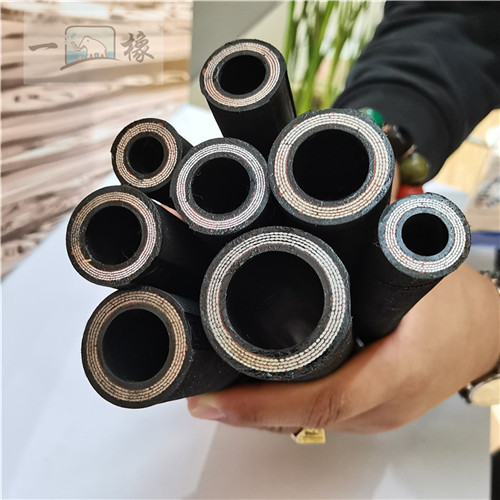
The core material for convoluted PTFE hose is polytetrafluoroethylene (PTFE), a synthetic fluoropolymer known for its exceptional chemical inertness, high thermal stability, and low coefficient of friction. Raw PTFE resin, typically produced via emulsion or suspension polymerization, possesses a high molecular weight and crystalline structure. The manufacturing process begins with the sintering of PTFE powder. Sintering involves heating the powder below its melting point to induce particle bonding, creating a dense, cohesive structure. For convoluted hoses, this is followed by a specialized extrusion and convolution process. A precisely shaped mandrel, often stainless steel, is employed during extrusion to impart the desired convoluted geometry. The extruded PTFE tube is then sintered again to achieve optimal mechanical properties. Critical parameters during manufacturing include resin grade (molecular weight and particle size distribution), sintering temperature and duration, extrusion pressure, and mandrel design. Improper control of these parameters can lead to porosity, dimensional inaccuracies, and compromised mechanical strength. The inner bore of the hose is often further enhanced with a smoothing process to minimize pressure drop. Additional layers of materials like stainless steel braiding are commonly added to provide reinforcement, increasing burst pressure and preventing kinking. Chemical compatibility is often ensured through the selection of specific PTFE grades suitable for the intended fluid service; variations exist regarding permeability to certain gases.
Performance & Engineering
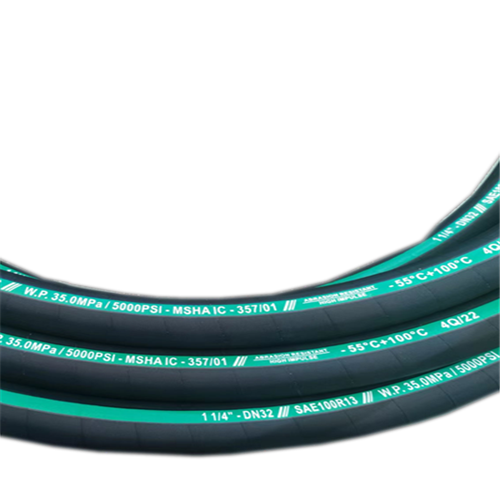
The performance of convoluted PTFE hose is heavily dictated by its ability to withstand pressure, temperature, and chemical attack. Force analysis focuses on hoop stress within the PTFE wall, particularly under internal pressure. The stainless steel braid, when present, significantly contributes to pressure containment and provides resistance to axial compression and elongation. Temperature resistance is a key characteristic, with PTFE maintaining its properties over a wide range (-200°C to +260°C), though prolonged exposure to high temperatures can lead to gradual degradation and creep. Chemical resistance is broad, encompassing strong acids, bases, solvents, and oxidizers; however, certain fluorinated compounds and molten alkali metals can attack PTFE. Flexibility, enabled by the convoluted structure, is crucial for installations in confined spaces or applications involving vibration. Fatigue life is a critical engineering consideration, especially in dynamic applications. Repeated bending and pressure cycling can induce fatigue cracking in the PTFE material. Compliance requirements, such as FDA regulations for food and pharmaceutical applications, mandate stringent material purity and traceability. Permeation rates of gases through the PTFE wall are also important for applications handling hazardous or valuable fluids; permeation rates are inversely proportional to PTFE thickness and molecular weight.
Technical Specifications
| Parameter | Unit | Typical Value (PTFE Lined SS Braid) | Testing Standard |
|---|---|---|---|
| Operating Pressure | MPa | 2.0 - 10.0 (depending on braid layers) | ISO 3162 |
| Burst Pressure | MPa | 6.0 - 30.0 (depending on braid layers) | ISO 3162 |
| Temperature Range | °C | -200 to +260 | ASTM D3418 |
| Chemical Resistance | - | Excellent to most chemicals | ASTM F1554-11 |
| Bending Radius | mm | 5x - 10x Hose ID | Manufacturer Specification |
| PTFE Thickness | mm | 0.5 - 3.0 | ASTM D3418 |
Failure Mode & Maintenance
Common failure modes in convoluted PTFE hose include permeation, cracking, delamination, and chemical attack. Permeation, as previously noted, can occur with specific gases, resulting in loss of containment. Cracking can arise from fatigue due to repeated bending or pressure cycling, especially at the convolution roots. Delamination, the separation of PTFE from the reinforcement braid, can occur due to insufficient bonding or exposure to aggressive fluids that weaken the adhesive. Chemical attack, though rare with PTFE, can degrade the material's properties, leading to swelling, embrittlement, or leaching. Oxidation at elevated temperatures can also contribute to long-term degradation. Maintenance procedures should include regular visual inspection for signs of cracking, swelling, or delamination. Pressure testing is recommended periodically to verify leak tightness. Avoid sharp bending radii that can induce stress concentrations. Flush the hose after use with incompatible fluids. Store the hose in a clean, dry environment away from direct sunlight and extreme temperatures. Replacing the hose at regular intervals based on application severity is critical. Documenting usage conditions and inspection findings helps establish a preventative maintenance schedule.
Industry FAQ
Q: What is the impact of PTFE molecular weight on hose performance?
A: Higher molecular weight PTFE generally exhibits improved creep resistance, tensile strength, and chemical resistance. This translates to a longer service life and better performance under high-pressure and temperature conditions. However, higher molecular weight PTFE can be more difficult to process during manufacturing, potentially increasing costs.
Q: How does stainless steel braiding affect the hose’s pressure rating?
A: Stainless steel braiding provides significant reinforcement, dramatically increasing the hose's burst pressure and preventing kinking or collapsing under vacuum. Each additional layer of braiding proportionally increases the pressure rating, but also reduces flexibility.
Q: What testing is performed to verify chemical compatibility?
A: Chemical compatibility testing typically involves immersing PTFE samples in the target fluid at the operating temperature for an extended period. Changes in weight, volume, hardness, and tensile strength are measured to assess the extent of chemical attack. ASTM F1554 provides standard test methods.
Q: What is the effect of convolution pitch on hose flexibility and pressure rating?
A: A tighter convolution pitch (smaller distance between convolutions) generally increases flexibility but reduces the hose’s ability to withstand internal pressure. A wider pitch provides greater pressure resistance but reduces flexibility. An optimal balance is achieved based on the specific application requirements.
Q: What are the key considerations for selecting a PTFE hose for food and beverage applications?
A: For food and beverage applications, compliance with FDA regulations (21 CFR 177.1550) is essential. The PTFE material must be manufactured using food-grade processes and free from harmful leachables. Cleanability and resistance to cleaning agents are also critical factors.
Conclusion
Convoluted PTFE hose is a versatile and reliable fluid transfer solution, particularly in demanding applications requiring chemical inertness, high-temperature resistance, and flexibility. Understanding the material science, manufacturing processes, performance characteristics, and potential failure modes is critical for selecting the appropriate hose for a given application and ensuring long-term operational integrity. Proper maintenance and inspection protocols are vital to maximizing service life and preventing costly downtime.
The ongoing development of advanced PTFE formulations and manufacturing techniques continues to expand the capabilities of convoluted PTFE hose. Future trends include the development of thinner-walled hoses with higher pressure ratings, enhanced permeation resistance, and improved resistance to specific aggressive chemicals. A proactive approach to material selection, installation, and maintenance will ensure that convoluted PTFE hose remains a cornerstone of critical fluid handling systems for years to come.