
Apr . 01, 2024 17:55 Back to list
china competitive price hydraulic hose suppliers Performance Analysis
Introduction
Hydraulic hoses are critical components in fluid power systems, responsible for transmitting pressurized hydraulic fluid to actuators and other components. China has emerged as a significant global supplier of hydraulic hoses, offering competitive pricing alongside increasing technical capabilities. This guide details the construction, performance characteristics, potential failure modes, and maintenance considerations for hydraulic hoses sourced from competitive Chinese suppliers. The industry faces core challenges concerning material consistency, adherence to international standards, and long-term durability under demanding operating conditions. This document provides an in-depth exploration of these factors, assisting procurement and engineering professionals in making informed decisions.
Material Science & Manufacturing
Hydraulic hoses are typically constructed from multiple layers, each serving a specific function. The inner tube, which directly contacts the hydraulic fluid, is commonly made from nitrile rubber (NBR), polyethylene (PE), or fluoropolymers (e.g., PTFE, FKM) depending on the fluid compatibility requirements. NBR offers good resistance to petroleum-based fluids, while fluoropolymers provide superior resistance to aggressive chemicals and high temperatures. The reinforcement layer provides the hose’s strength and pressure-bearing capacity. This layer is usually composed of multiple braids or spirals of high-tensile steel wire. The number and configuration of these reinforcements dictate the hose’s working pressure. An outer cover, typically made from synthetic rubber (e.g., SBR, CR), provides protection against abrasion, weathering, and ozone degradation.
Manufacturing processes for hydraulic hoses involve extrusion, braiding/spiraling, and vulcanization. Extrusion forms the inner tube and outer cover. Precise control of polymer ratios, temperature, and extrusion speed is crucial for achieving consistent dimensions and material properties. The reinforcement layer is applied via braiding or spiraling machines. Braiding involves interlacing wires at specific angles, while spiraling winds a single wire around the inner tube. Vulcanization, a chemical process involving heat and pressure, crosslinks the rubber compounds, enhancing their strength, elasticity, and resistance to degradation. Key parameters during vulcanization include temperature uniformity, pressure control, and curing time. Chinese suppliers are increasingly employing automated manufacturing processes and rigorous quality control measures to improve product consistency and reliability, though variability in raw material sourcing remains a challenge.
Performance & Engineering
The performance of a hydraulic hose is defined by its ability to withstand internal pressure, external damage, and environmental factors. Burst pressure, working pressure, and temperature range are critical performance parameters. Burst pressure is the maximum pressure the hose can withstand before failure, while working pressure is a fraction of the burst pressure, representing the safe operating limit. Temperature range specifies the permissible operating temperatures, as rubber compounds lose elasticity and strength at extreme temperatures.
Force analysis during hose operation involves consideration of internal pressure forces, tensile forces due to bending, and dynamic forces from fluid pulsation. Hose bending radius is particularly important, as exceeding the minimum bending radius can cause kinking and premature failure. Environmental resistance is also crucial. Hydraulic hoses are often exposed to oil, chemicals, UV radiation, and abrasion. Selecting appropriate materials and protective coverings is essential for ensuring long-term durability. Compliance requirements, such as those stipulated by SAE J517 and EN 856 standards, dictate hose performance characteristics and testing procedures. Understanding these standards is vital for ensuring that hoses meet application-specific requirements and safety regulations. Fatigue life is another critical consideration, especially in applications involving continuous cycling and vibration. Proper hose routing and support are essential for minimizing stress and maximizing fatigue life.
Technical Specifications
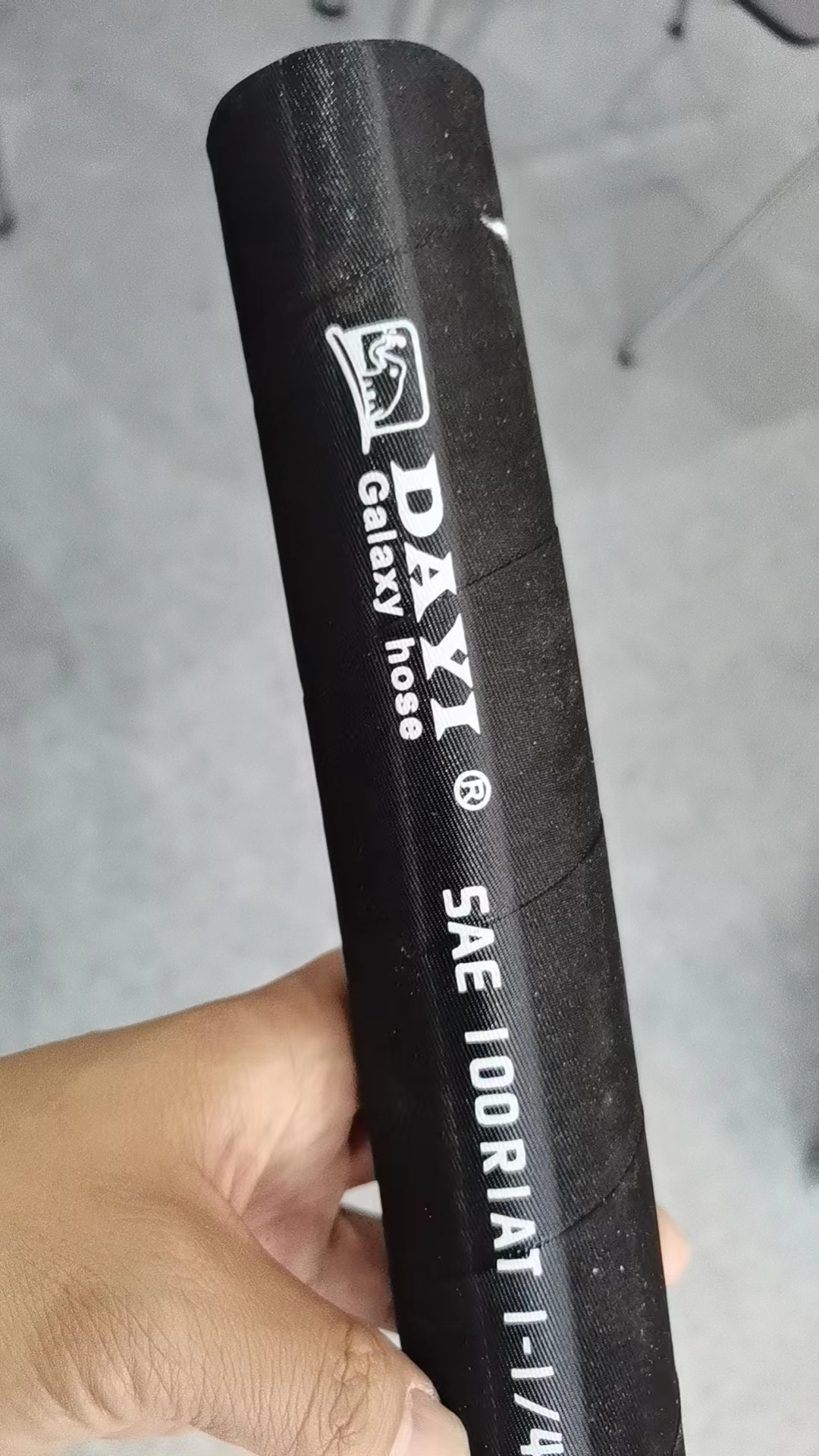
| Parameter | Unit | SAE 100R1 AT | SAE 100R2 AT |
|---|---|---|---|
| Working Pressure | MPa | 10.5 | 18.6 |
| Burst Pressure | MPa | 31.5 | 55.2 |
| Temperature Range | °C | -40 to +100 | -40 to +121 |
| Inner Tube | Material | NBR | NBR |
| Reinforcement | Material | Single Steel Wire Braid | Double Steel Wire Braid |
| Outer Cover | Material | CR | CR |
Failure Mode & Maintenance
Hydraulic hose failures can occur due to a variety of factors. Common failure modes include burst, leaks, kinking, and abrasion. Burst failure is typically caused by exceeding the working pressure or experiencing a sudden pressure surge. Leaks can occur at fittings due to improper installation or damage to the sealing surfaces. Kinking results from exceeding the minimum bending radius, causing the reinforcement wires to fracture. Abrasion can wear away the outer cover, exposing the reinforcement layer to corrosion.
Failure analysis should involve visual inspection for cracks, bulges, and abrasions. Pressure testing can identify leaks. Microscopic examination of fractured surfaces can reveal the root cause of the failure, such as fatigue cracking or corrosion. Preventive maintenance is crucial for extending hose life. Regular inspections should be conducted to identify signs of wear and damage. Proper hose routing and support are essential for minimizing stress. Fittings should be tightened to the correct torque specifications. Hoses should be replaced at recommended intervals or when signs of degradation are observed. Fluid compatibility should be verified to prevent chemical attack on the hose materials. Contamination of the hydraulic fluid can also accelerate hose failure, so regular fluid filtration is essential.
Industry FAQ
Q: What are the key differences between single-wire and two-wire braided hoses, and when should each be used?
A: Single-wire braided hoses (like SAE 100R1AT) are generally suitable for lower-pressure applications and offer greater flexibility. Two-wire braided hoses (like SAE 100R2AT) provide significantly higher pressure ratings and are ideal for applications involving high dynamic loads and pulsating pressures. The increased reinforcement also provides better resistance to kinking.
Q: How do varying rubber compounds affect the lifespan and compatibility of a hydraulic hose?
A: Different rubber compounds offer varying degrees of resistance to specific fluids, temperatures, and environmental factors. Nitrile rubber (NBR) is a good all-purpose material, but it may not be suitable for applications involving phosphate ester fluids. Fluoropolymers (FKM) provide superior chemical resistance but are more expensive. Choosing the correct rubber compound is critical for preventing degradation and ensuring long-term reliability.
Q: What quality control measures should I look for when sourcing hydraulic hoses from Chinese suppliers?
A: Look for suppliers with ISO 9001 certification, which demonstrates a commitment to quality management. Request material test reports (MTRs) for the steel wire and rubber compounds. Conduct independent testing to verify performance characteristics. Inspect for consistent dimensions, smooth surfaces, and proper fitting attachment. Auditing the supplier's manufacturing facility is highly recommended.
Q: What is the impact of improper hose routing on hydraulic system performance and hose longevity?
A: Improper hose routing can lead to excessive bending, kinking, and abrasion, significantly reducing hose life. Hoses should be routed away from hot surfaces, sharp edges, and moving parts. Avoid twisting the hose during installation. Use hose clamps or supports to prevent sagging and vibration. Correct routing minimizes stress and ensures optimal fluid flow.
Q: What is the importance of conducting regular hydraulic fluid analysis in conjunction with hose inspections?
A: Hydraulic fluid analysis can detect contamination, degradation, and the presence of wear particles. Contaminated fluid can accelerate hose failure by causing abrasion and corrosion. Identifying the source of contamination allows for corrective action to be taken, preventing further damage to the hydraulic system. Regular fluid analysis complements hose inspections, providing a comprehensive assessment of system health.
Conclusion
Hydraulic hoses sourced from competitive Chinese suppliers offer a viable option for industries seeking cost-effective solutions. However, rigorous attention to material selection, manufacturing quality, and adherence to international standards is paramount. Understanding the potential failure modes and implementing a robust preventive maintenance program are essential for maximizing hose lifespan and ensuring the reliability of hydraulic systems.
Future developments in hydraulic hose technology are likely to focus on advanced materials, such as thermoplastic hoses offering improved weight reduction and corrosion resistance, and smart hoses incorporating sensors for real-time monitoring of pressure, temperature, and leakage. Continued collaboration between suppliers, engineers, and procurement professionals is crucial for driving innovation and ensuring the safe and efficient operation of hydraulic systems worldwide.