
Apr . 01, 2024 17:55 Back to list
china competitive price hydraulic hose manufacturers Performance Analysis
Introduction
Hydraulic hoses manufactured in China, particularly those offering competitive pricing, represent a significant component in global fluid power systems. These hoses are engineered to convey hydraulic fluid under high pressure to transmit power, facilitating operation in a wide range of applications including construction equipment, agricultural machinery, material handling, and industrial manufacturing. The position of these hoses within the supply chain is crucial, acting as a direct interface between hydraulic pumps, valves, cylinders, and actuators. Core performance characteristics defining hydraulic hose suitability include pressure rating, burst pressure, temperature range, fluid compatibility, and abrasion resistance. The proliferation of competitively priced Chinese manufacturers has dramatically altered the market dynamics, demanding a detailed understanding of materials, manufacturing processes, and performance standards to ensure reliable and safe operation. A key pain point for procurement professionals is balancing cost savings with acceptable quality and compliance with international safety regulations. This guide provides an in-depth technical overview of these hoses, targeting the needs of engineers, procurement managers, and maintenance personnel.
Material Science & Manufacturing
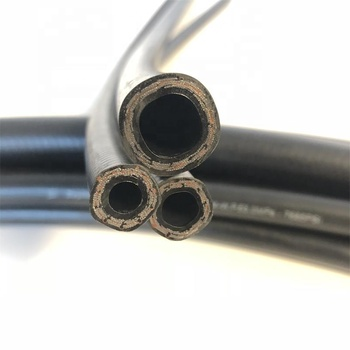
The core material in most hydraulic hoses is synthetic rubber, primarily based on Nitrile Rubber (NBR) due to its excellent resistance to petroleum-based hydraulic fluids. Other elastomers, such as Ethylene Propylene Diene Monomer (EPDM) for phosphate ester fluids, and Chloroprene (Neoprene) for increased oil and heat resistance, are also utilized. Reinforcement layers are critical, commonly constructed from multiple high-tensile strength steel wire braids. The number of braids directly correlates with the hose’s pressure rating. An inner tube provides fluid containment, a reinforcement layer provides strength, and an outer cover provides abrasion and environmental protection. Manufacturing involves several key steps: rubber mixing and compounding, extrusion of the inner tube and outer cover, spiral winding or braiding of reinforcement layers, vulcanization (curing) to crosslink the rubber polymers and impart desired properties, and final inspection. Precise control of vulcanization temperature and time is paramount to achieving optimal tensile strength and elongation. Quality control focuses on dimensional accuracy, tensile strength testing of the rubber compound, burst pressure testing of the assembled hose, and leak testing. The chemical compatibility of the inner tube material with the specific hydraulic fluid is vital to prevent swelling, degradation, and premature failure. Chinese manufacturers often utilize continuous vulcanization processes for increased throughput, but maintaining consistent quality across large production runs requires robust process monitoring and statistical process control (SPC).
Performance & Engineering
Hydraulic hose performance is governed by fundamental principles of fluid mechanics and material science. The hose must withstand internal pressure without failure, considering a significant safety factor. Burst pressure, typically four times the working pressure, is a critical parameter. Hose selection involves calculating the pressure drop along the hose length due to friction, which is influenced by fluid viscosity, flow rate, and hose inner diameter. External factors like bending radius also affect performance. Excessive bending can cause kinking, restricting flow and potentially damaging the reinforcement layers. Dynamic applications introduce fatigue stress due to cyclic pressure and movement. Finite element analysis (FEA) is increasingly used to model hose behavior under various loading conditions, optimizing reinforcement configuration and material selection. Environmental resistance is also crucial. Exposure to UV radiation, ozone, extreme temperatures, and corrosive substances can degrade the rubber compounds, reducing hose lifespan. Compliance requirements, such as those outlined in SAE J517 and EN 853, dictate minimum performance standards for pressure ratings, temperature ranges, and fluid compatibility. Proper hose assembly with correctly specified fittings is critical. Incorrect fittings can create stress concentrations, leading to premature failure.
Technical Specifications
| Parameter | Unit | Typical Value (China Competitive Price Hose) | Premium Hose (Western Manufacturer) |
|---|---|---|---|
| Working Pressure | MPa | 20-35 | 35-50 |
| Burst Pressure | MPa | 60-105 | 105-150 |
| Temperature Range | °C | -40 to +100 | -40 to +120 |
| Reinforcement Layers | Number | 2-4 | 4-6 |
| Inner Tube Material | - | NBR | NBR, EPDM, PTFE |
| Outer Cover Material | - | CR | CR, Polyurethane |
Failure Mode & Maintenance
Hydraulic hose failure can manifest in several ways. Fatigue cracking, initiated by repeated bending and pressure cycling, is a common mode, particularly near fittings. Abrasion from external contact with other components or environmental debris can wear through the outer cover, exposing the reinforcement layers. Internal degradation of the rubber due to fluid incompatibility or oxidation can lead to loss of flexibility and eventual rupture. Fitting failure, often due to corrosion or improper tightening, is another significant cause. Delamination of the reinforcement layers can occur if the bonding between the layers is compromised. Oxidation, especially at high temperatures, can cause the rubber to become brittle and crack. Preventative maintenance is critical. Regular visual inspections should be conducted to identify signs of wear, abrasion, cracking, or leakage. Hoses should be replaced if damage is detected. Proper routing and support are essential to minimize bending stress. Using the correct fittings and tightening them to the manufacturer’s specifications is crucial. Fluid analysis should be performed periodically to ensure compatibility with the hose materials. Storage of spare hoses in a cool, dry, and dark environment prevents degradation. For critical applications, a planned hose replacement schedule should be implemented based on operating hours and environmental conditions.
Industry FAQ
Q: What are the key differences in quality between Chinese competitive-price hydraulic hoses and those from established Western manufacturers?
A: Primarily, differences stem from material consistency, reinforcement layer quality, and manufacturing process control. Western manufacturers often employ higher-grade rubber compounds and more stringent quality control procedures, resulting in hoses with superior burst pressures, temperature resistance, and fatigue life. Reinforcement braiding tends to be more consistent and tightly wound in premium hoses. However, Chinese manufacturers are rapidly improving their quality and can offer comparable performance at a lower cost, particularly for less demanding applications.
Q: How important is fluid compatibility when selecting a hydraulic hose?
A: Fluid compatibility is paramount. Using a hose with an incompatible inner tube material can lead to swelling, softening, or degradation of the rubber, resulting in leaks and premature failure. The type of hydraulic fluid (petroleum-based, phosphate ester, water-glycol) dictates the appropriate hose material (NBR, EPDM, PTFE).
Q: What is the impact of bending radius on hydraulic hose life?
A: Exceeding the minimum recommended bending radius creates stress concentrations in the hose wall, accelerating fatigue cracking and reducing lifespan. Sharp bends can also cause kinking, restricting flow. Proper hose routing and support are essential to maintain the specified bending radius.
Q: What certifications should I look for when sourcing hydraulic hoses from Chinese manufacturers?
A: Look for certifications demonstrating compliance with international standards such as ISO 9001 (Quality Management System), ISO 14001 (Environmental Management System), and specific product certifications like EN 853 (European hydraulic hoses) or SAE J517 (American hydraulic hoses). Independent third-party testing reports are also valuable.
Q: How can I effectively identify a failing hydraulic hose before a catastrophic rupture occurs?
A: Regular visual inspections are crucial. Look for signs of cracking, abrasion, bulging, kinking, or leakage. Also, check for loose or corroded fittings. A noticeable decrease in system performance (e.g., slow cycle times) can also indicate a failing hose.
Conclusion
China competitive price hydraulic hoses provide a viable alternative to established Western manufacturers, but a comprehensive understanding of material properties, manufacturing processes, and potential failure modes is essential. While cost savings are attractive, compromising on quality can lead to increased downtime, safety risks, and ultimately, higher lifecycle costs. Careful consideration of application requirements, fluid compatibility, operating conditions, and compliance standards is paramount when selecting a hose.
Moving forward, advancements in materials science and manufacturing technologies will continue to improve the performance and reliability of hydraulic hoses produced in China. Increased adoption of rigorous quality control procedures and independent testing will further enhance their acceptance in global markets. Procurement professionals and engineers must stay informed about these developments to make informed decisions and optimize the total cost of ownership.