
Apr . 01, 2024 17:55 Back to list
china cat hydraulic hose suppliers Performance Analysis

Introduction
Hydraulic hoses produced by China Cat Hydraulic Hose Suppliers represent a critical component in fluid power systems across diverse industries, including construction, agriculture, manufacturing, and mining. These hoses facilitate the transmission of hydraulic fluid, enabling the operation of heavy machinery and critical industrial processes. The industry chain positions these suppliers as vital links between raw material providers (rubber, steel, polymers) and end-users requiring reliable fluid conveyance solutions. Core performance characteristics center around pressure capacity, burst strength, temperature resistance, and compatibility with various hydraulic fluids. A key pain point in the industry is consistently meeting stringent international safety standards and delivering hoses that withstand the demanding operational environments frequently encountered in heavy-duty applications. Furthermore, cost optimization without compromising performance is a constant challenge for both suppliers and consumers. China Cat Hydraulic Hose Suppliers are increasingly focused on offering customized solutions to address these specific application demands.
Material Science & Manufacturing
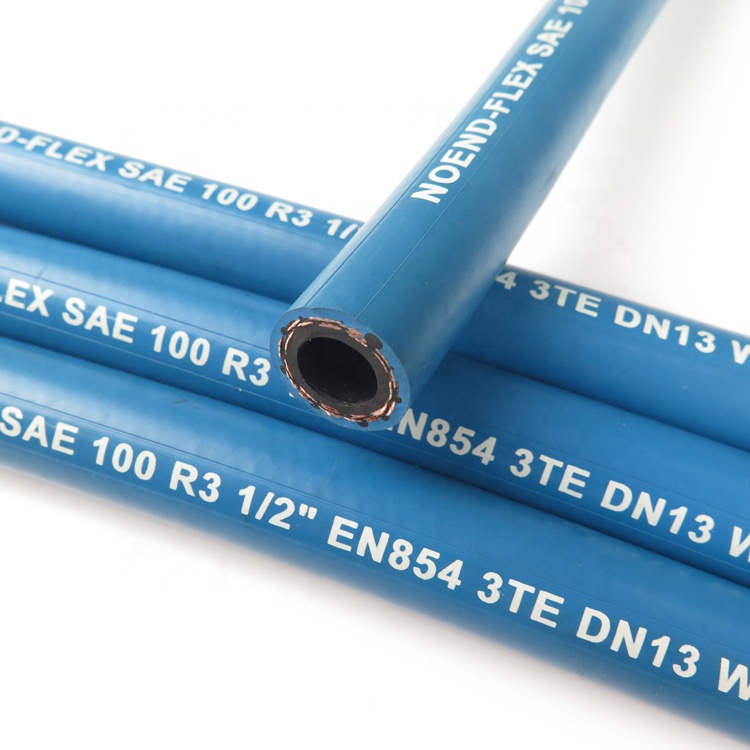
The foundation of a high-performance hydraulic hose lies in the careful selection and processing of raw materials. Inner tube materials commonly utilize nitrile rubber (NBR), known for its excellent resistance to petroleum-based hydraulic fluids, or fluoroelastomers (FKM/Viton) for applications requiring compatibility with aggressive fluids and high temperatures. Reinforcement layers are typically constructed from high-tensile steel wire, spirally wrapped to provide pressure containment. The number and diameter of these steel wires directly impact the hose’s working and burst pressures. Outer cover materials predominantly employ synthetic rubbers like Chloroprene (CR) offering abrasion resistance, weathering protection, and oil resistance. Manufacturing processes involve several critical stages. Inner tube extrusion precisely forms the fluid-carrying liner. Steel wire winding is meticulously controlled for consistent pitch and tension. The hose assembly is then vulcanized – a process of heating rubber under pressure – to bond the layers together, enhancing structural integrity. Critical parameters include temperature uniformity during vulcanization, precise control of steel wire tension, and consistent rubber compound mixing to ensure homogeneous material properties. Post-vulcanization testing includes hydrostatic pressure testing to verify burst strength, impulse testing to assess fatigue resistance, and dimensional inspection to confirm adherence to specifications. Quality control at each stage is essential to prevent defects such as porosity in the inner tube, uneven wire winding, and inadequate bonding between layers.
Performance & Engineering
Hydraulic hose performance is governed by a complex interplay of mechanical stresses and environmental factors. Force analysis considers hoop stress resulting from internal fluid pressure, longitudinal stress due to pressure and bending, and shear stress within the reinforcement layers. Finite element analysis (FEA) is frequently employed to model stress distribution and optimize hose design for specific operating conditions. Environmental resistance is paramount. Exposure to extreme temperatures (both high and low) can affect rubber elasticity and reduce hose lifespan. Ozone degradation, UV exposure, and chemical attack from external contaminants necessitate the use of protective outer covers and appropriate rubber compounds. Compliance requirements are dictated by industry standards such as SAE J517 (Hydraulic Hose – Performance Specifications) and EN 853/857 (Hydraulic Hose – Requirements and Test Methods). These standards specify minimum burst pressures, working pressures, impulse ratings, and dimensional tolerances. Functional implementation relies on proper hose fitting selection and installation. Fittings must be compatible with the hose material and rated for the system's operating pressure. Improperly installed fittings can lead to leaks, premature failure, and potential safety hazards. Bend radius is also crucial; exceeding the minimum bend radius induces excessive stress and reduces hose life. Proper routing and support are essential to prevent abrasion and kinking.
Technical Specifications
| Parameter | SAE 100R1AT | SAE 100R2AT | DIN EN 853 1SN | DIN EN 857 2SN |
|---|---|---|---|---|
| Working Pressure (PSI) | 600 | 1200 | 200 | 300 |
| Burst Pressure (PSI) | 2400 | 4800 | 800 | 1200 |
| Temperature Range (°F) | -40 to +212 | -40 to +212 | -40 to +100 | -40 to +100 |
| Inner Tube Material | NBR | NBR | NBR | NBR |
| Reinforcement | Single Steel Wire Braid | Two Steel Wire Braids | Single Steel Wire Helix | Two Steel Wire Helices |
| Outer Cover Material | CRM | CRM | CRM | CRM |
Failure Mode & Maintenance
Hydraulic hose failures commonly stem from several distinct mechanisms. Fatigue cracking, particularly in the reinforcement layers, is induced by repeated pressure pulsations and flexing. Delamination – the separation of bonding layers – arises from inadequate vulcanization or exposure to aggressive fluids. Rubber degradation, manifested as hardening, cracking, or swelling, results from prolonged exposure to heat, ozone, UV radiation, or incompatible fluids. Oxidation causes embrittlement of the rubber compounds, reducing flexibility and increasing susceptibility to cracking. Abrasion, resulting from contact with abrasive surfaces, weakens the outer cover, potentially exposing the reinforcement layers. Maintenance is critical to maximizing hose lifespan and preventing catastrophic failures. Regular visual inspections should identify cracks, bulges, abrasions, and leaks. Proper hose routing and support minimize stress and abrasion. Fluid contamination accelerates degradation, so implementing effective filtration is essential. Hoses should be replaced at recommended intervals, even if no visible damage is apparent, particularly in critical applications. When replacing hoses, ensure correct sizing and fitting compatibility. Avoid twisting or kinking hoses during installation. Pressure testing after installation confirms leak-free operation. Documenting hose replacement dates and operating conditions aids in identifying recurring failure patterns and optimizing maintenance strategies.
Industry FAQ
Q: What is the primary difference between a 1-wire and a 2-wire hydraulic hose in terms of application suitability?
A: A 1-wire hose (like SAE 100R1AT) is generally suitable for lower-pressure applications with less demanding impulse requirements. A 2-wire hose (SAE 100R2AT) offers significantly higher pressure and impulse ratings, making it ideal for heavy-duty equipment operating under severe cyclical loading, such as excavators and loaders. The additional reinforcement provides enhanced durability and resistance to burst.
Q: How does the choice of inner tube material impact hydraulic hose performance?
A: Nitrile rubber (NBR) is the most common inner tube material due to its good all-around compatibility with petroleum-based hydraulic fluids and moderate temperature resistance. However, for applications involving phosphate ester fluids, high temperatures, or aggressive chemicals, fluoroelastomers (FKM/Viton) are necessary to prevent swelling, degradation, and premature failure.
Q: What are the common causes of hydraulic hose leaks, and how can they be prevented?
A: Leaks frequently occur at fittings due to improper installation, damaged threads, or incompatibility. Internal leaks can result from inner tube degradation or reinforcement layer failure. To prevent leaks, ensure correct fitting selection and tightening torque. Regularly inspect hoses for cracks, bulges, and abrasions. Maintain proper fluid cleanliness and avoid exceeding pressure ratings.
Q: What is the significance of impulse testing, and how does it relate to hydraulic hose lifespan?
A: Impulse testing simulates the pressure pulsations common in hydraulic systems. It assesses the hose's resistance to fatigue failure caused by repeated stress cycles. A higher impulse rating indicates a longer expected lifespan under cyclical loading conditions. Hoses with lower impulse ratings are more prone to premature failure in applications with frequent pressure fluctuations.
Q: How important is proper hose routing and support, and what are the potential consequences of neglecting these factors?
A: Proper hose routing and support are vital to prevent abrasion, kinking, and excessive stress. Neglecting these factors can lead to premature hose failure, leaks, and potential safety hazards. Hoses should be routed away from hot surfaces, sharp edges, and moving parts. Support brackets or clamps should be used to prevent sagging and vibration.
Conclusion
China Cat Hydraulic Hose Suppliers play a pivotal role in ensuring the reliable operation of fluid power systems across numerous industries. The performance and longevity of these hoses depend critically on the careful selection of materials, precise manufacturing processes, adherence to stringent quality control measures, and appropriate application engineering. Understanding the underlying material science, potential failure modes, and relevant industry standards is paramount for both suppliers and end-users.
Future trends in hydraulic hose technology are focused on developing lightweight, high-strength materials, enhancing chemical resistance, and incorporating smart sensing capabilities for predictive maintenance. Continued innovation in hose design and manufacturing will be essential to meet the evolving demands of increasingly complex and demanding hydraulic systems. Prioritizing proactive maintenance and adherence to recommended operating procedures remains the most effective strategy for maximizing hose lifespan and minimizing downtime.