
Apr . 01, 2024 17:55 Back to list
china cat hydraulic hose manufacturer Performance Analysis

Introduction
Hydraulic hoses are critical components in fluid power systems, responsible for transmitting hydraulic fluid to actuators and other components. China Cat Hydraulic Hose Manufacturer specializes in the design and production of reinforced rubber hoses engineered for demanding industrial applications. These hoses occupy a crucial position in the industrial supply chain, serving sectors from construction and agriculture to manufacturing and materials handling. Core performance characteristics include burst pressure, working pressure, temperature resistance, and fluid compatibility. The industry faces challenges regarding hose longevity, resistance to abrasion and chemical attack, and maintaining consistent performance under dynamic loading conditions. The selection of the appropriate hose construction – considering reinforcement type, cover material, and fluid conveyed – is paramount to operational safety and efficiency. This guide provides an in-depth technical analysis of China Cat Hydraulic Hose products, covering material science, manufacturing processes, performance metrics, failure modes, and relevant industry standards.
Material Science & Manufacturing
Hydraulic hose construction fundamentally relies on a combination of rubber compounds and reinforcement materials. The tube, which is the innermost layer, typically consists of a synthetic rubber compound chosen for its compatibility with the hydraulic fluid being used. Common materials include nitrile rubber (NBR), ethylene propylene diene monomer (EPDM), and chloroprene rubber (CR). NBR offers excellent resistance to petroleum-based fluids, EPDM excels in phosphate ester fluids and high-temperature applications, and CR provides good resistance to ozone and weathering. The reinforcement layer provides the strength to withstand internal pressure. Common reinforcement materials include multiple layers of high-tensile steel wire (spiral or braided construction), synthetic textile fibers (e.g., aramid, polyester), or a combination of both. The cover provides protection against abrasion, weathering, and chemical exposure, commonly using synthetic rubbers such as polyurethane or chlorinated polyethylene (CPE).
Manufacturing processes involve several key steps. Tube extrusion forms the inner liner to precise dimensions. Reinforcement application depends on the hose design; spiral winding machines apply steel wire helically, while braiding machines interweave multiple strands of wire or fiber. These layers are then vulcanized – a process of heating rubber compounds under pressure to crosslink the polymer chains, enhancing strength, elasticity, and temperature resistance. Precise control of temperature, pressure, and curing time is critical to achieving optimal material properties. Post-vulcanization processes include dimensional inspection, pressure testing, and coupling attachment. China Cat utilizes a statistical process control (SPC) system throughout manufacturing to minimize variation and ensure consistent product quality. The parameters monitored include rubber compound viscosity, wire tensile strength, vulcanization temperature profiles, and burst pressure testing results.
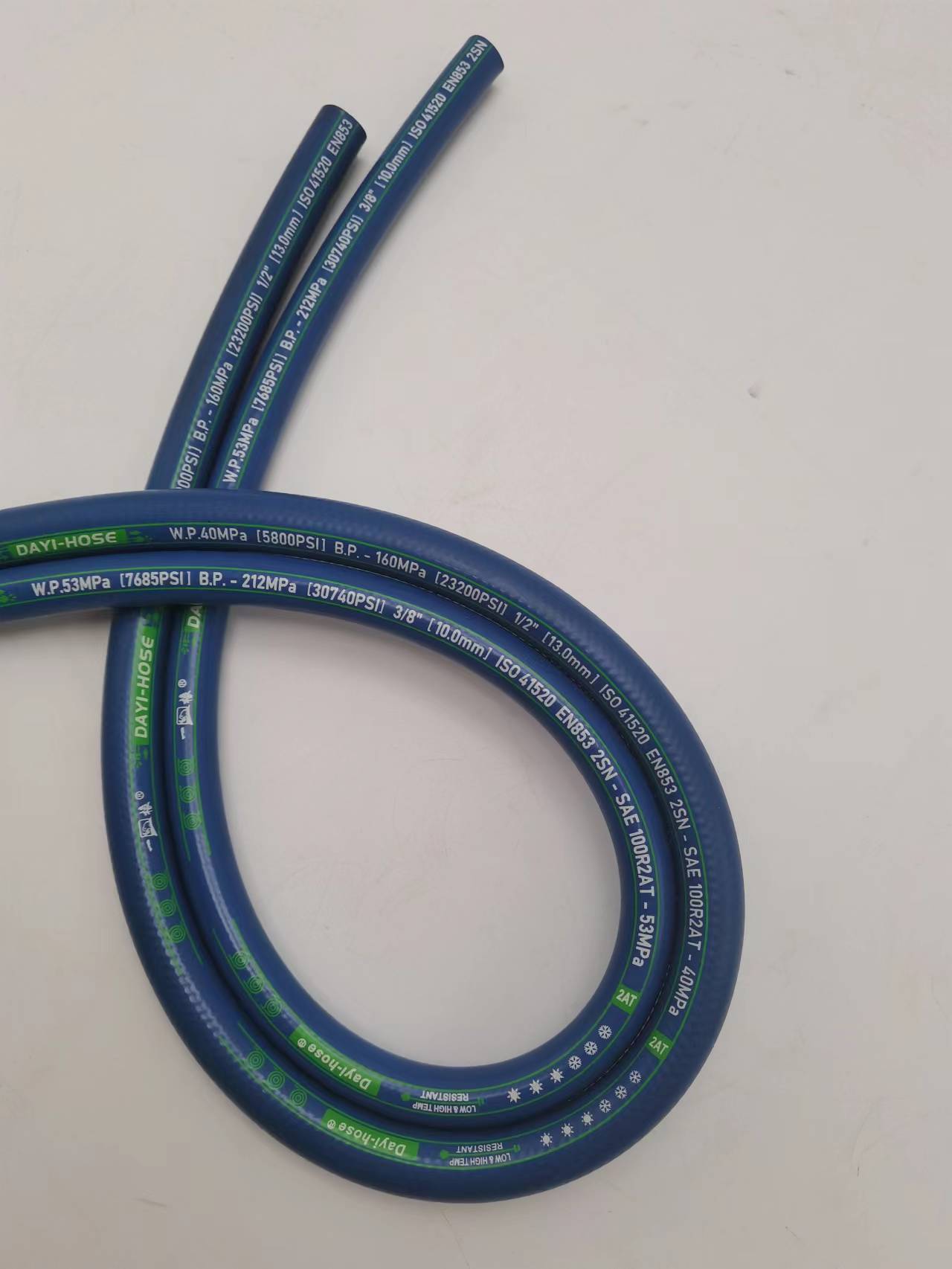
Performance & Engineering
The performance of a hydraulic hose is dictated by its ability to withstand internal pressure, external damage, and environmental factors. Burst pressure, the maximum pressure a hose can withstand before rupture, is a critical safety parameter. Working pressure, typically specified as a percentage (e.g., 50-70%) of the burst pressure, defines the safe operating limit. Force analysis involves calculating hoop stress (tensile stress in the hose wall due to internal pressure) and longitudinal stress (stress along the hose length due to pressure and bending). These stresses are influenced by hose diameter, wall thickness, and reinforcement configuration.
Environmental resistance is a significant concern. Exposure to extreme temperatures can degrade rubber compounds, leading to reduced flexibility and increased risk of cracking. Ozone, ultraviolet radiation, and chemical exposure can also cause material deterioration. Hose construction must be carefully selected to match the intended application environment. For example, hoses used in corrosive environments require chemical-resistant cover materials. Compliance requirements vary depending on the industry and region. SAE J517 specifies performance requirements for hydraulic hoses used in mobile equipment. EN 856 defines European standards for hydraulic hoses. China Cat Hydraulic Hose adheres to both SAE and EN standards, providing customers with hoses certified for a wide range of applications. Bending radius is also crucial, excessive bending can cause kinking and premature failure. Correct hose routing and the use of appropriate hose guards are essential for maximizing service life.
Technical Specifications
| Hose Type | Reinforcement Type | Working Pressure (PSI) | Burst Pressure (PSI) |
|---|---|---|---|
| Hydraulic Hose R1AT | Single Steel Wire Braid | 1500 | 4500 |
| Hydraulic Hose R2AT | Two Steel Wire Braids | 2250 | 6750 |
| Hydraulic Hose R1S | Single Synthetic Textile Braid | 1000 | 3000 |
| Hydraulic Hose R6 | Six Spiral High-Tensile Wire | 3000 | 9000 |
| Thermoplastic Hose | Synthetic Textile Braid | 2000 | 6000 |
| Ultra High Pressure Hose | Seven Spiral High-Tensile Wire | 5000 | 15000 |
Failure Mode & Maintenance
Hydraulic hose failure can occur through various mechanisms. Fatigue cracking, caused by repeated flexing and pressure cycling, is a common failure mode, particularly in hoses subjected to dynamic loading. Delamination, the separation of reinforcement layers from the rubber matrix, can occur due to inadequate bonding or exposure to harsh chemicals. Abrasion, caused by external contact with abrasive surfaces, can wear away the cover, exposing the reinforcement layers to corrosion. Oxidation, caused by exposure to oxygen and heat, can degrade rubber compounds, leading to reduced flexibility and cracking. Pinholes, often caused by corrosion of reinforcement wires, can lead to fluid leakage.
Preventative maintenance is crucial for maximizing hose service life. Regular visual inspections should be conducted to identify signs of abrasion, cracking, bulging, or leakage. Hose routing should be optimized to minimize bending and contact with abrasive surfaces. Fluid contamination can accelerate hose degradation; therefore, proper filtration is essential. Couplings should be inspected for corrosion and tightness. When replacing a hose, ensure that the new hose is compatible with the hydraulic fluid and operating conditions. China Cat Hydraulic Hose recommends a hose replacement schedule based on operating hours and environmental conditions. Correct installation techniques, including using the appropriate crimping equipment and following torque specifications, are also critical for preventing premature failure.
Industry FAQ
Q: What is the difference between braided and spiral hydraulic hoses, and when should each be used?
A: Braided hoses (typically 1-6 braids) offer excellent flexibility and are suitable for applications with moderate pressure requirements and frequent bending. They are less expensive than spiral hoses. Spiral hoses (typically 4-7 spirals) provide significantly higher pressure ratings and are better suited for applications with high pressure, high impulse, and minimal bending. Spiral hoses have lower flexibility compared to braided hoses.
Q: How does temperature affect the performance and lifespan of hydraulic hoses?
A: Extreme temperatures, both high and low, can degrade rubber compounds. High temperatures accelerate oxidation and reduce rubber elasticity, leading to cracking and reduced pressure capacity. Low temperatures can cause rubber to become brittle and less flexible, increasing the risk of cracking during bending. Selecting a hose with a temperature range appropriate for the application is crucial.
Q: What is the impact of hydraulic fluid compatibility on hose selection?
A: Using an incompatible hydraulic fluid can cause the rubber tube to swell, soften, or degrade, leading to leaks and premature failure. It's crucial to select a hose tube material that is specifically compatible with the fluid being used. Compatibility charts are readily available from hose manufacturers and fluid suppliers.
Q: How important is proper hose crimping, and what are the potential consequences of improper crimping?
A: Proper hose crimping is essential for creating a secure and leak-free connection between the hose and the fittings. Under-crimping can result in the hose blowing off the fitting under pressure, while over-crimping can damage the hose reinforcement, reducing its strength and potentially leading to failure. Always use calibrated crimping equipment and follow the manufacturer's specifications.
Q: What are the key considerations for extending the service life of hydraulic hoses?
A: Key considerations include proper hose routing to minimize bending and abrasion, using appropriate hose guards, maintaining clean hydraulic fluid through effective filtration, regular visual inspections for signs of wear and damage, and adhering to recommended hose replacement schedules. Avoiding excessive pressure spikes and ensuring correct installation practices are also critical.
Conclusion
China Cat Hydraulic Hose Manufacturer provides a comprehensive range of reinforced rubber hoses engineered to meet the demanding requirements of diverse industrial applications. Understanding the fundamental material science, manufacturing processes, and performance characteristics of hydraulic hoses is crucial for ensuring operational safety, maximizing service life, and minimizing downtime. Proper hose selection, installation, and maintenance are paramount to achieving optimal performance and preventing catastrophic failures.
The ongoing development of advanced rubber compounds, reinforcement materials, and manufacturing techniques promises to further enhance the performance and reliability of hydraulic hoses. Future trends include the development of self-sealing hoses, smart hoses with integrated sensors for condition monitoring, and environmentally friendly hose materials. China Cat Hydraulic Hose remains committed to innovation and providing customers with cutting-edge hydraulic hose solutions.