
Apr . 01, 2024 17:55 Back to list
china car washing hose suppliers Technical Analysis

Introduction
Car washing hoses supplied from China represent a significant portion of the global market, catering to both professional car wash facilities and individual consumers. These hoses are critical components in fluid conveyance systems, demanding specific performance characteristics related to pressure resistance, flexibility, and material compatibility. The industry chain encompasses raw material suppliers (primarily PVC, rubber, and reinforcement textiles), hose manufacturers, and distributors servicing regional and international markets. Core performance characteristics center around burst pressure, working pressure, kink resistance, and resistance to common cleaning agents and UV exposure. A key pain point for procurement managers is ensuring consistent quality and adherence to international safety standards, given the variability in manufacturing practices across different Chinese suppliers. This guide provides an in-depth technical analysis of these hoses, covering materials, manufacturing, performance, failure modes, and relevant industry standards.
Material Science & Manufacturing
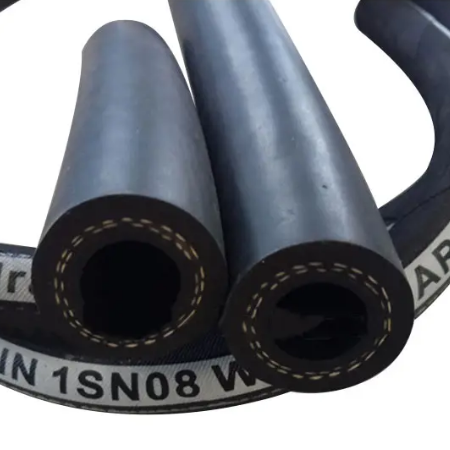
The predominant materials used in car washing hose construction are Polyvinyl Chloride (PVC), Rubber (typically Synthetic Rubber like SBR or NBR), and reinforcing textiles (often polyester or nylon). PVC provides the primary structural body, offering flexibility and resistance to abrasion. Its chemical formula (C2H3Cl)n dictates its properties; plasticizer content is crucial, impacting flexibility at different temperatures. Rubber layers, either internal or external, enhance flexibility and provide a sealing layer. The choice of rubber depends on the intended fluid compatibility – NBR offers superior resistance to petroleum-based products, while SBR provides cost-effectiveness. Reinforcement textiles, woven or spirally wound, impart strength and prevent bursting under pressure. Manufacturing processes primarily involve extrusion, calendaring, and braiding. Extrusion forms the PVC and rubber layers, with precise temperature control (typically between 160-200°C for PVC) critical to avoid degradation and maintain dimensional accuracy. Calendaring produces the rubber sheeting. Braiding machines interweave the reinforcement textiles around the extruded core, influencing the hose’s burst pressure. Parameter control during braiding is paramount – consistent tension and pick density are essential for uniform strength. Post-manufacturing processes include pressure testing (to 1.5x working pressure) and quality inspection for defects like pinholes or inconsistencies in the braiding.
Performance & Engineering
The performance of a car washing hose is fundamentally governed by its ability to withstand internal pressure without failure and maintain operational integrity over extended use. Force analysis involves hoop stress calculations based on the Barlow formula (σ = PD/2t, where σ is hoop stress, P is pressure, D is diameter, and t is wall thickness). This dictates the minimum wall thickness required for a given working pressure. Environmental resistance is crucial; prolonged UV exposure can cause PVC degradation, leading to embrittlement and cracking. The addition of UV stabilizers (typically benzophenones or benzotriazoles) mitigates this effect. Chemical compatibility is another critical factor. Exposure to detergents, surfactants, and specialized car wash chemicals can cause swelling, leaching of plasticizers, and ultimately, hose failure. NBR rubber exhibits superior resistance to many of these chemicals compared to SBR. Compliance requirements are dictated by regional standards (detailed in the footer). Specifically, hoses intended for potable water applications must comply with standards relating to lead and phthalate content. Functional implementation considers the hose’s flexibility and kink resistance, which are influenced by the plasticizer content in the PVC and the weave pattern of the reinforcement textiles. Kink resistance is evaluated through standardized bend tests, measuring the force required to induce a kink and the time taken for the hose to recover.
Technical Specifications
| Parameter | Unit | Typical Value (Standard Duty Hose) | Typical Value (Heavy Duty Hose) |
|---|---|---|---|
| Working Pressure | MPa | 0.6 | 1.0 |
| Burst Pressure | MPa | 1.8 | 3.0 |
| Tensile Strength (Reinforcement) | N/mm2 | 15 | 25 |
| Elongation at Break | % | 300 | 400 |
| Diameter (Internal) | mm | 12.7 | 19.1 |
| Wall Thickness | mm | 2.5 | 3.8 |
Failure Mode & Maintenance
Car washing hoses are susceptible to several failure modes, primarily related to material degradation and mechanical stress. Fatigue cracking, induced by repeated flexing and pressurization, is a common issue, particularly in areas around fittings. This is exacerbated by using the hose at pressures exceeding its working limit. Delamination, the separation of PVC and rubber layers, can occur due to poor adhesion during manufacturing or chemical attack. Degradation of the PVC due to UV exposure leads to embrittlement and cracking, reducing the hose’s flexibility and burst resistance. Oxidation of the rubber components can cause them to become brittle and lose their elasticity. Kinking and twisting can lead to localized stress concentrations and eventual failure. Maintenance involves regular inspection for signs of cracking, blistering, or delamination. Avoid exposing the hose to extreme temperatures or harsh chemicals. After each use, the hose should be fully drained and stored in a cool, dry place, away from direct sunlight. If cracks are detected, the hose should be replaced immediately. Ensure fittings are securely attached and regularly inspected for leaks. Proper storage significantly extends the service life and prevents premature failure. Avoid dragging the hose across abrasive surfaces.
Industry FAQ
Q: What is the significance of the "burst pressure" rating, and how does it relate to safe operating practices?
A: Burst pressure represents the maximum pressure the hose can withstand before catastrophic failure. It’s typically 1.5 to 3 times the working pressure. Safe operating practices dictate never exceeding the working pressure, and keeping pressures well below the burst pressure to ensure a safety margin. Exceeding the working pressure significantly reduces the hose’s lifespan and creates a serious safety hazard.
Q: How does the choice of plasticizer affect the performance of a PVC car washing hose, particularly at different temperatures?
A: Plasticizers are added to PVC to increase its flexibility. Different plasticizers exhibit varying temperature dependencies. At low temperatures, some plasticizers can become less effective, making the hose stiffer and more prone to cracking. At high temperatures, plasticizers can leach out, causing the PVC to become brittle and lose its flexibility. Phthalate-free plasticizers are increasingly preferred for environmental and health reasons, though their performance characteristics may differ slightly.
Q: What are the key considerations when selecting a hose for use with hot water or specialized car wash detergents?
A: Hot water accelerates degradation processes, particularly in PVC. Hoses intended for hot water applications should be specifically rated for the maximum temperature. Specialized car wash detergents can contain aggressive chemicals that attack the hose materials. NBR rubber exhibits superior resistance to many of these chemicals compared to SBR. It is vital to check the chemical resistance chart provided by the hose manufacturer before use.
Q: How do different reinforcement textile weaves (e.g., spiral vs. braided) impact the hose's kink resistance and overall durability?
A: Braided reinforcement generally provides greater flexibility and kink resistance compared to spiral-wound reinforcement. Braiding distributes stress more evenly, reducing the likelihood of localized failure. Spiral-wound reinforcement offers higher strength-to-weight ratio but can be more prone to kinking. The pick density of the braiding also affects durability – a higher pick density provides increased strength and abrasion resistance.
Q: What is the role of UV stabilizers in extending the service life of car washing hoses exposed to outdoor conditions?
A: UV radiation from sunlight causes photodegradation of PVC, leading to embrittlement and cracking. UV stabilizers absorb UV radiation and dissipate it as heat, preventing damage to the polymer chains. Common UV stabilizers include benzophenones and benzotriazoles. The concentration and type of UV stabilizer directly impact the hose’s resistance to UV degradation and its overall service life.
Conclusion
China-supplied car washing hoses offer a diverse range of options catering to various performance needs and budgets. Understanding the interplay between material science, manufacturing processes, and engineering principles is paramount for procurement managers seeking reliable and durable products. Key performance indicators – working pressure, burst pressure, and chemical resistance – must be carefully evaluated in relation to the intended application.
Future development trends will likely focus on incorporating more sustainable materials, improving UV resistance, and enhancing chemical compatibility. Adherence to international standards (detailed below) and rigorous quality control during manufacturing are crucial for ensuring consistent performance and mitigating the risk of premature failure. A proactive approach to maintenance and proper storage practices will significantly extend the service life of these essential components.