
Apr . 01, 2024 17:55 Back to list
china car washer hose manufacturer Performance Analysis

Introduction
High-pressure car wash hoses, manufactured in China, represent a critical component within the professional vehicle detailing and automated wash facility sectors. These hoses serve as the fluid transfer pathway for delivering water, detergents, and cleaning solutions at pressures ranging from 1500 to 5000 psi. Positioned within the broader industrial hose market, they differentiate themselves through requirements for flexibility, chemical resistance, abrasion resistance, and burst strength exceeding those of general-purpose industrial hoses. Core performance characteristics revolve around maintaining consistent water pressure, preventing kinking under operational stress, and ensuring long-term durability against common automotive cleaning agents and environmental factors. A primary industry pain point is the prevalence of substandard materials leading to premature hose failure, downtime, and potential water damage. This guide provides a comprehensive technical overview of Chinese-manufactured car wash hoses, covering material science, manufacturing processes, performance metrics, failure analysis, and applicable industry standards.
Material Science & Manufacturing
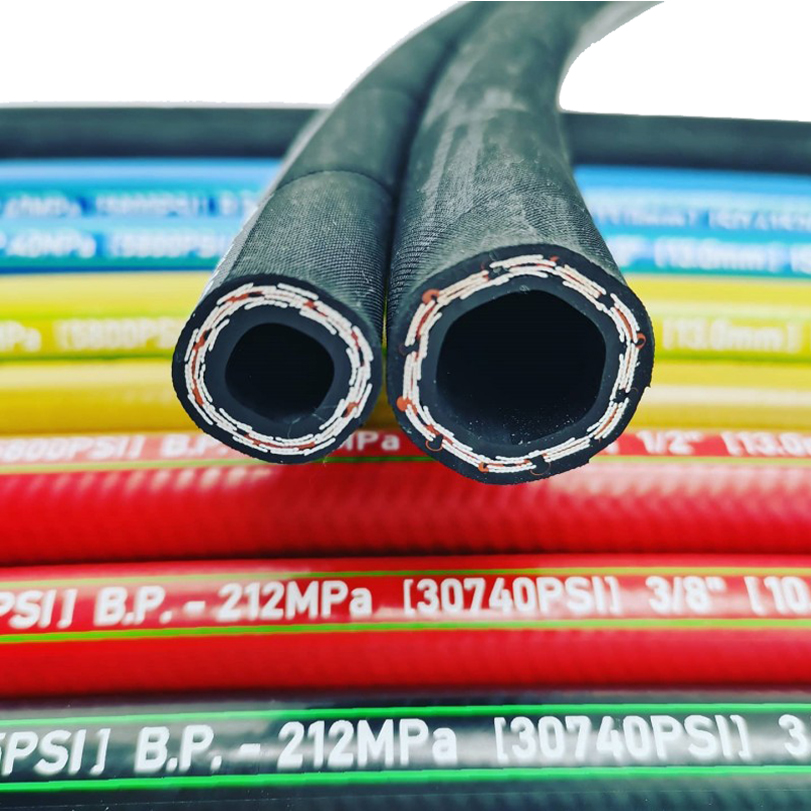
Car wash hoses are typically constructed from multiple layers, each contributing specific performance characteristics. The inner tube, in direct contact with the fluid, is commonly manufactured from a blend of synthetic rubbers, primarily Nitrile Rubber (NBR) or Ethylene Propylene Diene Monomer (EPDM). NBR offers excellent resistance to petroleum-based products and abrasion, critical in environments exposed to oils and solvents. EPDM, conversely, exhibits superior resistance to ozone, weathering, and heat, making it suitable for hot water applications and outdoor exposure. The reinforcement layer, vital for burst strength, generally consists of multiple plies of high-tensile strength textile braids (typically polyester or nylon) or a spiral-wound steel wire reinforcement. The outer cover, designed for abrasion and UV resistance, utilizes a blend of polymers such as PVC or thermoplastic polyurethane (TPU). TPU offers superior abrasion resistance and flexibility compared to PVC. Manufacturing processes involve extrusion for the inner tube and outer cover, followed by braiding or winding of the reinforcement layer. Precise control of extrusion parameters (temperature, pressure, screw speed) is crucial to ensure uniform wall thickness and consistent material properties. The braiding process requires maintaining consistent tension and ply count to achieve the specified burst pressure. Post-manufacturing quality control includes hydrostatic testing to verify burst strength and leak testing to ensure fluid integrity. A common manufacturing defect is inadequate bonding between layers, leading to delamination and premature failure.
Performance & Engineering
The performance of a car wash hose is governed by a complex interplay of hydraulic principles and material properties. Force analysis must consider hydrostatic pressure, dynamic pressure fluctuations (pulsation), and external mechanical stresses (bending, kinking, abrasion). Hose burst pressure is calculated using Barlow's formula, modified to account for reinforcement type and material properties. Environmental resistance is paramount; prolonged exposure to UV radiation degrades PVC and TPU, reducing flexibility and increasing the risk of cracking. Chemical compatibility dictates the suitability of the inner tube material for specific cleaning agents. Abrasive wear is a significant concern in environments where hoses are dragged across rough surfaces. Compliance requirements, such as those mandated by the Clean Water Drinking Act (where applicable) necessitate the use of non-toxic materials. Functional implementation involves proper hose selection based on operating pressure, fluid temperature, and chemical exposure. Correct hose coupling selection is equally critical; quick-connect couplings must maintain a secure seal at the rated pressure and withstand repeated connection/disconnection cycles. Kinking is a major operational issue, reducing flow rate and potentially causing hose damage; a smaller bend radius and the use of anti-kink coils mitigate this risk. Fatigue failure occurs under cyclical pressure loading and is directly related to the amplitude and frequency of the pressure cycles.
Technical Specifications
| Parameter | Unit | Standard Grade Hose | Premium Grade Hose |
|---|---|---|---|
| Working Pressure | psi | 2000 | 4000 |
| Burst Pressure | psi | 8000 | 16000 |
| Inner Diameter | in | 3/8 | 1/2 |
| Outer Diameter | in | 0.625 | 0.75 |
| Tensile Strength | psi | 4000 | 5000 |
| Elongation at Break | % | 400 | 500 |
| Temperature Range | °F | -40 to 176 | -40 to 212 |
Failure Mode & Maintenance
Common failure modes in car wash hoses include burst failure due to exceeding the working pressure, kinking leading to localized stress concentration and cracking, abrasion causing wear of the outer cover and eventual exposure of the reinforcement layer, chemical degradation resulting in swelling and loss of flexibility of the inner tube, and delamination caused by inadequate bonding between layers. Fatigue cracking occurs in hoses subjected to repeated pressure cycling. Oxidative degradation, particularly in PVC hoses, causes embrittlement and cracking upon prolonged UV exposure. Failure analysis involves visual inspection for cracks, abrasions, and swelling, hydrostatic testing to verify burst pressure, and microscopic examination of fractured surfaces to determine the root cause. Preventative maintenance includes regular visual inspection for signs of wear and damage, proper storage (avoiding direct sunlight and extreme temperatures), flushing the hose to remove debris, and ensuring correct coupling connections. Hoses should be replaced if they exhibit any signs of significant wear, cracking, or delamination. Avoid sharp bends and dragging the hose across abrasive surfaces. Properly draining the hose after use prevents internal corrosion and buildup of contaminants.
Industry FAQ
Q: What is the typical lifespan of a car wash hose under heavy commercial use?
A: Under typical heavy commercial use (multiple washes per day, 7 days a week), a standard grade hose might last 12-18 months. A premium grade hose, constructed with higher-quality materials and reinforced with steel wire, can often achieve a lifespan of 24-36 months. Lifespan is heavily dependent on maintenance and operating conditions.
Q: What is the impact of using hot water on hose longevity?
A: Continuous exposure to hot water (above 140°F) accelerates the degradation of many rubber compounds. EPDM rubber is generally more resistant to hot water than NBR. Selecting a hose specifically rated for hot water applications is crucial. Regular inspection for softening or swelling of the inner tube is recommended.
Q: How does the type of cleaning solution affect hose material compatibility?
A: Strong alkaline or acidic cleaning solutions can significantly degrade certain rubber compounds. NBR offers good resistance to many solvents, while EPDM is more resistant to oxidizing chemicals. Always consult a chemical compatibility chart before using a new cleaning solution.
Q: What are the advantages of steel wire reinforcement over textile braiding?
A: Steel wire reinforcement provides significantly higher burst pressure and kink resistance compared to textile braiding. However, steel wire hoses are generally less flexible and more expensive. They are best suited for high-pressure applications and environments where kinking is a major concern.
Q: What are the key considerations when selecting hose couplings?
A: Couplings must be rated for the same or higher pressure than the hose. Material compatibility between the coupling and the hose is essential to prevent corrosion and leaks. Quick-connect couplings should provide a secure, leak-proof seal and be easy to operate. Regularly inspect couplings for wear and damage.
Conclusion
China-manufactured car wash hoses represent a viable and cost-effective solution for professional vehicle detailing operations, but selecting the appropriate hose requires a thorough understanding of material science, manufacturing processes, and performance characteristics. The risk of premature failure due to substandard materials is a significant industry concern, emphasizing the importance of sourcing from reputable manufacturers who adhere to stringent quality control standards. Proper maintenance and adherence to recommended operating procedures are crucial for maximizing hose lifespan and minimizing downtime.
The future of car wash hose technology will likely focus on developing more durable and chemically resistant materials, improving hose flexibility to reduce kinking, and incorporating smart sensors for real-time monitoring of hose pressure and temperature. Standardization of testing protocols and enhanced traceability of materials will further improve product quality and reliability, ultimately benefiting end-users and reducing the overall cost of ownership.